
The Political Message of Ali Khamenei's Funeral and the Geopolitics of the Strait of Hormuz
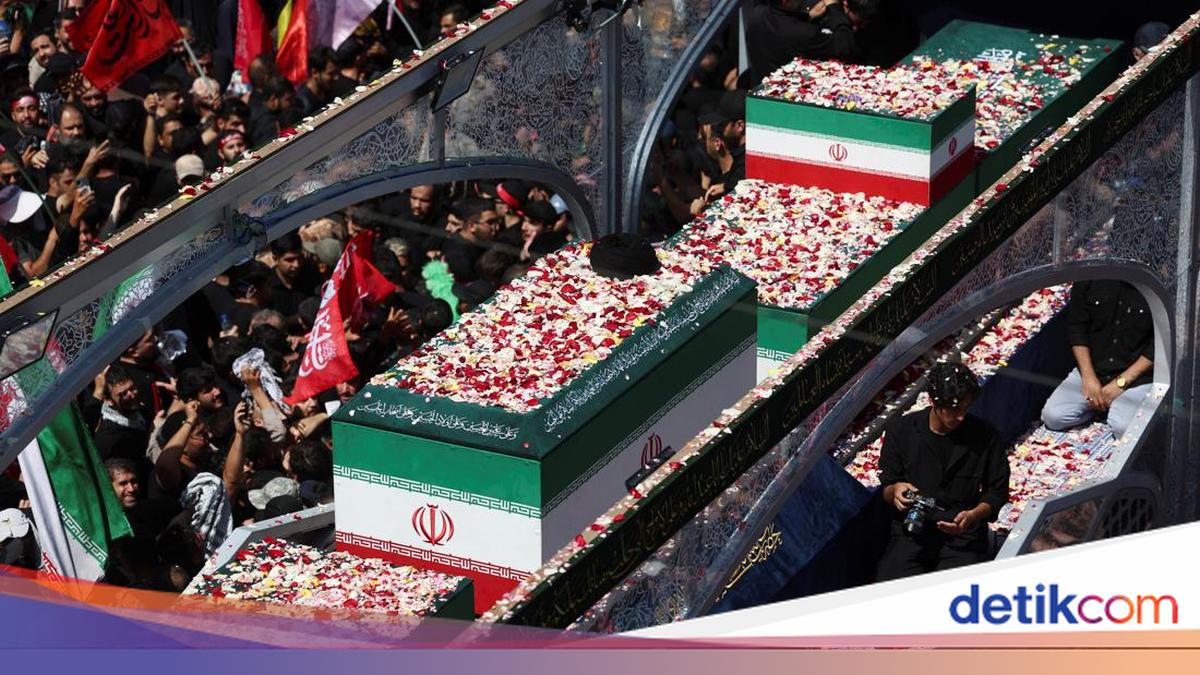
The death of Supreme Leader Ayatollah Ali Khamenei on 28 February 2026 not only marks the end of a political era in the Islamic Republic of Iran but also opens a new chapter in Middle Eastern geopolitical dynamics. The days-long funeral processions across Tehran, Qom, Najaf, Karbala, and Mashhad have transformed into a global-scale political demonstration. Simultaneously, the escalation in the Strait of Hormuz through missile attacks on commercial vessels indicates that Iran is sending a strategic message far broader than a mere ritual of respect for a revolutionary leader.
Khamenei’s funeral took place amidst an extraordinarily complex situation. The Iran-US ceasefire remains fragile, diplomatic negotiations have stalled without meaningful progress, while Washington and Tel Aviv continue to display military threats. In this context, the funeral procession was not merely a space for national mourning but also a political instrument to demonstrate the regime’s legitimacy, ideological solidarity, and mass mobilisation capacity.
Meanwhile, rising tensions in the Strait of Hormuz underscore Iran’s intent to ensure the world understands a crucial point: despite losing a central figure like Khamenei, the state’s ability to control regional geopolitics has not collapsed. Indeed, through a combination of religious symbolism, military strength, and public mobilisation, Iran is constructing a new narrative of revolutionary continuity in the post-Khamenei era. Statements by senior Iranian officials regarding plans to impose tariffs on vessels transiting the Strait of Hormuz carry political significance far beyond mere maritime economic policy. This policy is part of Iran’s language of power, demonstrating that Tehran still possesses the capacity to dictate the security and economic architecture of the Persian Gulf region. Even the declaration of ‘special treatment’ for friendly nations signals not just economic diplomacy, but the formation of a new solidarity bloc amidst shifting global geopolitics.
The funeral of Khamenei ultimately became a momentum showcasing three simultaneous phenomena: the internal consolidation of the Islamic Republic, symbolic diplomacy towards the Islamic world and the Global South, and a new Iranian strategy of leveraging energy geopolitics as an instrument of international negotiation.
In the modern political history of the Middle East, the funerals of major figures have often become arenas for contesting legitimacy. From Gamal Abdel Nasser in Egypt in 1970, to Ayatollah Ruhollah Khomeini in 1989, and Qassem Soleimani in 2020, the death of a leader has never been purely personal but has transformed into a moment of mass mobilisation, ideological ritual, and a display of national solidarity. The Iranian government appeared to be attempting to replicate the mass outpouring of loyalty seen at Khomeini’s 1989 funeral. To mobilise millions of mourners in Tehran, the state actively provided transport, food, and accommodation, and even suspended government activities to enable public attendance. This effort demonstrates the regime’s understanding of the importance of political visuals in the age of global information warfare. Images of a human sea filling Tehran’s streets serve as a symbolic message to the international community that the Islamic Republic has not lost its social base.
Ayatollah Mohammad Saidi, the Friday Prayer leader of Qom, described the procession as a ‘referendum’ for the Islamic Republic. This statement is significant, as it positions mass attendance as a measure of the state’s political legitimacy. At a time when Iran faces severe economic pressure from international sanctions and rising domestic discontent, the state requires a symbol of national unity to mitigate perceptions of internal fracture. For the Iranian government, the funeral also became a momentum to shift the narrative from a ‘regime crisis’ to ‘revolutionary resilience’. The US-Israeli airstrike that killed Khamenei was a major symbolic blow, but through a monumental funeral procession, Iran sought to demonstrate that the death of a leader does not equate to the destruction of the system.
Within Iran’s revolutionary political tradition, the concept of martyrdom holds a central position. The 1979 Islamic Revolution grew from the narrative of Imam Hussein’s sacrifice at Karbala against tyranny. Khamenei is thus positioned not merely as a head of state, but as a martyr of the Islamic Revolution. Consequently, his funeral was constructed within a narrative of sacred sacrifice against Western and Zionist aggression. The use of red flags, anti-American slogans, and calls for revenge illustrates how the state transformed a space of mourning into a space of ideological mobilisation. This politics of martyrdom serves both domestic and regional functions. Domestically, the narrative reinforces loyalty to the state and the Islamic Revolutionary Guard Corps as the protectors of the revolution. Regionally, it consolidates pro-Iran networks, including Hezbollah, Iraqi Shia groups, and Shia sympathisers in Pakistan and Afghanistan.
Amidst economic pressure, inflation, international sanctions, and waves of protest that had shaken the country prior to the war, the regime required a symbol of national unity. Khamenei’s death in a combined US-Israeli strike provided the state with an opportunity to frame the conflict as an assault on Iran’s national dignity. This allowed the government to simultaneously mobilise patriotic sentiment and Shia martyrdom ideology. The symbols within the funeral procession made this clear: red flags symbolising a call for revenge.