
The Political Economy of Indonesia’s Energy Transition
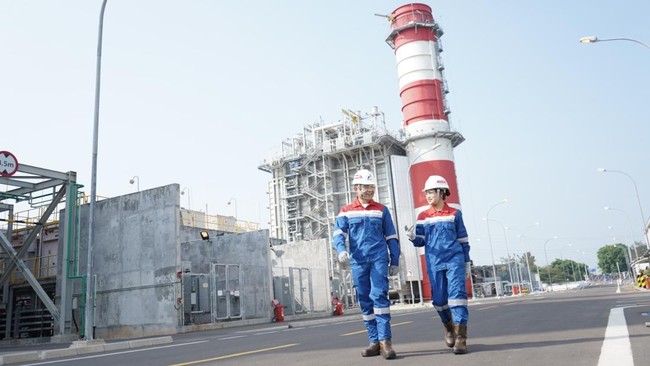
Indonesia’s energy transition needs to be viewed as more than a shift from fossil fuels to new and renewable energy. Behind emissions-reduction targets, power plant construction and investment mobilisation lies a more fundamental issue: how Indonesia allocates economic resources to build an energy system capable of supporting national transformation.
Ultimately, the energy transition is not only about how a country generates cleaner energy, but also how it sets investment priorities, builds industrial capacity and strengthens its economic position in global competition.
This perspective matters because Indonesia faces complex challenges. Energy demand will continue to rise alongside economic growth, industrialisation, urbanisation and the development of the digital economy.
At the same time, Indonesia must keep energy affordable, ensure reliable supplies, maintain fiscal sustainability and meet its emissions-reduction commitments. These four priorities do not always align.
Clean energy investment requires substantial capital, supporting infrastructure and regulatory certainty. Meanwhile, domestic industry needs competitively priced energy to compete, and the state must ensure that transition costs do not become an excessive burden on the public or the government budget.
This is where the political economy of the energy transition becomes relevant. Every decision in the energy sector is essentially a decision about the distribution of resources, risks and economic benefits. Who finances infrastructure development? Who bears investment risks? How does the state divide responsibilities with state-owned enterprises and the private sector? And, no less importantly, who ultimately captures the added value generated by the process?
These questions show that the energy transition is not merely a matter of technology and funding availability. It is a strategic choice for the state. Indonesia cannot focus solely on the volume of investment attracted or the power generation capacity built. It needs to ensure that every investment decision is linked to the broader economic development agenda.
Discussions of the energy transition have so far often centred on financing needs. Indonesia requires substantial investment to develop renewable energy, strengthen transmission networks, build energy storage and improve the flexibility of the electricity system. But the issue is not simply how to attract more capital. The real question is how to allocate it productively.
From a development economics perspective, investment does not always produce the same effects. Investment in power plants, for example, can increase supply capacity. Investment in transmission and interconnection, however, can provide energy access to industrial areas and new centres of economic growth.
Meanwhile, energy storage can make the system more flexible and enable renewable energy to be used more effectively. These three areas serve different economic functions, but complement one another in building the national energy system.
Indonesia therefore needs to move beyond an approach overly focused on megawatts. Installed capacity remains important, but success should also be measured by the energy system’s ability to generate economic productivity.
Does the investment strengthen industrial competitiveness? Does it create opportunities to develop domestic manufacturing? Does energy infrastructure development encourage the emergence of new growth centres? Such questions need to form part of the evaluation of energy investment policy. This is where the relationship between the energy transition and economic complexity becomes important.
As explained in the economic complexity approach developed by Professor César Hidalgo, economic progress is determined not only by the resources a country possesses, but also by its ability to master increasingly complex knowledge, technology and productive capabilities. In Indonesia’s case, the energy transition should be an opportunity to build these capabilities.
The development of solar, wind and geothermal energy, batteries and grid infrastructure must not stop at project construction. Indonesia should use this momentum to strengthen engineering capabilities, component manufacturing, technology development and domestic supply chains.
In this way, energy investment would not only create electricity-generating capacity, but also broaden the national industrial base. The strategic value of the energy transition lies in its ability to change the structure of the economy, not merely the composition of the energy mix.
However, this transformation requires an appropriate division of risks between the state and the market. The state is responsible for setting strategic direction, establishing regulatory certainty, providing basic infrastructure and addressing market failures.
The private sector has a role in mobilising capital, developing technological innovation, constructing projects and operating them. State-owned enterprises, including PLN, are strategically placed to ensure system reliability while managing changes to the structure of the electricity sector.
The challenge is to ensure that this division of responsibilities does not create further uncertainty. If all investment risks are borne by the state, fiscal space may become increasingly constrained.
Conversely, if all decisions are left to market mechanisms, projects of national strategic value that require long payback periods may struggle to secure adequate financing. The government therefore needs to distinguish clearly between projects that are commercially viable and those requiring state support because they deliver broader public benefits.
Fiscal support should also be targeted more selectively. Government incentives should not merely be used to make a project appear attractive to investors. They should focus on developing basic infrastructure and technology, expanding grid capacity, and supporting strategic projects with multiplier effects across the economy.
Projects that are already commercially viable, meanwhile, should be encouraged to access market financing. This approach is important to prevent limited fiscal resources from being used to absorb risks that the private sector could manage.
In this framework, the cost of capital is a determining factor. Perceived regulatory risks, policy changes, procurement uncertainty and inadequate infrastructure readiness can increase project financing costs.
Indonesia cannot rely on incentives alone to attract investment. Regulatory certainty, policy consistency, credible planning and a clear allocation of risks are far more important foundations for building investor confidence over the long term.
Furthermore, this agenda requires institutional capacity to integrate energy, industrial, fiscal, investment and trade policies. The energy transition cannot be pursued as a stand-alone sectoral programme.
Decisions on power plant construction must be linked to electricity grid planning. Energy policy must take industrial needs into account. Investment policy should be directed towards strengthening national production capabilities, while fiscal policy must ensure that the entire process can be sustained.
Indonesia needs a state that can do more than set targets: it must also be able to coordinate implementation, manage risks and adjust policies as conditions change. In this respect, the quality of institutions is as important as the amount of capital available. Without strong coordination and governance, even large-scale investment risks producing projects disconnected from the needs of the national economy.
Ultimately, the energy transition must form part of Indonesia’s broader economic transformation strategy. We should not ask only how much renewable energy capacity can be built or how much investment can be mobilised. We must ask whether the process can strengthen productivity, expand industrial complexity, improve technological mastery and build national economic resilience.
Countries that succeed in the energy transition are not simply those that replace their energy sources most quickly. They are those that can use changes to the energy system to strengthen their economic capabilities.
The success of Indonesia’s energy transition should therefore be measured not only by how much clean energy is generated, but also by how much national economic capability is built through the process.
Ultimately, the energy transition is a choice about the future of Indonesia’s economy. That choice is determined not only by the technologies we use or the capital we attract, but by the state’s ability to direct both towards creating added value, strengthening industry and improving national competitiveness.
Source: jawawa.id (https://jawawa.id/newsitem/the-political-economy-of-indonesias-energy-transition-1793922625)
Originally published by CNBC Indonesia (https://www.cnbcindonesia.com/opini/20261103112210-14-781825/ekonomi-politik-transisi-energi-indonesia), translated from Indonesian