
The Planet Under Threat
By: Pham Phan Long
Humanity has entered the Anthropocene, an era in which human activity shapes Earth’s climate, ecosystems, rivers, and natural processes at planetary scale. Yet many institutions guiding development were built around a narrower vision of environmental impacts, focusing on individual projects while cumulative ecological consequences can extend over time and across ecosystems, regions, and national borders.
Today, climate change, biodiversity loss, pollution, and resource depletion are interconnected consequences of how societies produce energy, build infrastructure, use land, and extract resources. Decisions made in one place can reshape ecosystems, economies, and communities far beyond it.
Mainland Southeast Asia’s river basins reveal the challenge clearly. The Mekong, Salween, and Irrawaddy show how hydropower, mining, industrial growth, and climate change can transform interconnected ecosystems. The issue is not whether development should continue, but whether it can remain sustainable if the ecological systems that support it are irreversibly weakened.
The crises facing Mainland Southeast Asia’s river basins reveal a broader mismatch between planetary-scale environmental change and development institutions still organized around individual projects and national boundaries. The Anthropocene requires a new approach to development governance—one that aligns economic progress, ecological resilience, and human well-being while strengthening regional cooperation.
Development and Governance in an Interconnected World
Modern environmental governance was built around national sovereignty. A dam was evaluated by the country that built it, a mine regulated by the government that approved it, and development measured through growth and infrastructure. Safeguards typically focused on individual projects rather than cumulative and transboundary effects.
This approach is increasingly insufficient. Rivers cross borders, fish migration links watersheds, sediment sustains downstream deltas, pollution travels across regions, and greenhouse gas emissions affect the global climate. Earth functions as an interconnected system, while governance remains fragmented by borders, sectors, and institutions.
International development institutions have reduced poverty and improved welfare, but many were designed for a world in which economic progress and environmental protection were treated separately. In the Anthropocene, development must be redefined around the life-support systems that make prosperity possible: rivers, forests, oceans, biodiversity, and climate stability.
Mainland Southeast Asia’s River Basins: Early Warnings of the Anthropocene
The river basins of Mainland Southeast Asia illustrate this governance gap. These rivers are not merely waterways; they sustain communities, economies, biodiversity, agriculture, fisheries, transportation, and regional stability.
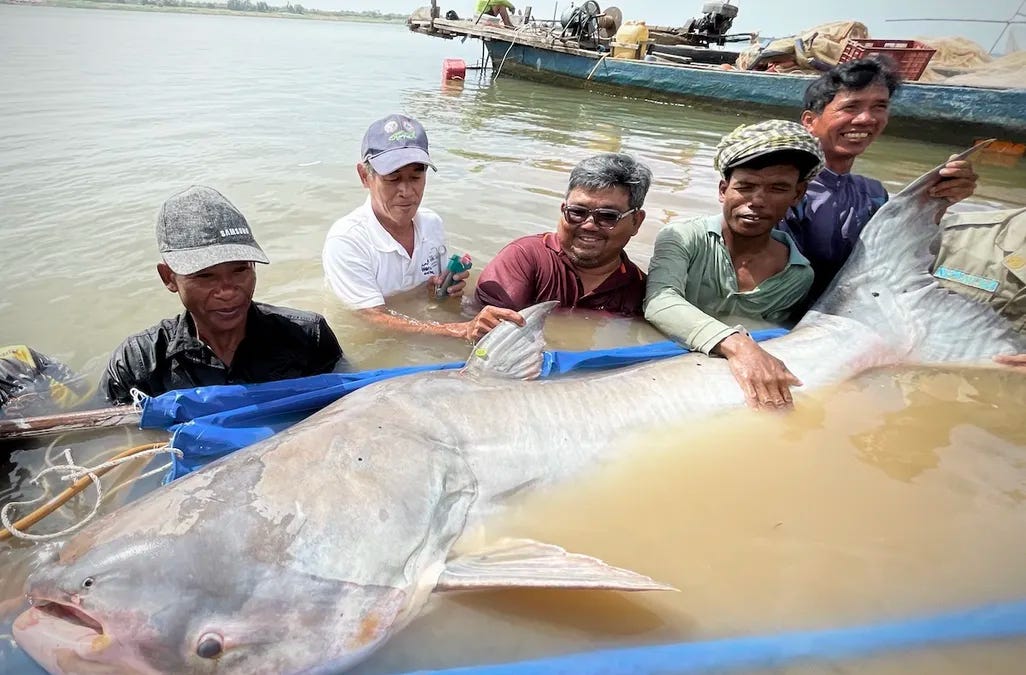
The Mekong illustrates the cumulative consequences of intensive development. According to the Stimson Center’s Mekong Dam Monitor, hundreds of dams across the basin have altered flows, trapped sediment, accelerated riverbank erosion, disrupted fish migration, deepened salt intrusion, and increased pressure on fisheries, agriculture, and wetlands in the Mekong Delta.
Hydropower has expanded electricity access and supported economic development, including Laos’ ambition to become the “Battery of Southeast Asia.” But the Mekong also shows the limits of evaluating projects individually when their combined effects reshape an entire river system.
The Salween offers a different warning. As one of Asia’s last major free-flowing rivers, it remains comparatively intact but faces rising hydropower and mining pressure. It shows why preventive governance matters: ecological systems should be protected before irreversible changes occur.
The Irrawaddy shows that the challenge is not limited to transboundary rivers. Myanmar’s largest river sustains agriculture, fisheries, and millions of livelihoods, yet it also has the highest concentration of mining sites in Mainland Southeast Asia. Together with proposed hydropower projects, land-use change, and climate pressures, these cumulative impacts underscore the need for basin-wide governance and long-term ecological assessment.
The Stimson Center’s River Basins Dashboard identifies 2,699 mining sites on or near rivers across Mainland Southeast Asia, including substantial activity in the Mekong and Irrawaddy basins. Rare earth, gold, and other minerals are essential for renewable energy, electric vehicles, and electronics, but poorly managed extraction can introduce heavy metals, disrupt sediment systems, degrade forests, and harm downstream communities.
Together, these basins reveal a fundamental lesson: environmental impacts accumulate across landscapes and borders, while governance often remains limited to individual projects and jurisdictions.
The challenge of the Anthropocene is to ensure that our institutions see as comprehensively as the systems they seek to govern.
Toward Planetary Development Governance
The solution is not to weaken national sovereignty or create a single global authority. Nations must retain the ability to develop and improve living standards. But sovereignty in the Anthropocene must evolve from an exclusive right to control territory into a responsibility to protect shared ecological systems.
A decision made within one country can affect rivers, forests, climate systems, and communities beyond its borders. Recognizing these connections does not diminish sovereignty; it strengthens governance by aligning national decisions with ecological reality.
The future requires a development paradigm that treats economic progress, environmental protection, and human well-being as mutually dependent. The goal is not to slow advancement, but to ensure that its ecological foundations are not destroyed.
The river sees the ecosystem in its entirety. Governance often does not.
An ASEAN Op