
The Philosophy of the Moringa Leaf: The Logo for Muhammadiyah's Tanwir and 114th Anniversary
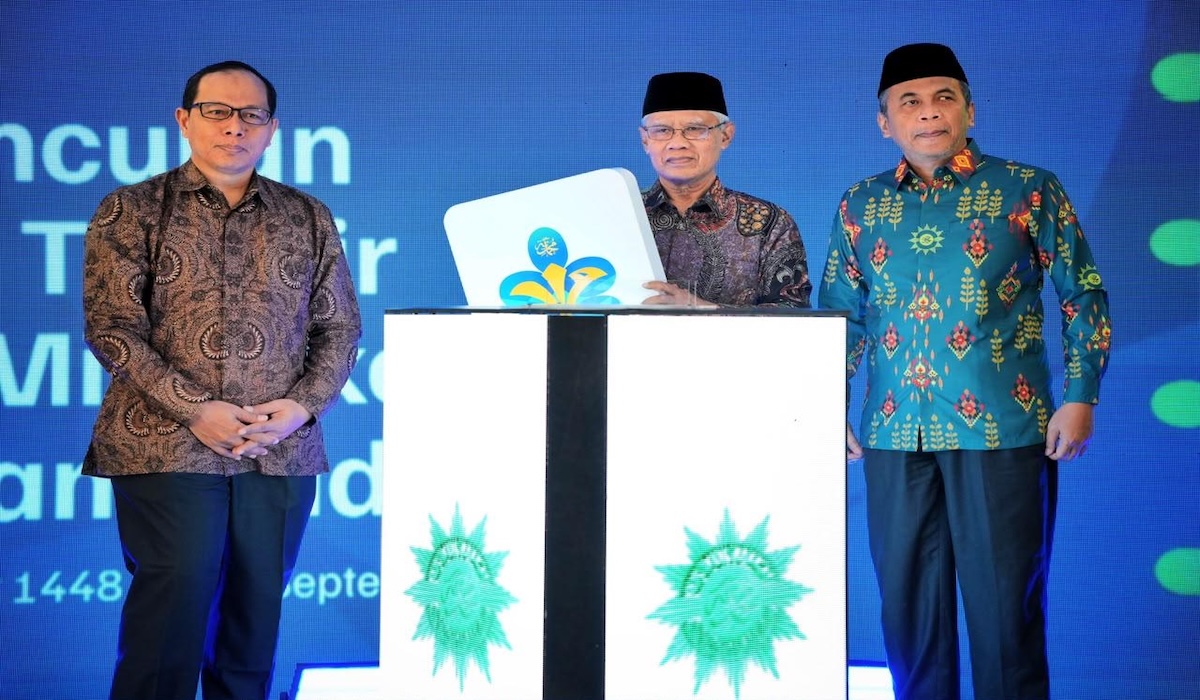
There was something unusual about the launch of the Logo for Tanwir and the 114th Anniversary of Muhammadiyah at the PP Muhammadiyah Office in Yogyakarta on Saturday (12/9). This Islamic organisation, which is over a century old, has chosen the Moringa leaf as its logo.
The General Chairman of PP Muhammadiyah, Haedar Nasherek, overturned the stigma of old proverbs. In his view, the plant, which grows abundantly in Palu, Central Sulawesi—the host of Tanwir 2026—is positioned as a ‘miracle tree’ that holds three vital life forces of the movement:
First, the Moringa tree is resilient and can grow easily without complex care. This reflects the character of Muhammadiyah as being simple yet adaptive, rather than merely a display of populism.
Second, Moringa symbolises breadth of insight, thought, social interaction, and the organisation’s reach. Furthermore, Moringa leaves can be processed into nutrition and traditional Indonesian dishes.
“Moringa is a metaphor for a movement that provides concrete benefits for the welfare of the community,” he stated firmly.
On this occasion, Haedar invited all members of the organisation to undergo a “mi’raj of thought,” a process of leaping from literal meaning towards philosophical depth. He analysed the logo through three lenses of the philosophy of meaning:
First, a linguistic philosophy approach related to referential meaning. Through this approach, Muhammadiyah members are invited to look deeper into the meaning behind the created forms or symbols.
Second, an ideasional approach which views that a symbol is born from ideas and notions. According to Haedar, the ability to read symbols is closely related to the ability to generate ideas. “Those who have many ideas are those who can produce many symbols and interpret them. Conversely, those without ideas are those who cannot read symbols,” said Haedar.
Third, an existentialist approach that views Muhammadiyah as the existence of an Islamic Movement that carries the essence of enlightenment. In this third point, he linked it to the theory of theistic existentialism, which views humans as beings possessing freedom and responsibility in living their existence, yet inseparable from religious matters and God. “And faith is the link between human existence and their God,” he emphasised.
At the conclusion, Haedar re-emphasised the importance of maintaining organisational identity. This identity is key to ensuring Muhammadiyah can maintain its strength, resilience, and relevance after more than a century of activity.
Referring to the organisational identity theory of Albert and Whetten, Haedar explained that there are at least three main elements an organisation must possess. First, the central value, which is the core of the organisation: Al-Islam. Second, the enduring value, so that the organisational identity does not easily change with the passing of time. Third, the distinctive value that gives the organisation a unique character compared to others.
“An organisation must have an identity with values that are ‘shalihun fi kulli zaman wa makan’ (valid in every time and place). This means it must be adaptive to the development of the times and circumstances,” he advised.
Therefore, Haedar reminded that Muhammadiyah must continue to nurture its fundamental values while remaining open to and following the changes of the era. In this context, it must be emphasised that progress does not mean losing identity, just as maintaining identity does not mean closing oneself off from the development of the times.
He asserted that Muhammaradiyah must continue to possess progressive Islamic thoughts, attitudes, resources, and perspectives. All elements of the organisation need to nurture these values so that Muhammadiyah remains a movement with value, while also being able to present meaningful aesthetics.