
The Philosophy and Reflection of the Youth Pledge of 28 October 1928
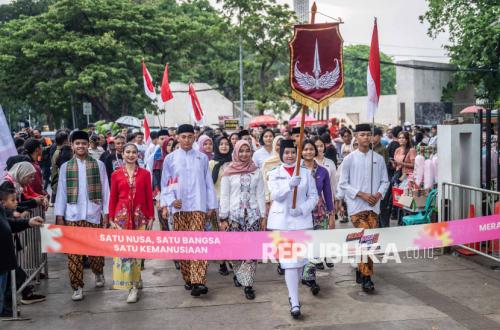
The significance of the Youth Pledge lies not only in the wording of its three declarations, but also in the change in how young people viewed the struggle. They no longer saw regional interests as the ultimate goal, but began to regard themselves as part of one nation striving for independence. The Youth Pledge is one of the key milestones in the history of Indonesia’s struggle.
This historic event took place on 28 October 1928, when young people from different organisations, regions, ethnic groups and backgrounds gathered to unite their resolve in the struggle for Indonesian independence. National awareness had begun to develop through education, youth organisations, the press and the national movement. Organisations such as Jong Java, Jong Sumatranen Bond, Jong Celebes and Jong Ambon, along with various other youth associations, provided space for ideas about the nation’s future to take shape.
At the time, Indonesia was still under Dutch colonial rule. Resistance to colonialism had taken place in various regions, but struggles divided by territory and regional identity faced major challenges. This situation encouraged the realisation that independence could not be pursued effectively without unity and a shared aspiration.
The culmination of this growing awareness came at the Second Youth Congress, held on 27–28 October 1928 in Batavia, now Jakarta. The congress brought together various youth groups to discuss the importance of unity, national identity and a unifying language.
A key outcome of the congress was the pledge that later became known as the Youth Pledge. It affirmed that differences of region, ethnicity and language should not prevent the creation of one nation with a shared purpose. The Youth Pledge can be understood as a milestone in strengthening national identity.
The event showed that unity does not mean erasing differences, but bringing them together in pursuit of a greater aspiration. The Youth Pledge also provided a moral foundation for the subsequent struggle, which ultimately led to Indonesia’s Proclamation of Independence on 17 August 1945.
Several figures took part in this historic event. They included:
Soegondo Djojopoespito
Soegondo Djojopoespito led the Second Youth Congress. As congress chairman, he helped guide the proceedings so that participants could reach agreement on the importance of national unity. His role shows that leadership in a struggle involves not only courage, but also the ability to foster dialogue, bring ideas together and guide different groups towards a shared goal.
Mohammad Yamin
Mohammad Yamin was one of the key figures in the development of Indonesian national thought. He is known for his role in shaping the ideas of one homeland, one nation and a unifying language.
His thinking helped strengthen the awareness that people from across the archipelago shared the same national future. Mohammad Yamin can be seen as an example of an intellectual young person who used thought, language and political ideas to advance the national struggle.
Wage Rudolf Supratman
Wage Rudolf Supratman, known as W.R. Supratman, played an important role through the song “Indonesia Raya”. He performed the song on the violin at the Second Youth Congress on 28 October 1928. Its performance became a powerful symbol of the aspirations for independence and national identity. Music served to inspire enthusiasm, strengthen emotional bonds and foster pride in being Indonesian.
Djoko Marsaid
Djoko Marsaid is known as the vice-chairman of the Second Youth Congress. He contributed to the leadership and organisation of the congress, which brought together various youth organisations. His role shows that the success of a movement depends not on one person alone, but on cooperation and collective responsibility.
Amir Sjarifuddin
Amir Sjarifuddin was one of the figures involved in the Second Youth Congress. He was active in the youth movement and took part in organisational activities and the congress discussions. The involvement of figures such as Amir demonstrates the breadth of youth support for the idea of national unity.
The collective role of young people
The Youth Pledge also involved many participants and organisations. Other figures associated with its organisation and the youth movement included Soenario and Sie Kong Liong, as well as representatives of various youth organisations. The Youth Pledge should not be understood as the achievement of just one or two figures. It was the result of a long process of dialogue, courage and the willingness of different youth groups to build a shared identity.
The important lesson is that major change requires both strong leadership and collective participation. Unity emerges when everyone is willing to contribute their abilities for the good of the nation.
One homeland: Indonesia
The first pledge affirmed the recognition of one homeland: Indonesia. It expressed the awareness that the entire archipelago forms part of a shared living space. A homeland is not merely a geographical area, but a place where shared life, culture, history and aspirations take root. Bringing this pledge’s spirit into the present means protecting Indonesia’s territorial integrity, safeguarding the environment, respecting people in different regions and rejecting actions that threaten national unity.
One nation: the Indonesian nation
The second pledge affirmed the recognition of one nation: the Indonesian nation. It reflected the belief that national identity can unite people with diverse ethnicities, religions, regional languages, traditions and cultures.
People can remain proud of their regions of origin without diminishing their commitment to Indonesia. In modern life, this principle reminds us not to use differences as a reason to demean, discriminate against or show hostility towards other groups. Unity must be built through respect for human dignity, equality and a spirit of mutual cooperation.
A unifying language: Indonesian
The third pledge affirmed Indonesian as the unifying language.
Language is a marker of a nation, and Indonesian has a strategic role in connecting people from different backgrounds.
It serves as a means of national communication, education, the development of knowledge, the expression of ideas and the creation of a shared public sphere. The choice of Indonesian as the unifying language was a visionary decision.
A common language enables people to communicate without erasing the richness of regional languages. Sundanese, Javanese, Minangkabau, Bugis and other regional languages remain an important part of Indonesia’s cultural wealth. In other words, Indonesian strengthens national communication, while regional languages preserve the identity and cultural heritage of the country’s diverse peoples.
The text of the Youth Pledge
The Youth Pledge is widely known in the following form:
We, the sons and daughters of Indonesia, acknowledge one homeland, the land of Indonesia.
We, the sons and daughters of Indonesia, acknowledge one nation, the Indonesian nation.
We, the sons and daughters of Indonesia, uphold the language of unity, Indonesian.
The three pledges are closely interconnected: the homeland represents a shared space, the nation affirms a common identity, and the unifying language provides a means of communication linking all people.
Philosophically, the Youth Pledge teaches that unity must be built through awareness, commitment and concrete action. Unity is not merely a slogan repeated at each 28 October commemoration, but a value that must be put into practice in everyday life.
Unity amid difference
The spirit of the Youth Pledge teaches that differences are a reality to be managed with maturity. Young people should cultivate mutual respect, prioritise dialogue, verify information and reject hate speech and discrimination.
More than 90 years after the Youth Pledge, Indonesia continues to face challenges in maintaining unity. Differences in political views, group identities and economic interests, as well as the spread of misinformation, can lead to division if not handled wisely. Unity does not require everyone to share the same opinion. Rather, unity is strengthened when differences of opinion are expressed responsibly and resolved peacefully.
Agents of change
The young people of 1928 showed that youth is no barrier to playing an important role in history. They had limited power in confronting colonial rule, yet were able to develop ideas that transcended the interests of their individual groups.
Today’s young people face different challenges. They are expected to develop education, knowledge, technology, creativity, integrity and social concern. Technology should be used to broaden knowledge, build collaboration and create solutions to society’s problems. The spirit of the Youth Pledge should be translated into concrete action: studying diligently, working professionally, upholding ethics, helping communities, preserving culture and taking part in national development.
Nationalism as national identity
The nationalism inherited from the Youth Pledge is not an attitude of believing one’s nation to be superior to others. It means loving one’s homeland, preserving unity, respecting culture and being willing to contribute to shared progress.
Love of country should be reflected in everyday behaviour, such as obeying the law, looking after public facilities, respecting the rights of others, caring for the environment, and opposing corruption and abuse of power. This spirit is also relevant to building a developed, just and prosperous Indonesia. The independence won by earlier generations must be carried forward by improving the quality of education, strengthening the people’s economy, widening access to opportunity and developing the nation’s character.
Source: jawawa.id (https://jawawa.id/newsitem/the-philosophy-and-reflection-of-the-youth-pledge-of-28-october-1928-1793159532)
Originally published by Republika (https://opini.republika.co.id/berita/tnljlk451/filosofi-dan-refleksi-peristiwa-sumpah-pemuda-28-oktober-1928), translated from Indonesian