
The Philosophy and Meaning of the Mejejaitan Tradition in Bali
When visiting Bali, one frequently observes offerings placed in various corners, from the front of houses to the roadside. These offerings are understood as sacred presentations to Ida Sang Hyang Widhi Wasa and His manifestations.
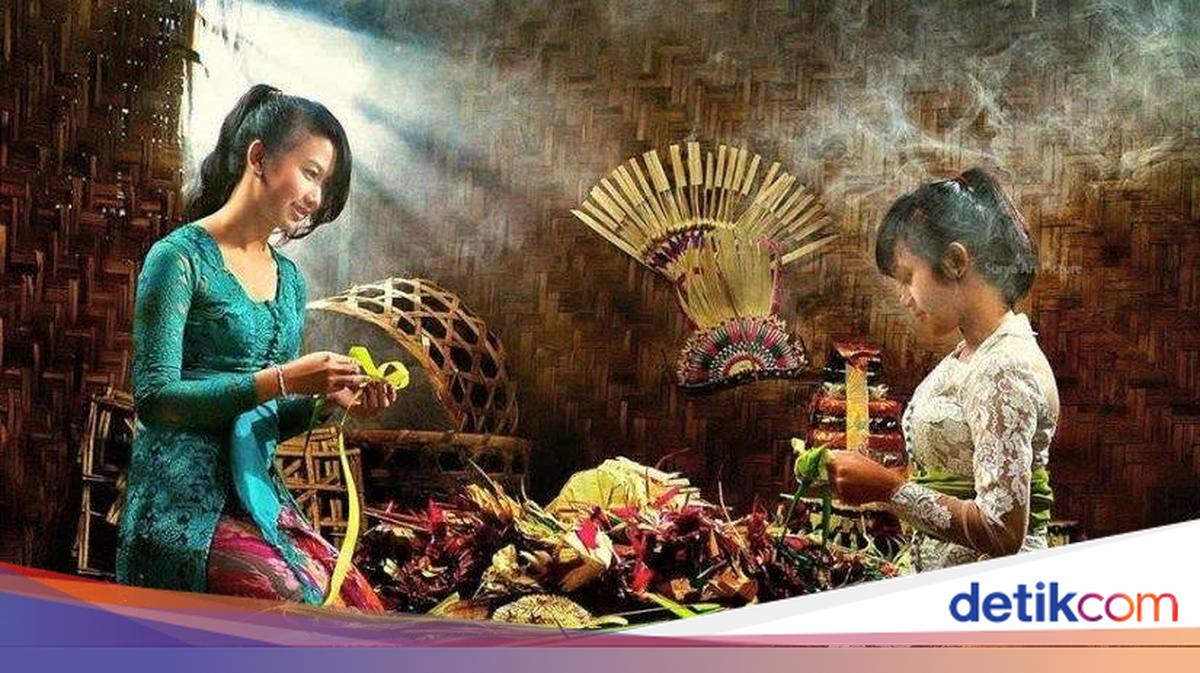
Before becoming canang sari or various other types of banten, these offerings undergo a creation process known as Mejejaitan.
In Balinese Hindu teachings, the Mejejaitan tradition is generally performed by women and is passed down through generations. These offerings are not only prepared during major religious holidays but are also part of daily routines.
Philosophy of the Mejejaitan Tradition
According to the Sejarah Hindu website, the Mejejaitan tradition is defined as the activity of arranging and sewing young coconut leaves, or janur, into various forms of sacred offerings (banten) for yadnya ceremonies.
In Bali, the Mejejaitan tradition holds spiritual value and symbolic meaning closely linked to the principles of life. This tradition is carried out as a form of devotion to God, fulfilling spiritual obligations that must be grounded in perseverance and sincerity.
Furthermore, banten or offerings are made using natural materials, such as coconut leaves, flowers, and bamboo, reflecting the harmonious relationship between humans and nature, in accordance with the Tri Hita Karana concept.
Meaning of the Mejejaitan Tradition
For Hindus, prayer is a spiritual obligation to maintain a connection with God that must not be neglected. Therefore, the process of preparing banten should be performed with complete sincerity as an expression of gratitude and a reminder that humans must not forget their Creator.
In practice, the Mejejising tradition is a fundamental skill that Balinese women are generally expected to possess from an early age. The creation of banten or offerings is considered quite complex, requiring high levels of precision.
Consequently, the Mejejaitan tradition also serves as a means to train patience and self-control, while simultaneously strengthening social bonds.
Source: jawawa.id (https://jawawa.id/newsitem/the-philosophy-and-meaning-of-the-mejejaitan-tradition-in-bali-1782341434)
Originally published by detikBali (https://www.detik.com/bali/budaya/d-8545890/filosofi-dan-makna-tradisi-mejejaitan-di-bali), translated from Indonesian