
The Phenomenon of Chinese Citizens Embracing Islam En Masse, Here Are the Reasons
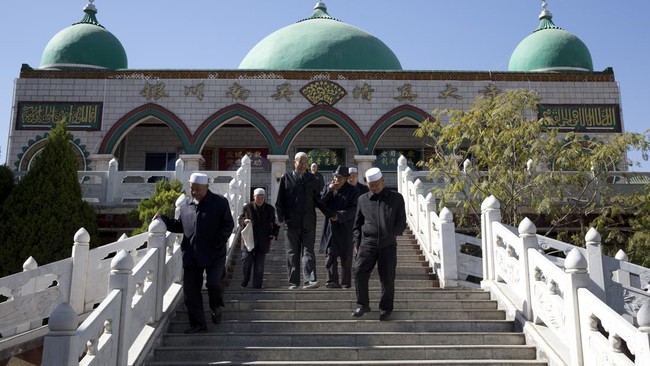
History records that Islam is not a new presence on the Chinese mainland, having established itself in the country since the 7th century AD. However, there was one crucial phase in the historical timeline where Chinese citizens converted to Islam en masse.
This massive wave of converts occurred during the rule of the Ming Dynasty (1368–1398 AD), specifically under the leadership of its founding emperor, Zhu Yuanzhang.
How did this significant event occur? According to research titled “Islam in Imperial China” (201 $ ext{9}$), the era of Emperor Zhu Yuanzhang’s rule is known as one of the most conducive phases for the development of Islam in China. In fact, this era is often referred to as the golden age for the Muslim community there. During this period, Islam was no longer viewed merely as an isolated minority religion, but rather integrated into the social, political, and administrative structures of the empire.
The primary cause of this phenomenon of Chinese citizens converting to Islam is inseparable from the emperor’s political policies, which were highly tolerant and protective of Muslims. Emperor Zhu Yuanzhang openly expressed great admiration for Islamic teachings and the figure of the Prophet Muhammad (PBUH). As a mark of respect, the emperor even ordered the construction of several mosques within his territories, including the magnificent Jinjue Mosque in Nanjing.
This full support from the supreme ruler acted as the primary catalyst. With guarantees of security and significant freedom of movement provided by the empire, Islamic proselytisation developed rapidly and systemically. The spread of the religion was achieved through fluid cultural approaches—ranging from the individual and community levels to villages, clans, and trade social networks.
Interestingly, the massive number of local Chinese citizens embracing Islam was also driven by a process of cultural assimilation known as Sinicisation. “Alongside this support, a process of Sinicisation occurred within the Hui Muslim community, or cultural assimilation, which slowly caused parts of their Islamic cultural identity to merge into Chinese culture,” stated the research report “Islam in Imperial China: Sinicization of Minority Muslims and Synthesis of Thought.”
This cultural blending made Islamic teachings more easily accepted by the local Chinese population at the time, as it was not perceived as erasing their ancestral cultural identity.
The most historical and monumental evidence of the emperor’s admiration is reflected in a poetic text of praise he wrote himself, known as “The Hundred-word Eulogy.” In this poetic verse, Emperor Zhu Yuanzhang praised the Prophet Muhammad (PBUH) as a universal, wise, and most noble figure in the world who brought mercy to all creation. Through this poem, historians assess that the emperor possessed a deep understanding of Islamic values, even though he did not personally convert.
Thanks to the combination of political protection from the empire, inclusive proselytisation methods, and harmonious cultural assimilation, Chinese citizens during that era flocked to Islam, ultimately forming a strong foundation for the Chinese Muslim community (such as the Hui ethnic group) that persists to this day.
Source: jawawa.id (https://jawawa.id/newsitem/the-phenomenon-of-chinese-citizens-embracing-islam-en-masse-here-are-the-reasons-1782528633)
Originally published by CNBC Indonesia (https://www.cnbcindonesia.com/lifestyle/20260626175658-33-746092/fenomena-warga-china-ramai-ramai-masuk-islam-ini-alasannya), translated from Indonesian