
The Phenomenon of Chinese Citizens Converting to Islam in Large Numbers: What Is Behind It?
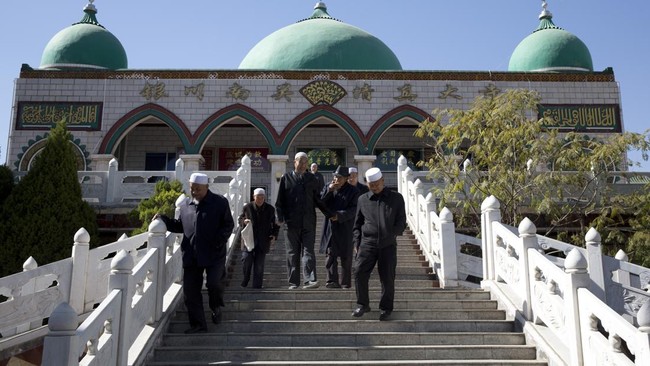
History records that Islam once developed very rapidly in China during the reign of Zhu Yuanzhang, founder of the Ming Dynasty (1368–1398). Under his leadership, many local residents became interested in and eventually decided to embrace Islam.
At that time, Islam was no longer merely a religion for a small group. Its development allowed Islam to exert significant influence and occupy an important position in various aspects of life, both socially and politically in China.
Research entitled Islam in Imperial China (2019) notes that the early Ming Dynasty was one of the most conducive periods for the growth of the Muslim community in the country. During this period, the number of people embracing Islam increased quite significantly.
The spread of Islam occurred through various social channels. Da’wah was carried out personally and reached local communities, from villages and family clans to trade networks. It was this social interaction that made Islam increasingly widely known and attracted the interest of many people.
In addition to social factors, state support also helped accelerate the development of Islam. The Ming Dynasty government encouraged the construction of mosques and religious learning centres. Muslim scholars and intellectuals were also given space to develop within society.
Moreover, the Muslim community began to be involved in the imperial government structure. Many of them were recruited to fill various important positions, such as state administration, the military, and even the palace environment.
In practice, a number of Muslim figures were entrusted with strategic positions such as imperial advisers, diplomatic envoys, palace eunuchs, and regional governors. This involvement made the Muslim community increasingly influential in the political and social life of the period.
Traces of acceptance of Islamic culture can even be seen in imperial artefacts. Several palace objects from the Ming Dynasty era are known to feature Arabic and Persian calligraphy decorations, indicating the influence of Islamic tradition within the royal environment.
Nevertheless, support for Islam also went hand in hand with the imposition of a process of cultural assimilation. The Muslim community in China gradually adapted to local culture.
Research entitled Islam in Imperial China: Sinicization of Minority Muslims and Synthesis of Chinese Philosophy and Islamic Tradition (2019) states that this process is known as sinicisation, namely a cultural adaptation that caused part of the Hui Muslim cultural identity to blend with Chinese traditions.
One of the most intriguing pieces of evidence of the close relationship between the Ming empire and Islam is a poem of praise for the Prophet Muhammad known as the Hundred-Word Eulogy. The text is often associated with the reign of Zhu Yuanzhang and describes the Prophet Muhammad as a wise figure who brought mercy to all the worlds.
According to research entitled Praising the Prophet Muhammad in China, the existence of this poem shows that Zhu Yuanzhang had an understanding of Islamic teachings, even though he himself did not become a follower of the religion.
The eulogy also indicates that at that time Islam was regarded as a moral and spiritual force that had a place in the life of Chinese society.
Source: jawawa.id (https://jawawa.id/newsitem/the-phenomenon-of-chinese-citizens-converting-to-islam-in-large-numbers-what-is-behind-it-1788695450)
Originally published by CNBC Indonesia (https://www.cnbcindonesia.com/lifestyle/20260906150834-33-765503/fenomena-warga-china-ramai-ramai-masuk-islam-ada-apa), translated from Indonesian