
The People's Trust
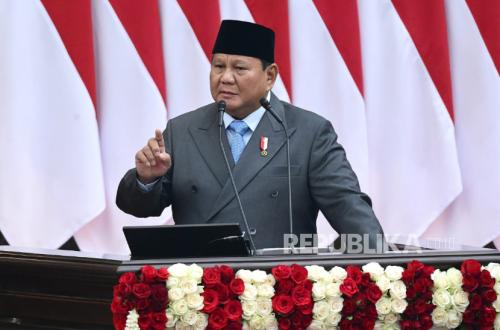
In his state address on 14 August 2026, President Prabowo Subianto made a statement worthy of deeper reflection: BUMN do not belong to directors, nor to commissioners, nor are they a source of funds for those in power. The President also stated that the government had identified 1,074 BUMN along with their subsidiaries, had closed 290, and was targeting a maximum of 300 by the end of 2026.
This figure is important to know. However, the fundamental issue does not lie in how many companies are closed. The question instead focuses on who actually owns this nation’s wealth. The answer appears simple: the people. Yet, in the practice of power, that simple answer can become obscured.
Social psychology recognises the concept of psychological ownership, a state in which a person feels something as ‘mine’, even though legally it is not theirs. This feeling can grow because someone has long controlled, used, or made decisions over an object. In organisations, a sense of ownership can bring benefits. A manager who feels bound to their institution may work more diligently and protect its reputation. Problems arise when the sense of ownership turns into a claim of possession: institutional facilities are treated like personal facilities, positions are considered rights, and public resources are viewed as space that may be used for the interests of one’s own group.
At that point, psychological ownership can meet a sense of entitlement, the belief that someone deserves certain privileges because of the position they hold. Power is then no longer read primarily as responsibility, but as legitimacy to enjoy special rights. This is one of the psychological risks of power. The longer someone remains at the centre of decision-making, the easier the boundary between ‘what I manage’ and ‘what I own’ becomes blurred. Yet BUMN were not established to enrich their managers. The state grants authority so that public wealth produces public benefit.
Islam has a very firm concept to prevent this blurring: amanah, or trust. Allah SWT says in Surah An-Nisa verse 58 that trusts should be delivered to those entitled to receive them and that justice should be upheld. Amanah is not merely personal honesty. Amanah contains the obligation to ensure that what is entrusted is used for the right purpose.
In the context of state wealth, directors, commissioners, ministry officials, and holders of political power are managers. They are not the ultimate owners. A position does not enlarge a person’s rights over public wealth; rather, it enlarges their accountability. The greater the assets managed, the greater the trust borne. Therefore, reforming BUMN cannot be resolved solely through institutional restructuring. Closing unproductive companies, trimming organisational layers, and reducing bureaucratic costs are indeed important. However, structural change without a change in the psychology of power can give rise to old problems in new forms.
Social psychology also recognises moral disengagement, the process by which someone justifies behaviour that actually contradicts the moral standards they believe in. Misuse of facilities, for example, can begin with seemingly light excuses: ‘everyone else does it’, ‘this is already customary’, ‘I work hard for the country’, or ‘the amount is insignificant’. Small rationalisations that are allowed to persist can develop into group norms. When the organisational environment condones such behaviour, people learn that deviation is part of habit. What was once wrong becomes ordinary and eventually considered normal.
This is where institutional integrity is tested. The behaviour of elites also has exemplary power. Bandura, through his social learning theory, states that people learn not only from written rules, but from what high-status figures do. If leaders are frugal and transparent, that becomes the norm. If leaders are permissive towards facilities, permissiveness is easily imitated.
The issue is not only whether someone directly takes state money. What must also be avoided is the emergence of an organisational culture in which public wealth slowly becomes the personal property of those in power. The Qur’an gives a stern warning in Surah Al-Baqarah verse 188 against consuming one another’s wealth unjustly and using positions of power to obtain wealth improperly. This verse brings wealth and power together in a single ethical space. Power can be a tool for the common good, but it can also become a means to justify improper taking.
BUMN reform should not stop at numerical efficiency; it must become a cultural reform. The measure of success is not only how many companies are closed or how much cost is saved, but also whether the orientation of management changes: from elite interests towards the welfare of the people. BUMN must be present through better services, healthy employment, economic resilience, fair prices, and tangible benefits for society. If large profits only increase the comfort of managers while the people do not feel the benefits, then something is wrong in interpreting public ownership.
In social psychology, trust in institutions grows when the public sees procedural justice: decisions are made transparently, rules are applied consistently, and managers do not place themselves above the rules they set.