
The 'Paid But Not Replaced' Hajj Concept: Protecting Pilgrims' Rights or Closing Commercialisation Loopholes?
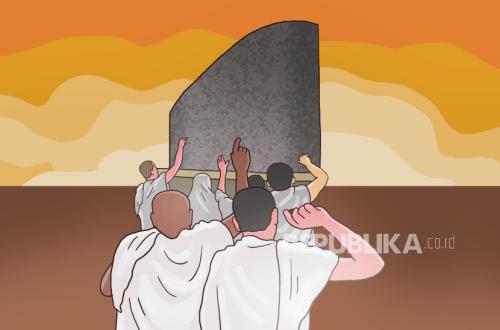
The discourse surrounding the implementation of a ‘lunas tidak ganti’ (paid but not replaced) scheme in the organisation of the Hajj pilgrimage needs careful analysis, as it touches upon two equally important legal interests. These two interests are the protection of pilgrims’ rights and the realisation of fair Hajj management.
The concept of ‘lunas tidak ganti’ does not refer to ‘lunas tunda’ (paid but deferred), but rather to a situation where a pilgrim has fully paid the Hajj Travel Cost (BIPIH) but postpones their departure for specific reasons. In this condition, the right to depart remains attached to the pilgrim concerned and cannot be transferred to another party. Exceptions only apply in circumstances exhaustively regulated by legislation, such as replacement by an heir if the pilgrim dies or suffers a permanent illness rendering them unable to perform the pilgrimage.
In administrative law, this concept aligns with the principle that the ‘right to a Hajj quota is an individual right arising from the registration process according to the national queue’, not an object that can be freely transferred. The quota system is built upon the principles of justice, legal certainty, and equality so that every citizen obtains an equal opportunity to perform the Hajj according to their registration order. Therefore, any mechanism allowing the substitution of a person outside reasons justified by law has the potential to disrupt the integrity of the national queue system and contravenes the principle of equal treatment before the law.
The ‘Paid, Deferred, Replaced’ Concept
The issue becomes more complex when a practice known as ‘lunas tunda ganti’ (paid, deferred, replaced) emerges. This is a condition where a pilgrim pays the BIPIH but postpones departure, while the departure seat is then utilised by another party through various specific schemes. If such a practice truly occurs, a suspicion arises that the payment is no longer solely intended to ensure the concerned pilgrim’s departure, but has become an instrument to ‘store’ or ‘secure’ a departure right that can be transferred at any time.
From a legal perspective, this practice has the potential to create injustice for other pilgrims who continue to wait according to their queue number. Normatively, the Law on the Organisation of the Hajj and Umrah Pilgrimage is built on the principles of justice, transparency, accountability, professionalism, and non-discrimination. Pilgrims’ rights must indeed be protected, including the right to receive services in the event of force majeure causing a departure delay. However, the protection of these rights cannot be interpreted as legitimising the trading or transferring of departure rights to other parties outside the mechanisms determined by law. Thus, the individual right to depart must be strictly distinguished from the right to transfer the quota to another party.
If the practice of making the payment and deferral scheme a form of ‘pilgrim savings investment’ truly exists, then the issue is no longer merely an administrative matter but has touched upon aspects of good governance. The state is obliged to ensure that every administrative policy does not open up space for moral hazard, conflicts of interest, or practices that could potentially disrupt the national queue principle. This is because the Hajj quota system is essentially an instrument for distributing rights that must be carried out objectively and free from practices that benefit certain groups.
On the other hand, caution is also needed so that the ‘paid but not replaced’ policy does not inadvertently reduce protection for pilgrims who have legitimate reasons to postpone their departure, such as temporary illness, disasters, security disturbances, or other circumstances beyond their control. Under such conditions, the state remains obliged to guarantee that the pilgrim’s right to depart is not lost, as long as the postponement is carried out according to established mechanisms and does not cause losses to other pilgrims in the queue. In other words, the protection of individual rights must go hand in hand with the protection of the public interest.
Clearer regulations are needed regarding the boundary between ‘departure deferral (paid but deferred)’ and ‘transfer of departure rights (replacement)’. Implementing regulations must explicitly affirm that a deferral only maintains the concerned pilgrim’s right without opening the opportunity for replacement by another party, except in circumstances exhaustively regulated by law, such as replacement by an heir due to death or permanent illness. Strengthening the digital system, transparency of the waiting list, and supervision by the Ministry of Religious Affairs and the Hajj Financial Management Agency are also important instruments to prevent the misuse of this mechanism.
Ultimately, the substance of the issue is not merely whether a pilgrim may postpone departure after making full payment, but how to ensure that every policy continues to respect the principles of justice, legal certainty, and the integrity of the national queue system. The ‘paid not replaced’ concept can be seen as a legal instrument to maintain the purity of the Hajj quota system, provided it is applied proportionally, transparently, and does not eliminate the rights of pilgrims who legitimately obtain the opportunity to perform the Hajj pilgrimage.