
The Origins of Rasi, a Rice Substitute Sustained for More Than a Century in Cireundeu Traditional Village
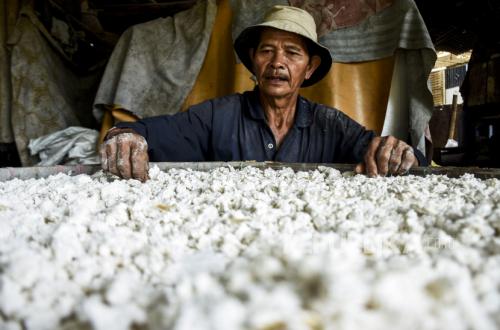
CIMAHI — Rasi, or cassava rice, has been the staple food of residents of Cireundeu Traditional Village, in Leuwigajah sub-district, South Cimahi district, Cimahi, West Java, for more than a century. It has also been designated an Intangible Cultural Heritage (WBTB) by the West Java provincial government.
For more than a century, the people of Cireundeu have not relied on rice made from paddy as their main food. Instead, they process cassava into granules, which are then cooked like rice. Its appearance is not much different from that of paddy rice.
“Cimahi has only two items that have been included as Intangible Cultural Heritage, and Rasi is one of them. It is recognised at provincial level,” said Lucky Sugih Maulidin, head of the Culture and Tourism Division at Cimahi’s Department of Culture, Tourism, Youth and Sport, on Sunday (8 November 2026).
Rasi is thought to have become the staple food of Cireundeu Traditional Village around 1918. One of its pioneers was Aki Ali, who believed that his community’s food sources should be protected while the people were under colonial rule.
At the time, residents were in a difficult position as the colonial authorities controlled community plantations. The village’s mountainous location also meant that residents could not grow rice in paddy fields.
Village elders and residents therefore decided it was time to move away from rice as their staple and turn to tubers such as cassava. Six years later, in 1924, they developed cassava into a rice-like food.
“Preserving Rasi, which has a long history for the people of Cireundeu Village, is a shared responsibility for the government, the community and other stakeholders,” Lucky said.
Cireundeu Traditional Village is now home to 60 families, or around 240 people, and is not entirely closed off from modern life. Modernisation has had some influence, but residents intend to maintain their habit of eating cassava Rasi, an inheritance from their ancestors.
“We have made a commitment with the next generation, including the children, that this food self-sufficiency must continue to be maintained,” said Abah Widi, an elder of Cireundeu Traditional Village.
Residents are not concerned about running out of cassava. The forest in the area covers around 50 hectares, although not all of it can be cultivated for cassava and other crops.
Source: jawawa.id (https://jawawa.id/newsitem/the-origins-of-rasi-a-rice-substitute-sustained-for-more-than-a-century-in-cireundeu-traditional-village-1794203470)
Originally published by Republika (https://rejabar.republika.co.id/berita/to7y0l487/asalusul-rasi-pengganti-nasi-yang-lestari-lebih-dari-1-abad-di-kampung-adat-cireundeu), translated from Indonesian