
The Origins of Bali’s ‘Island of a Thousand Temples’ and Lombok’s ‘Island of a Thousand Mosques’ Nicknames
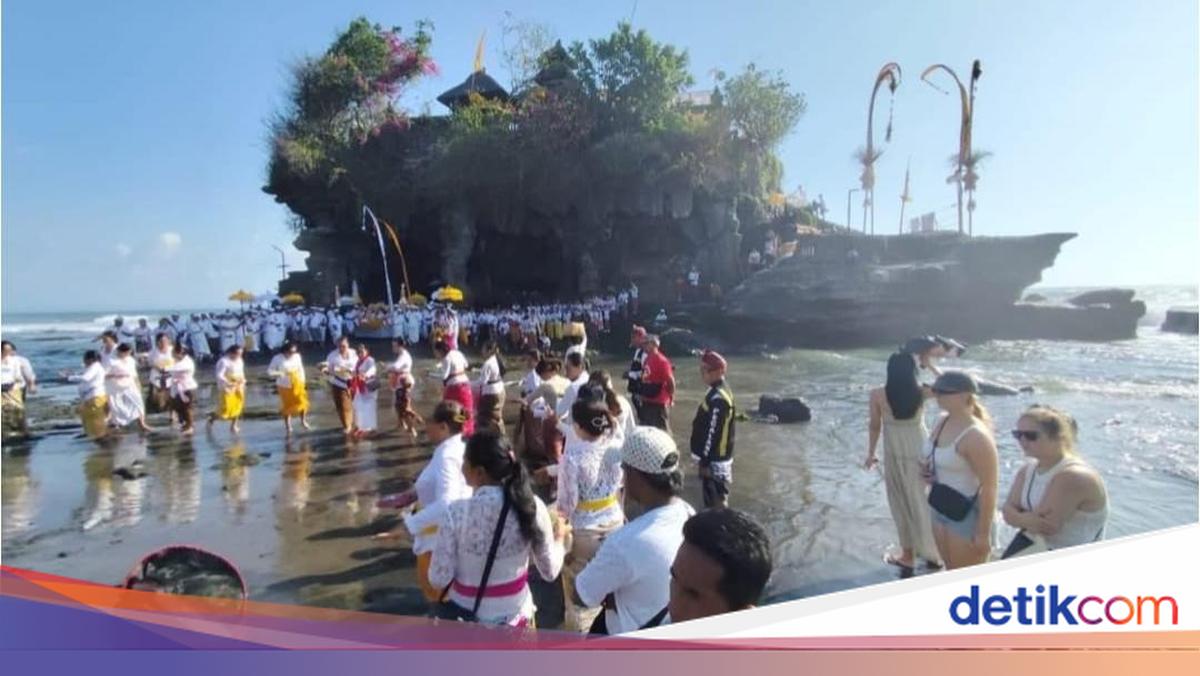
Bali and Lombok each have a nickname closely associated with their identity. Bali is known as the Island of a Thousand Temples, while Lombok is called the Island of a Thousand Mosques.
The nicknames refer not only to the large numbers of places of worship on the two islands, but also reflect the communities, traditions and cultures that have developed alongside everyday life.
What lies behind these names, and what do they mean?
Why is Bali called the Island of a Thousand Temples?
The nickname Island of a Thousand Temples is strongly associated with Bali. It can be understood literally: the Island of the Gods is home to thousands of temples.
Temples are not only purpose-built places of worship. They can also be found beside people’s homes, serving as shrines. Almost every Hindu family has a dedicated place for worship, such as on the top floor of a house or in its grounds.
Shrines are also found in each banjar, or traditional community neighbourhood, and at public facilities including schools, health centres, markets and government service offices. Large and small temples can be found near the headwaters of rice fields, as well as in the mountains, valleys and along the coast. It is therefore no surprise that visitors to Bali encounter different kinds of temples throughout the island.
According to 2025 figures from the Ministry of Religious Affairs on Hindu places of worship, Bali has 4,786 temples across its regencies and municipalities. This is the highest figure of any province in Indonesia, reflecting the concentration of the country’s Hindu population in Bali.
Balinese life is closely bound up with religious rituals and Hindu customs. Temples and sacred places provide a means of expressing religious beliefs and values, including devotion to God Almighty.
The official Bali government website says the community upholds the concept of Tri Hita Karana, which seeks to maintain balance and harmony between people and God, between people, and between people and the environment. The concept is regarded as a source of peace, prosperity and happiness for Hindu communities.
How did Lombok earn the nickname Island of a Thousand Mosques?
Lombok’s nickname provides a contrast with neighbouring Bali, despite the islands’ proximity. According to the official website of Indonesia’s Ministry of Tourism, the name Island of a Thousand Mosques was coined by Effendi Zarkasih, then Director General of Islamic Community Guidance at the Ministry of Religious Affairs. He made the remark during a working visit to inaugurate Cakranegara Jami Mosque in 1970.
Effendi was struck by the number of mosques on Lombok and spontaneously called it the Island of a Thousand Mosques.
The nickname is borne out by the figures. According to records cited by Taufan Hidjaz, a lecturer at the National Institute of Technology, Lombok had 8,951 mosques: 3,767 large mosques and 5,184 smaller ones, spread across 518 villages. More recent figures from the Ministry of Religious Affairs’ SIMAS database show that West Nusa Tenggara (NTB) has 5,980 mosques and 5,638 prayer rooms across its 10 regencies and municipalities.
Lombok has also been named the world’s best halal tourism destination under the Global Muslim Travel Index (GMTI) standards in 2019. The island’s nickname reflects the predominance of the Muslim Sasak people. For them, mosques are an important part of everyday life.
Iconic temples in Bali and mosques in Lombok
Bali is home to a number of iconic temples that form part of its cultural identity and spiritual life. One is Besakih Temple in Karangasem Regency.
Known as Bali’s largest temple complex and one of the most important sacred sites for Balinese Hindus, Besakih sits on the slopes of Mount Agung. The complex comprises a number of temples used for various religious activities.
Another is Ulun Danu Beratan Temple in Tabanan Regency, on the shore of Lake Beratan. It is known for its distinctive architecture and its setting amid a mountainous landscape.
Meanwhile, Lombok has iconic mosques that reflect the development of Islam as well as the history of local communities. One is the Islamic Centre Hubbul Wathan in Mataram.
Known for its grand architecture and strikingly coloured domes, the NTB Islamic Centre is one of Lombok’s religious landmarks and is used for worship and other religious activities.
Lombok is also home to the ancient Bayan Beleq Mosque in North Lombok Regency, which holds historical significance in the development of Islam on the island. Its simple structure uses traditional materials, including woven bamboo walls and a roof made from natural materials. The mosque illustrates how Islamic teachings developed alongside the local traditions of the Sasak people.
Source: jawawa.id (https://jawawa.id/newsitem/the-origins-of-balis-island-of-a-thousand-temples-and-lomboks-island-of-a-thousand-mosques-nicknames-1793332225)
Originally published by detikBali (https://www.detik.com/bali/berita/d-8730598/asal-usul-julukan-bali-pulau-seribu-pura-dan-lombok-pulau-seribu-masjid), translated from Indonesian