
The often overlooked environmental impacts of forest fires
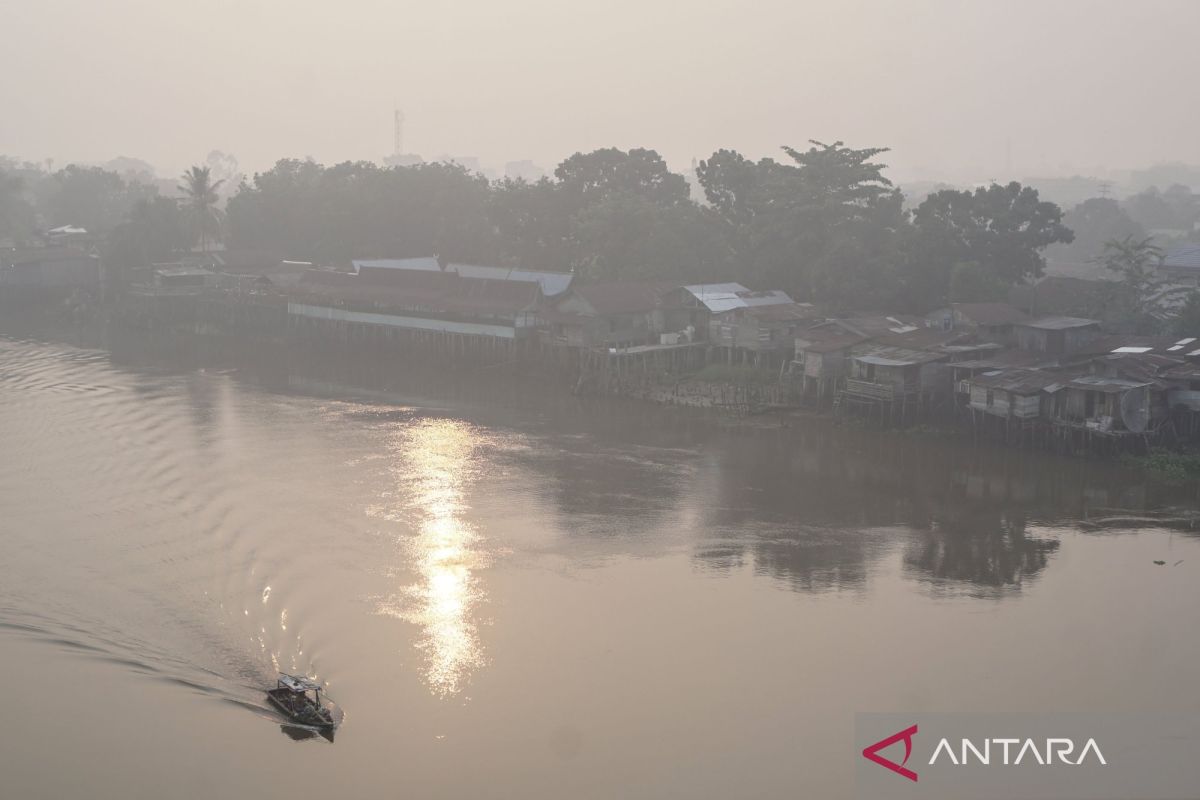
Forest and land fires (karhutla) have once again become a concern in several regions of Indonesia. In Kalimantan, the government is strengthening firefighting operations following an increase in hotspots in West Kalimantan, Central Kalimantan, and South Kalimantan, accompanied by reports of smoke haze and reduced visibility in several areas. The government has also deployed ground and air firefighting support to control the blazes.
A similar problem is occurring in Sumatra. On Monday (24 August), President Prabowo Subianto inspected firefighting efforts in Riau after the government prioritised fire control in six provinces across Sumatra and Kalimantan.
These conditions show that forest fires are not merely a matter of flames and smoke. When forests or land burn, the impacts can spread to various parts of the environment and may persist even after the fires are extinguished.
So what are the environmental impacts of forest fires that often go unnoticed?
- Wildlife habitats are lost
Forest fires directly destroy the living spaces of various animal species. Trees, shrubs, undergrowth, and food sources can be burned, damaging ecosystems that previously provided shelter and sustenance. The loss of habitat can also force wildlife to move to other areas in search of food and shelter. In certain circumstances, this displacement can increase conflicts between wild animals and humans.
The damage does not stop once the fire is out. Forests need time to rebuild ecosystems capable of supporting diverse species. The Ministry of Environment and Forestry notes that forest and land fires can diminish the forest’s function as a protector of biodiversity and its ecosystems.
- Soil loses its fertility
So far, the impacts of fires are often more readily associated with smoke and damage to trees. Yet soil is also one of the environmental components affected. High-intensity fires can remove vegetation and organic matter from the soil surface. This organic matter plays a role in maintaining soil quality. The Ministry of Environment and Forestry records that forest and land fires can affect soil productivity, in addition to the forest’s function in maintaining water systems and biodiversity.
- Water systems in an area can be disrupted
Forests are not just collections of trees. Forest areas also play an important role in regulating the water cycle. When vegetation burns and land cover is reduced, the environment’s ability to absorb and retain water can change. When rain falls, water flows more easily across the surface because it is no longer retained by vegetation. This condition can increase the risk of erosion and carry soil material into rivers or other water bodies. In the long term, damage to vegetation cover can disrupt the water balance in the area.
- Rivers and water sources can be polluted
The impacts of fires can also move from land to water. Ash residue and material from burned areas can be carried by rainwater into rivers, lakes, or other water sources. If this occurs on a large scale, the influx of such material can affect aquatic ecosystem conditions. Rivers and water sources are important parts of the ecosystem and support the needs of communities and wildlife. Therefore, post-fire recovery is not enough with simply replanting trees. Soil conditions, water sources, and surrounding ecosystems also need attention.
- Air quality declines
The most easily felt impact of forest and land fires is, of course, smoke. However, the problem is not merely that the air smells or visibility is reduced. Fire smoke can contain fine particles and various pollutants that degrade air quality. The Ministry of Environment and Forestry notes that fine particulate matter PM2.5 produced by fires can have serious health impacts if it enters the body. This means fires occurring in one area can become a cross-regional, even cross-border, problem.
- Carbon stored in forests is released into the atmosphere
Forests store carbon in various forms, from trees to organic matter in the soil. When forests burn, some of this carbon is released into the atmosphere as emissions. The impact is not only felt around the fire site. Greenhouse gas emissions contribute to climate change. The Ministry of Environment and Forestry notes that forest and land fires are linked to climate change, both as an impact and as one of its causes.
On peatlands, this problem can become more complex. Peat stores large amounts of organic matter and when it is dry, fire can spread below the surface, making it difficult to detect and extinguish.
- Ecosystem recovery can take a long time
Fires can indeed be extinguished within hours or days. However, that does not mean the environment immediately returns to its previous state. Trees need time to grow back. Wildlife needs to find suitable habitats. Soil also needs time to recover its condition and productivity. The larger and more severe the fire, the greater the recovery challenges. Therefore, prevention is a crucial step, especially in areas entering the dry season and with extensive fire-prone land.
Fires do not always wipe out every species in a forest. However, habitat changes caused by fires can deprive certain plant and animal species of the environmental conditions they need to survive. If fires occur repeatedly in the same location, the ecosystem’s ability to recover can be further impaired. Species that require specific forest conditions risk finding it increasingly difficult to locate suitable habitats. Ultimately, what is lost is not only trees.