
The Official Who Lost Secret State Documents on a Train
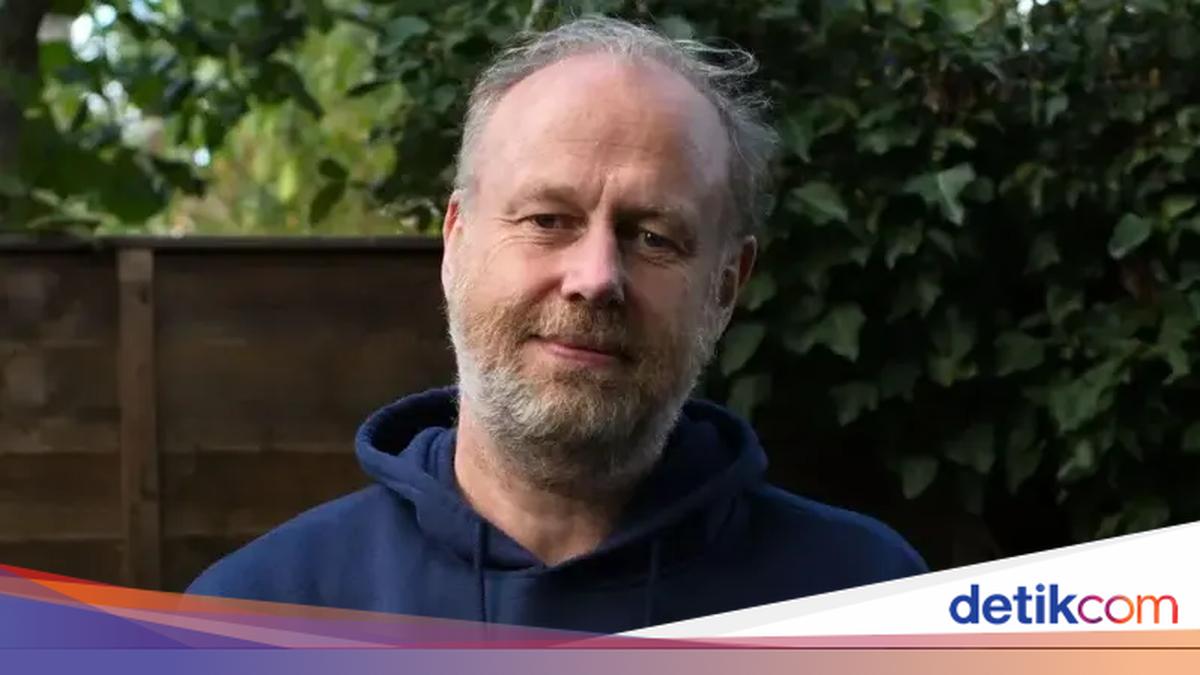
It was an ordinary train journey to work for Richard Jackson, a senior UK government official. But, without realising it, he made the biggest mistake of his life. When he understood what had happened, he panicked. It was too late.
He had left highly classified documents on the train.
The momentary mistake became national news and turned Jackson’s life upside down. He was overwhelmed by shame and humiliation. Nearly 20 years later, Jackson recalls that dark day and its impact on his life.
Warning: This article contains references to suicide.
Jackson shared his story with Dr Sian Williams on the BBC Radio 4 podcast Life Changing. He says he is proof that people can recover and rebuild their lives, even after making the worst mistake of their lives.
Before his life fell apart, 37-year-old Jackson was happy with his wife, Maddie, and his 15-year-old stepdaughter, Charlotte. His other stepdaughter, Becky, 20, was at university.
“We were very happy,” he said. “But at the time I was very focused on my career. My self-esteem and sense of worth depended on my career, my job title, my position and my responsibilities.”
“For a while, I was working up to 100 hours a week,” he said. “I could never really switch off from work.”
Jackson was then seconded from the UK Ministry of Defence to the Cabinet Office, where he dealt with global terrorism. His role involved handling live intelligence from GCHQ, MI5 and MI6, the UK’s three intelligence agencies.
On Monday evening, as he left his office in Whitehall, London, he took a stack of forms home to complete as part of formalising his secondment.
At home, Jackson realised that two documents concerning highly sensitive matters were mixed in with the forms. Both were classified top secret.
Looking back, he says he should have contacted the Cabinet Office and arranged for someone to retrieve the documents securely. But he admits that his subsequent decision may have been driven by a desire to protect himself.
“Perhaps if I could return the documents, nobody else would know,” he said.
Jackson put the confidential papers in a bright orange cardboard folder. The next morning, while sitting on the train, he kept reminding himself not to forget it.
He got off the train and hurried to his office in Whitehall. But shortly afterwards, he realised that he had left the folder behind.
“For a moment, it felt as though the world had stopped turning,” he recalled.
Jackson then visited every station on the train’s route to ask whether anyone had handed in the missing folder. His search came to nothing.
“I was in an absolute panic. Everything felt chaotic; every movement was jerky. I felt sick,” he said.
He finally broke down when he met his wife, Maddie.
“I told her I had ruined our lives. She just held me. She said everything would be all right and that we would get through it together.”
The next day, when he arrived at work, Jackson learnt that the documents had been found and handed to the BBC.
At first, he says, he was relieved that the papers had been recovered and were safe. But he soon realised that the case would now become public.
“That night, I was the lead story on the six o’clock news. The Ministry also suspended me pending the outcome of an investigation,” he said.
Jackson shut himself away at home. One afternoon, Maddie found him sitting cross-legged on the sofa, sobbing.
“I spent that morning trying to work out how to end my life painlessly,” he said. “I often think about what might have happened if Maddie hadn’t come home at lunchtime that day. But I suppose I’ll never know.”
“We spent that afternoon talking. I think that was the first time I thought, ‘If I’m going to get through this, I can’t face it alone.’”
The Cabinet Office concluded that Jackson’s actions constituted gross misconduct. He was demoted by three grades. Jackson was charged under the Official Secrets Act, but avoided a prison sentence and was fined £2,500 (equivalent to Rp60 million).
Administratively, the case was over. But Jackson could not escape the shame, regret and humiliation that continued to haunt him.
He says he gradually rebuilt his life thanks to the many people who cared about him and helped him recover.
“I did almost nothing myself to put things right. It was other people who helped me recover,” he said.
After returning to the Ministry of Defence to work in human resources, Jackson moved to the Department for Culture, Media and Sport to help prepare for the Olympics.
He later left the civil service and worked for Samaritans, an organisation offering emotional support to people in crisis. He went on to lead a team of analysts examining global terrorism risks.
In his spare time, he also began training as a life coach, helping people develop and deal with life’s challenges.
After being made redundant, Jackson founded NewDay, a personal development training company. It helps people cope with the pressures of handling material or information that can cause emotional distress.
“I can tell my story and give it meaning. There’s a reason behind what I did,” he said.
Jackson wants others to know that there is always a way to recover, even after making the biggest mistake of their lives.
“You may be in a very bad situation, but you can still get back up and get through it. There are different ways to help yourself cope, and there is also help you can get from other people.”
Asked whether he had forgiven himself, Jackson said he had not. Nevertheless, he is happy again.
His wife, Maddie, is also pleased that Jackson no longer works 100 hours a week.
“My life is no longer defined by my career, and now I can be more present for my family at home,” he said. “I also appreciate much more how lucky I am to have such wonderful people in my life.”
Making a mistake? How to get back on your feet
Richard Jackson shared several steps that helped him through traumatic times in his life.
Talk about what is on your mind. When you are at a low point, your thoughts can quickly move from “I have made a big mistake” to “I am worthless”. Writing them down or talking to someone can help slow that process, giving you a chance to recognise that the conclusions in your mind may not make sense.
Keep doing things you enjoy. When you feel worthless, you may stop doing things that could make you feel better. Identify those activities, whether going to the gym, reading a book or taking a long walk, and make them a regular part of your life that you do not neglect.
Remind yourself of your worth and achievements. “I keep a reminder board near my desk, with notes about things I have achieved and kind words other people have said to me,” Jackson said.
For him, tangible reminders help confirm that he is not the mistake he made. He is worth far more than that one error.
Find someone who will support you and be honest with you. You need someone who will encourage you but also speak up when you start neglecting good habits. Choose someone who genuinely supports you and wants the best for you.
Recognise what you can and cannot put right. If you have hurt someone, take responsibility for your actions. Apologise and make amends as far as you can. But do not take responsibility for things that were never yours to answer for.
Do not let your worst moment define your whole life story. You are not the mistake you made. You are still the same person you were before it happened. And there is a future version of you that you have not yet met—someone who still has the chance to grow and live differently.