
The NU Congress and the Moral Test of Ulama: Preserving the Dignity of the Organisation and Honouring the Founders' Trust
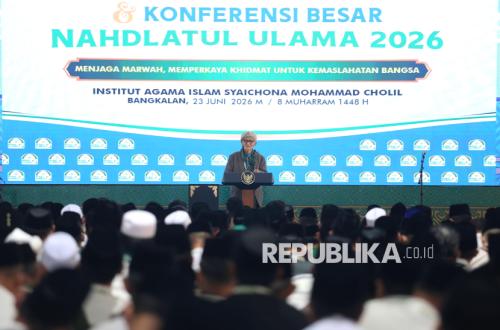
Nahdlatul Ulama was established by scholars through knowledge, sincerity, and sacrifice. It must not be passed on to the next generation through practices that undermine the very values they instilled.
Ahead of the 35th Nahdlatul Ulama Congress, organisational dynamics are intensifying. Names of potential candidates are emerging, support is flowing, and networking forums are being held. All of this is a natural part of a democratic organisation. However, behind these dynamics, there is a moral question far more important than who will eventually be elected as the General Chairman of PBNU: Are the scholars capable of maintaining the honour of the Congress as a clean, honest, and dignified forum for deliberation?
This question cannot be taken lightly. What is at stake is not merely the leadership for the next five years, but the dignity of Nahdlatul Ulama as the largest organisation of scholars in the world.
Leadership is not an arena for transactions. In the Islamic tradition, leadership is a trust (al-amānah), not a commodity. The Qur’an affirms, “Indeed, Allah commands you to render trusts to whom they are due…” (QS. An-Nisa’ [4]: 58). This verse serves as the foundation for the ethics of Islamic leadership. Trust can only arise from a dignified process. When the process is tainted by transactions that violate Sharia values and organisational ethics, the moral legitimacy of the leadership will be called into question. Therefore, the Congress is not merely a forum for electing leaders; it is a space to safeguard the trust of the founders who established NU with sincerity, knowledge, and devotion.
In Islamic jurisprudence, bribery (risywah) is a prohibited act. The Prophet Muhammad (PBUH) said: “Allah curses the briber, the bribed, and the intermediary between them” (HR. Ahmad, Abu Dawud, and Tirmidzi). Other narrations state: “Allah’s curse is upon the one who bribes and the one who accepts bribes in legal matters” (HR. Abu Dawud). Scholars have further explained that this prohibition is not limited to courts but encompasses all forms of giving intended to secure decisions, positions, or advantages that should be determined fairly. Imam al-Mawardi, in Al-Ahkam al-Sulthaniyyah, emphasises that public office is a trust that must be granted based on merit (ahliyyah), rather than through transactions or personal interests.
Source: jawawa.id (https://jawawa.id/newsitem/the-nu-congress-and-the-moral-test-of-ulama-preserving-the-dignity-of-the-organisation-and-honouring-the-1785642943)
Originally published by Republika (https://analisis.republika.co.id/berita/tj4gfd451/muktamar-nu-dan-ujian-akhlak-para-ulama-menjaga-marwah-jamiyyah-menjunjung-amanah-para-muassis), translated from Indonesian