
The Netherlands to Return Indonesian Treasures, Including a Rare 38-Carat Diamond
Jakarta, CNBC Indonesia — Many valuable objects belonging to Indonesia were stolen during the colonial period and taken to the Netherlands. After hundreds of years, the Netherlands is finally set to return several historic objects of great cultural significance to Indonesia.
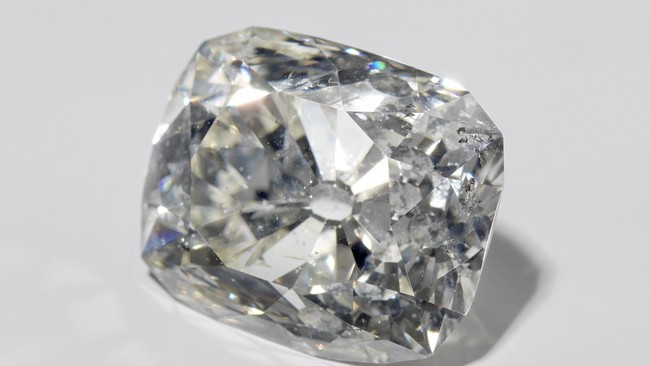
At least 20 historical artefacts are to be returned, including the 38-carat Banjarmasin Diamond. The diamond was a treasured possession of the Sultanate of Banjarmasin, seized by the Dutch colonial government in 1859. It will be returned to Indonesia after spending more than 160 years in the Netherlands.
According to the Rijksmuseum website, the diamond was taken as war booty. It once belonged to Panembahan Adam, Sultan of Banjarmasin in Kalimantan. After his death, the Dutch intervened in the succession dispute. In 1859, Dutch forces forcibly took control of Banjarmasin and abolished the sultanate. The rough diamond was sent to the Netherlands and cut into a rectangular shape, weighing 38 carats.
NL Times reported that the agreement to return the artefacts was signed by Indonesia’s Culture Minister Fadli Zon and Dutch Minister of Education, Culture and Science Rianne Letschert at Indonesia House in Amsterdam last October.
The decision forms part of efforts to address historical injustice, particularly concerning Indonesian cultural objects acquired during the colonial period through seizure or coercion.
The Dutch government said all the objects covered by the agreement had undergone provenance research. The findings concluded that their previous owners had been deprived of them involuntarily.
“With this return, based on the recommendation of the Colonial Collections Committee, we are contributing to addressing historical injustice,” Letschert said.
She stressed that the objects hold great cultural and historical significance for Indonesia and should not be in the Netherlands.
The Banjarmasin Diamond and other historical artefacts
Of the 20 objects to be returned, 18 have been managed by the Wereldmuseum, while the other two are part of the Rijksmuseum collection.
Alongside the Banjarmasin Diamond, the artefacts include a handwritten Qur’an once owned by Acehnese resistance figure Teuku Umar, and a traditional Acehnese sword known as a Sikin Panjang.
The return also covers four manuscripts from the Sultanate of Aceh, six Javanese wayang beber scrolls, a historic tomb panel, and several Batu Aceh tombstones bearing Arabic calligraphy.
The diversity of the collection highlights the importance of these repatriated objects not merely as museum pieces, but as part of Indonesia’s history, traditions and social identity.
The objects have been held in the collections of cultural institutions in the Netherlands. Through repatriation, Indonesia will be able to restore them to the historical and cultural context of their place of origin.
Part of efforts to address historical injustice
The return of the 20 artefacts follows a review by the Colonial Collections Committee, which advises the Dutch government on requests to return cultural objects from the colonial period.
The process considers an object’s provenance and how it was acquired. In this case, research concluded that all the objects covered by the agreement had been taken from their owners involuntarily.
The decision is therefore not simply a transfer of ownership of museum collections, but also an acknowledgement of the historical circumstances that led to the objects being held outside Indonesia.
The Dutch government had previously also decided to return the Dubois Collection to Indonesia. Held at Naturalis Biodiversity Center, it comprises tens of thousands of fossils and scientific materials of importance to research into natural history and human evolution.
Four objects from the collection were handed over to Indonesia in December 2025, while the return of the remainder is being prepared in stages.
The return of the Dubois Collection and the 20 cultural artefacts reflects the continued repatriation of Indonesian historical objects that have long been held in the Netherlands.
Awaiting their return to Indonesia
Although the return agreement has been signed, the physical transfer of the 20 artefacts still requires preparation. The Dutch government expects to hand them over to Indonesia in early 2027.
The next steps include preparing documentation, packing the objects and arranging their transport to ensure that each artefact can be moved safely.
Once they arrive in Indonesia, the objects could enrich the national historical collection and broaden public access to cultural heritage directly connected to the country’s history.
For Indonesia, repatriation is about more than recovering valuable or rare objects. It is also part of an effort to restore the connection between historical objects, their communities of origin and the historical narratives that have long been kept abroad.
Source: jawawa.id (https://jawawa.id/newsitem/the-netherlands-to-return-indonesian-treasures-including-a-rare-38-carat-diamond-1793350283)
Originally published by CNBC Indonesia (https://www.cnbcindonesia.com/lifestyle/20261030123409-33-780897/belanda-mau-kembalikan-harta-karun-ri-ada-berlian-langka-38-karat), translated from Indonesian