
The Netherlands Recognised Indonesian Independence on 27 December 1949, Many People Unaware
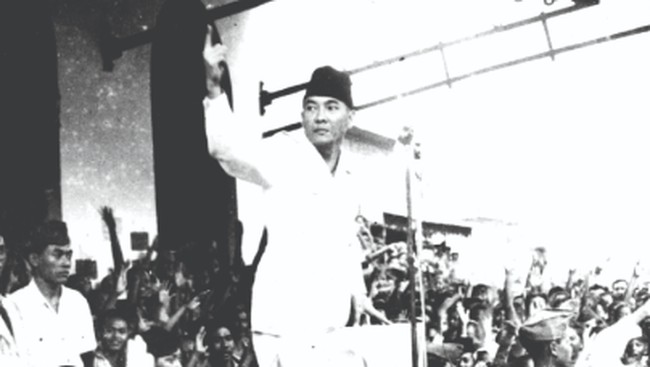
The Indonesian nation commemorates its independence on 17 August 1945, marked by Soekarno’s proclamation. Even so, the Netherlands did not consider Indonesia independent on that date, but rather on 27 December 1949.
Why did it take the Netherlands 60 years to recognise Indonesian independence?
When Soekarno proclaimed Indonesian independence, the Netherlands considered it invalid and wanted to regain control of Indonesia. The desire for control was driven by economic factors. At that time, the Dutch economy and development grew not from activity in the homeland itself, but from the wheels of colonialism upon which the Netherlands ran, including the Dutch East Indies. The economic value of the Dutch East Indies was enormous.
Of course, if the Dutch East Indies became independent, one could imagine how devastated the Netherlands would be. So, unwilling to let Indonesia go, the Netherlands intended to colonise Indonesia. Moreover, at that time the Netherlands had legitimacy. As a victorious nation in the war, it had the right to take over the colonies of defeated nations.
Thus, the land of windmills arrived in Indonesia at the end of 1945. Afterwards, that arrival sparked a major war between the Netherlands and Indonesia. Unwilling to be colonised again, the Indonesian military fought desperately to defend every inch of territory.
The war ended in 1949 when the Round Table Conference (KMB) was held. The key point of the KMB was that the Netherlands finally recognised Indonesian independence. Unfortunately, not on 17 August 1945, but on 27 December 1949. This corresponded to the date the KMB agreement concluded.
That recognition also had to be paid for dearly by Indonesia, as it was forced to pay all of the Netherlands’ debts from the colonial era. These debts were only paid off several years later amid the ups and downs of the Indonesian economy.
Regarding the revision of the recognition of independence, the Netherlands had actually long wanted to recognise 17 August 1945 as the date of independence. It was just always opposed by people, particularly groups of veterans who had experienced the bitterness of being attacked by the Indonesian military. In 1995, for example, Queen Beatrix of the Netherlands was reportedly planning to revise the date of Indonesian independence by personally attending the 17 August celebrations at the State Palace in Jakarta.
However, that did not happen because it met with opposition from war veterans and Prime Minister Willem Kok. As a result, Queen Beatrix only visited Indonesia a few days later, and even then failed to recognise 17 August 1945 as the date of independence.
The revision only occurred in 2005, 60 years after independence. At that time, as reported by Detik.com (17 August 2005), the Dutch government, represented by Foreign Minister Bernard Bot, attended the 17 August ceremony at the State Palace.
That presence marked the Netherlands’ recognition that Indonesia became independent not on 27 December 1949, but on 17 August 1945. On the same occasion, the Netherlands also expressed regret for having colonised Indonesia, although it did not apologise for past crimes.
“On behalf of the Dutch government, I would like to express deep regret for all that suffering. Let us move towards the future together with full confidence,” Bot said.
As for an apology for the colonisation, it was only delivered by the Netherlands 17 years later. In 2023, King Willem-Alexander of the Netherlands apologised for Dutch colonial actions.