
The Need for Investment Incentives in Upstream Oil and Gas
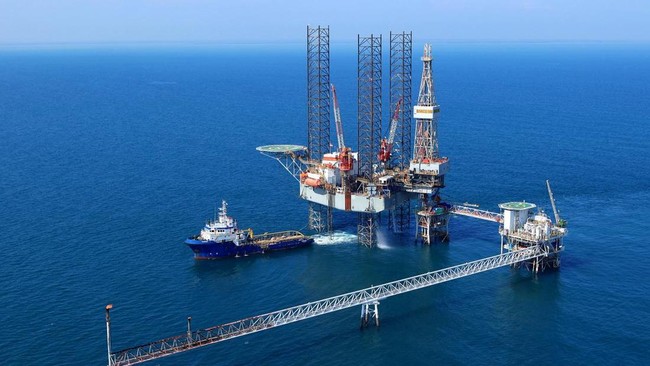
Indonesia’s upstream oil and gas sector is currently facing structural challenges that require special handling. The main problem in the national upstream oil and gas industry is the high natural decline rate in mature fields. In the 2020-2025 period, the national natural oil production decline recorded an average of around 22.3% per year, while the decline in gas production was at a level of 12.0% per year. Without significant new reserve additions, national oil production is projected to fall below 600 thousand BOPD in the coming years.
In addition to the high production decline rate, the characteristics of Indonesia’s oil and gas resource potential have also shifted. Discoveries of large conventional onshore fields that are easily accessible are increasingly rare. The nation’s hydrocarbon potential is now largely in fields with complex technical characteristics, such as low quality reservoirs (LQR), non-conventional oil and gas (MNK), deepwater areas, frontier areas, and remote areas not connected to infrastructure and market access.
Technical Complexity and Project Economic Risk
Developing LQR, MNK, and deepwater potential requires different technical treatment and investment compared to conventional fields. As an illustration, LQR potential in Indonesia is estimated to reach more than 3 billion barrels of original oil in place (OOIP) spread across dozens of fields, with the largest portion in the Rokan Working Area (WK). In the same area, MNK potential in four main sub-basins is estimated at 20.68 trillion cubic feet (TCF) of gas and 2.22 billion barrels of oil. However, monetising this potential requires the application of high technology such as horizontal drilling with multi-stage fracturing (MSF) technology and the use of special materials.
The cost of drilling and completing MNK wells can reach around US$10.5 million per well. The high initial capital expenditure (CAPEX) requirement causes the project’s internal rate of return (IRR) to be marginal if standard fiscal terms are used.
Beyond technical-geological factors, the competitiveness of Indonesian oil and gas investment is also influenced by above-ground risk factors. Industry evaluations show that although Indonesia’s geological potential is considered relatively good with a score of 8.5 out of 10, the level of regulatory risk, legal uncertainty, and the length of the permitting process is at a lower score of around 4.5 out of 10. Project delays due to long permitting durations can erode the time value of money and significantly reduce project IRR.
Comparison of Global Fiscal Practices
In the global upstream oil and gas investment arena, capital moves flexibly towards regions that offer a balance between risk levels and certainty of returns. Governments in various countries actively adjust fiscal terms to attract investment in high-risk projects. In general, there are several fiscal incentive instruments applied globally for non-conventional, deepwater, and frontier area projects, as follows:
- Adjustment of Royalty Rates and Profit Sharing
In the Asia Pacific region, countries such as Malaysia and Thailand apply sliding-scale royalty schemes or adjustments to profit split portions that give a larger share to contractors in deepwater projects and marginal fields.
- Increase in Cost Recovery Cap and Accelerated Depreciation
In production sharing contract (PSC) schemes, the maximum limit for operating cost recovery (cost petroleum) is raised from the standard 50% to 80% to 90% to allow faster initial capital recovery. In the United Kingdom, the use of investment allowance helps reduce the effective tax burden when companies reinvest their capital in mature or high-pressure fields in the North Sea.
- Investment Tax Credits and Exploration Cost Recovery
The United States historically allows direct expensing of intangible drilling costs in the first year for shale gas projects. Meanwhile, Norway applies an exploration tax refund scheme of 78% for exploration activities that do not produce commercial reserves, thereby minimising investor financial losses in the early stages.
- Exemption from Indirect Taxes and Import Duties
Countries in Latin America such as Brazil apply special customs facilities (such as the REPETRO scheme) that exempt import duties and import taxes on high-technology upstream oil and gas capital equipment.
- Flexibility of Early-Stage Fiscal Regimes
Guyana provides flexible and competitive contract terms at the start of exploration activities in the Stabroek Block. This step successfully encouraged the discovery of reserves of more than 11 billion barrels of oil equivalent before the government gradually adjusted the state share after project risk decreased.
Relevance for Indonesian Conditions
Global experience shows that a one-size-fits-all fiscal scheme is not effective when applied to all types of fields. To maintain investment continuity and curb the decline in national production, the fiscal policy approach in Indonesia needs to be adjusted to the operational risk level of each project. Within this framework, several policy adjustments relevant for application in Indonesia’s upstream oil and gas sector may include:
- Special Contract Framework
Formulation of a special contract framework and fiscal terms
Source: jawawa.id (https://jawawa.id/newsitem/the-need-for-investment-incentives-in-upstream-oil-and-gas-1787050339)
Originally published by CNBC Indonesia (https://www.cnbcindonesia.com/opini/20260818154618-14-760336/kebutuhan-insentif-investasi-hulu-migas), translated from Indonesian