
The Need for Accurate Methane Data to Unravel the Waste Problem
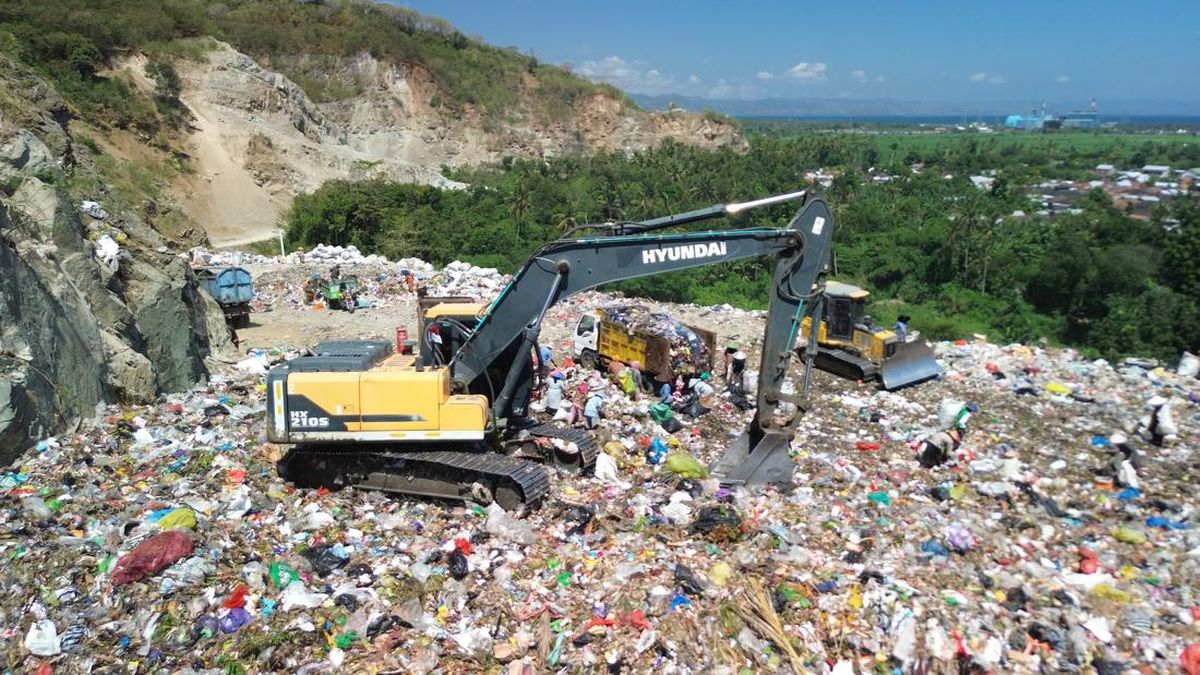
Around 96 percent of the total 511 final disposal sites (TPA) in Indonesia are reported to still use an open dumping system. The majority of these waste piles are dominated by organic waste that produces massive amounts of methane gas emissions, potentially triggering fires. Based on data from the National Waste Management Information System (SIPSN) of the Ministry of Environment (KLH), Indonesia produces around 144 thousand tonnes of waste per day in 2025. Of that amount, only about 25 percent of waste is recorded as properly managed. This condition leaves a very significant potential for methane emission formation in various regions.
To address this issue, WRI Indonesia, through the SMART Waste Indonesia initiative (Strengthening Methane Action through Reliable Tracking in Waste Sector), handed over the results of a study on methane emissions in the waste sector to the Ministry of Environment/Environmental Control Agency (KLH/BPLH) in Jakarta on Wednesday (19/8). In a written statement from WRI Indonesia, the SMART Waste Indonesia project, supported by the Global Methane Hub, runs from September 2024 to August 2026. This initiative focuses on strengthening capacity for measurement, monitoring, verification, and reporting (MRV) of methane emissions.
During its course, research was conducted through waste characteristic surveys at five landfills representing various city scales in Indonesia, namely in Solok, Surabaya, Balikpapan, Mataram, and Gorontalo. Survey results in 2025 showed that 52.02 percent of waste piles were organic waste and 12.83 percent were paper. Both types of waste produce methane when decomposing in low-oxygen conditions.
Not only conventional surveys, the project also applied modern technology in the form of monitoring using drones and direct methane sensors at the Benowo landfill in Surabaya and the Galuga landfill in Bogor. A representative of the Directorate of Waste Management at the Ministry of Environment, Andina Novita Tas’an, appreciated the use of these special tools. “The methods carried out in the SMART project complement what has been done nationally so far in the calculation approach,” said Andina. According to her, the national emission approach has so far relied heavily on estimates or calculation approaches.
To strengthen the quality of national waste data in SIPSN, the SMART Waste project proposes calculating emission inventories using the Tier 2 IPCC (Intergovernmental Panel on Climate Change) method. This method combines waste composition data, local activities, and country-specific emission factors that are far more precise. To facilitate its implementation, an application platform called the Methane Emission Toolbox (MET) was also developed to support national data accuracy.
Meanwhile, the Director of Climate Change Mitigation at KLH/BPLH, Haruki Agustina, said that the government continues to encourage the contribution of the waste sector in the national greenhouse gas emission reduction target, one of which is through the preparation of a waste sector roadmap. “The SMART Waste Indonesia initiative, particularly through strengthening measurement methods and the methane emission MRV system, is expected to support the provision of more accurate data as a basis for policy formulation and mitigation actions,” said Haruki.
WRI Indonesia Country Director Nirarta Samadhi emphasised that handling methane emissions cannot rely solely on end-of-pipe handling or when waste has already piled up at the landfill. “Methane mitigation cannot only be carried out when waste is already at the landfill. Efforts need to start from reducing and sorting waste at the source, diverting and processing organic waste, to improving landfill management and utilising methane gas,” said Nirarta. He explained that an accurate understanding of each city’s waste profile is crucial so that local governments can predict trends and build targeted policies. This effort is in line with Indonesia’s target in the Global Methane Pledge commitment to reduce global methane emissions by up to 30 percent by 2030.
Meanwhile, Regional Lead Asia at Global Methane Hub, Manjyot Ahluwalia, praised Indonesia’s steps, which are considered to provide a real example for countries in the Global South. “Indonesia shows that handling methane emissions in the waste sector can be done through transparent monitoring, data-based management, and climate-responsive policies,” she said. The implementation of this integrated MRV system is expected to direct waste management investment to appropriate facilities, in order to realise the long-term vision of Zero Waste Zero Emission (ZWZE) in Indonesia.