
The Name ‘Kijang’ Is an Acronym — Here’s What It Stands For
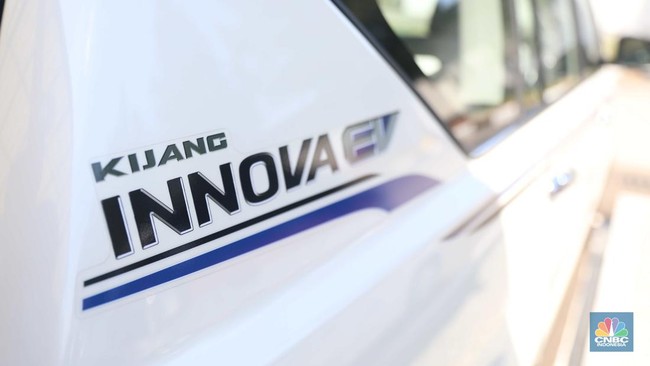
Jakarta, CNBC Indonesia — The Toyota Kijang was once one of Indonesia’s most popular cars. It even earned the nickname “the people’s car” because so many families used it. But behind the familiar name lies an interesting history of relations between Indonesia and Japan.
The Kijang Innova is made by Toyota Motor, which is headquartered in Toyota City, Japan. Japanese-made cars have not dominated Indonesian roads for very long. In the 1970s, Europe-made vehicles still accounted for most of Indonesia’s car market, and wealthy people were willing to import them to drive on Indonesian roads.
This situation led the government to seek ways to develop the domestic automotive industry. That ambition was held back by various factors, including the readiness of the workforce. One of the best ways to stimulate the industry was therefore to co-operate with foreign countries.
In 1974, the government also banned imports of fully built vehicles. Instead, it allowed vehicles to be imported in assembled form. The aim was to revive the domestic automotive industry. Japan had already been involved in Indonesia’s automotive sector since 1971.
Through its partnership with PT Astra International, Japan had begun developing car assembly in Indonesia. The government’s openness to working with foreign countries was therefore welcomed by Japan.
Indonesia and Japan subsequently established co-operation. One example was Toyota’s Kijang, whose name is an abbreviation of “Kerjasama Indonesia-Jepang” (Indonesia-Japan co-operation). The first Toyota Kijang was launched on 9 June 1977 at the Jakarta Fair.
The Toyota Kijang was not immediately welcomed by the Indonesian public, as Japanese cars were still unfamiliar in the country. Some people said their quality was far lower than that of European vehicles.
However, the Kijang gave consumers another option. In his book Sejarah Mobil & Kisah Kehadiran Mobil di Negeri Ini (2012), James Luhulima writes that from the Kijang’s launch, Indonesians had a wider choice of cars: not only saloons, but also vehicles that could carry more than four people.
For this reason, Kijang sales gradually reached 1,000 units. From then on, the Toyota Kijang became one of Astra’s mainstays in Indonesia. It remains on the market today, although it has taken on a more modern design.
Source: jawawa.id (https://jawawa.id/newsitem/the-name-kijang-is-an-acronym-heres-what-it-stands-for-1794297029)
Originally published by CNBC Indonesia (https://www.cnbcindonesia.com/lifestyle/20261110095918-33-783791/nama-mobil-kijang-ternyata-singkatan-ini-kepanjangannya), translated from Indonesian