
The Mystery of Why Tuyul Never Steal Money from Banks
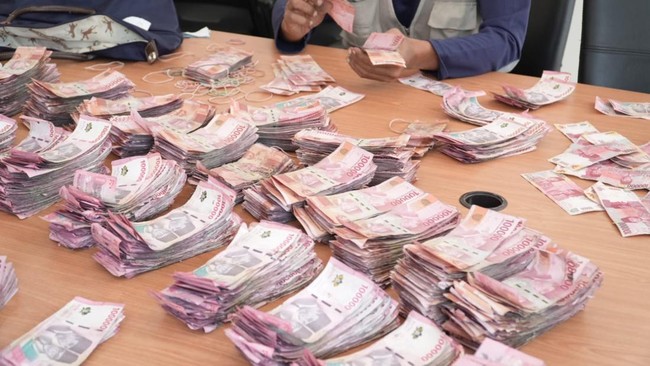
Tuyul have long featured in Indonesian folklore as supernatural beings believed to steal money. Described as small, childlike figures, they are said to move from one house to another to carry out their thefts.
In his book Dunia Hantu Orang Jawa (2004), cultural scholar Suwardi Endraswara explains that tuyul are believed to steal not only money but also various other goods and valuables. Such practices are usually associated with someone intensely driven to accumulate wealth.
But there is one intriguing question that may not often occur to people: if tuyul are believed to steal money from house to house, why do they not target banks, which hold far larger sums?
Another question is just as curious: can tuyul steal electronic money or e-money balances, which are now widely used?
So far, there have been no reported cases of banking losses attributed to tuyul. Even so, the question is often discussed online and has prompted various speculations.
One popular explanation is that tuyul fear objects made of metal. This is then linked to the metal safes banks typically use to store money.
Another belief holds that banks have invisible supernatural guardians—other spirits said to be stronger than tuyul and feared by them.
These answers are merely conjecture about something that is, in itself, illogical. But whatever the answer to the question, there is a scientific explanation behind the tuyul legend—one that challenges the creatures’ existence and explains why they do not steal money from banks or take someone’s e-money balance.
To understand this explanation, we must go back to 1870, when the Dutch introduced the Open Door Policy, or economic liberalisation, replacing the Cultivation System. At first glance, the change seemed to offer hope because it was considered capable of improving people’s welfare. In reality, it did not.
According to Jan Luiten van Zanden and Daan Marks in Ekonomi Indonesia 1800–2010 (2012), economic liberalisation created a new colonial regime in which smallholders’ plantations were taken over and converted into large estates and sugar factories. This left people’s lives in a worse state, particularly those of small farmers in Java, who sank further into poverty after losing control of their land.
Some people, however, prospered under the system. Traders, both indigenous and Chinese, became newly wealthy in a short time. Their rapid accumulation of wealth puzzled farmers, who were becoming poorer and did not know where the money had come from.
Farmers at the time lived modestly. According to Ong Hok Ham in Wahyu yang Hilang Negeri Yang Guncang (2019), they followed a subsistence system: they farmed mainly to feed themselves, and any surplus was either given as tribute or sold.
As a result, they viewed wealth accumulation as a process that should be visible. In other words, people were expected to achieve it through clear efforts that others could witness. The problem was that farmers did not see the newly wealthy working hard. Nor could the traders explain the origins of their fortunes to the farmers. This gave rise to envy and resentment among farmers towards traders who had acquired so much.
Moreover, George Quinn writes in “An Excursion to Java’s Get Rich Quick Tree” (2009) that farmers believed wealth had to be accounted for. When the wealthy could not explain the source of their riches, farmers grew envious and accused them of having stolen the money.
Because mystical beliefs were deeply rooted, farmers saw the alleged theft as the result of wealthy people working with supernatural, invisible beings. One such figure was the tuyul, a long-established figure in Javanese mythology: a small, bald spirit or ghost that could be kept as a familiar.
Thus, farmers who resented the newly wealthy accused them of using illicit means to gain their fortunes. As Ong Hok Ham writes in another book, Dari Soal Priayi sampai Nyi Blorong (2002), these accusations cost successful traders and entrepreneurs their standing in society. They were considered “low” because they had supposedly accumulated wealth through forbidden means—by consorting with the devil. In reality, their sudden fortunes were a consequence of changes brought about by Dutch colonial policy.
Farmers’ hostility towards those who became rich suddenly affected more than personal relationships; it also changed how the wealthy spent their money. They tended to buy things that did not reveal the full extent of their wealth, such as gold or luxury goods. If they bought land or a house, farmers might accuse them of keeping a devil or tuyul.
These baseless accusations helped make the tuyul an increasingly popular supernatural figure associated with wealth, a status it retains in Indonesia today. The country’s long agrarian history further helped perpetuate the imagination and accusations surrounding the use of tuyul.
Source: jawawa.id (https://jawawa.id/newsitem/the-mystery-of-why-tuyul-never-steal-money-from-banks-1794210641)
Originally published by CNBC Indonesia (https://www.cnbcindonesia.com/lifestyle/20261109121407-33-783503/misteri-tuyul-tak-pernah-mencuri-uang-di-bank-apa-alasannya), translated from Indonesian