
The Mystery of Jong Dobo, a Ship Artefact in the Middle of Sikka Forest
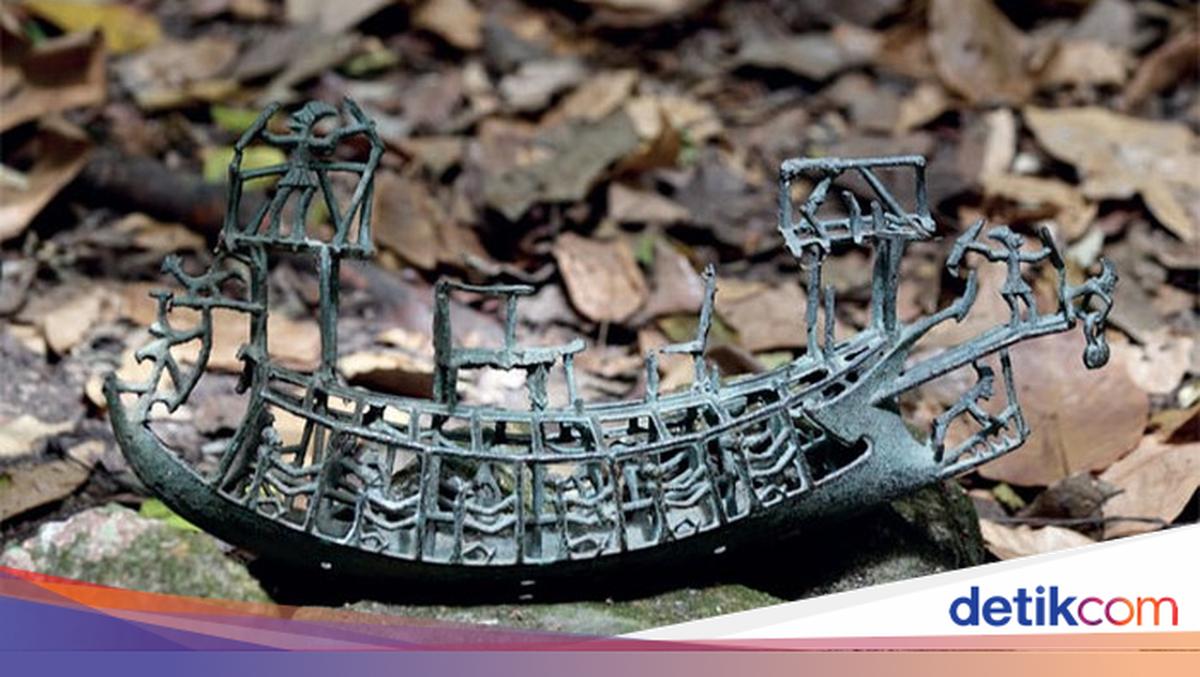
The village of Dobo in Sikka Regency, East Nusa Tenggara, possesses a unique artefact in the form of a miniature ship. Rather than being near the sea, this artefact is located in the middle of a forest on top of a hill. The artefact, named Jong Dobo, is believed to be thousands of years old.
The exact origins of this artefact are not definitively known. There are no historical records proving how a miniature ship artefact ended up in the middle of a forest. However, the local community has stories passed down through several generations. The story of Jong Dobo’s origins is documented in the oral poetry of the Dobo village community.
Story of Jong Dobo’s Origins
Jong Dobo is a bronze metal artefact measuring 60 centimetres in length, 28 cm in height, and 10 cm in width. The artefact resembles a ship with human decorations on several parts. It is placed in the middle of the forest and can be accessed with permission from the caretaker.
The Sikka people have an oral tradition about Jong Dobo. According to an article written by Yuwanita Kolo, this oral tradition is a folklore that has developed around Jong Dobo. Here is an excerpt from the Jong Dobo folklore, which is a poem.
“The ancestors who first discovered the Dobo Ship were named Du’a Bela and Mo’ang Lago. They recounted that the people of Soge, from Ende, hid the ship in Dobo. The ship could bring rain and heat, so everyone had to take good care of it. According to the ancestral poetry story, it is said thus: the people of Soge from Numba hid the bronze ship above; the bronze ship above brings rain and heat.
Originally, the ship was a large vessel, and on top of the ship, there were many people. The people, along with the ship, began their journey from Siam, China, and Malacca. The emperor there ordered them to go in search of medicine that would make them not fall ill and live long lives because in their region, many people were dying. They also wanted to seek a prosperous life. There was an oath so that they could obtain that medicine: they had to raise the anchor at dawn, before the rooster crowed, before the sun rose; if they were late, they would face misfortune, so they had to obey that oath.
In Indonesia, in the Nusantara, they first entered Bima Island. Then they continued their journey to Bajo, next they continued again and stopped in Soge, Ende, but the people there did not offer them cigarettes and betel nut, so they continued their journey. They arrived at Sadang Watu Manuk in the Sikka area and in Nita Karang Jawa village. Upon reaching Nita, they saw that the land was not good and not fertile, so they rowed again until Kolitatit Moro Humang, Soda Otang Bolawolon, then headed to Waipare. Upon reaching Watumilok, they saw that the place was very good and very clean. There they dropped anchor as morning approached.
They headed to Ili Koli Kokowahor, then to Apinggo’ot, where the land was flat. There the flat land was good, and the village was very beautiful, but Mo’ang Kedong Leder did not offer cigarettes and betel nut, so they continued the journey. They reached a large hill and crashed into the hill, splitting it in two. Then they went up until they reached Dobo Dora Nata Ulu. There the land was good, a prosperous village, but because they were late in raising the anchor in Dobo, the large ship turned into bronze and shrank as we see it to this day. According to the ancestral poetry story, it is like this: raising the anchor in Dobo was late in Dobo, late in Dobo, the ship turned into bronze.”