
The Mystery of Iran's New Leader Mojtaba Khamenei Who Has Not Yet Appeared in Public
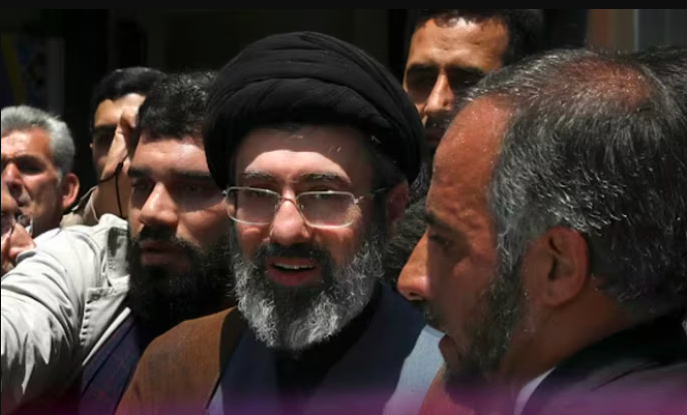
The whereabouts of Iran’s new Supreme Leader, Mojtaba Khamenei, have become a matter of speculation after he failed to appear in public following his appointment to replace his father, Ali Khamenei. His absence has triggered widespread conjecture regarding his state of health.
In recent developments, Mojtaba Khamenei is reported to have sustained injuries but remains in a secure condition. This information was conveyed by Yousef Pezeshkian, the son of Iran’s President.
“I heard reports that Mojtaba Khamenei was wounded. I then asked several people who have connections with the relevant parties,” said Yousef.
This represents the first official explanation concerning Khamenei’s absence from public view since his appointment as Iran’s new leader last weekend.
Speculation suggests that Mojtaba was possibly injured during an aerial attack on Tehran on the first day of hostilities, an assault that resulted in the death of his father Ali Khamenei.
Yousef Pezeshkian, who also serves as a government adviser, stated that he had heard reports of injuries sustained by the new Iranian leader. “They said that, thankfully, he (Mojtaba) is safe and secure,” said Yousef.
Mojtaba Khamenei was appointed as Iran’s Supreme Leader to succeed his father Ali Khamenei. The appointment was made by Iran’s Assembly of Experts, the ulama council.
However, Mojtaba has not yet appeared or made any public statement, giving rise to various theories regarding his health condition.
International media reports also indicate that he sustained several injuries, including to his legs, though he remains conscious and is being held in a highly secured location with restricted communications.
In Iran’s capital, images of Mojtaba Khamenei now appear on numerous large billboards. One image symbolically depicts him receiving the national flag from his father, with a depiction of Ruhollah Khomeini, the founder of the Islamic Republic of Iran, witnessing the event.
Several analysts believe that Mojtaba Khamenei is likely to remain in a secret location for the time being, as he represents a potential target for attack.
Emile Hokayem, an analyst from the International Institute for Strategic Studies, stated that the new Iranian leader is likely to remain in a secure protective location, given the possibility that Israel may attempt to eliminate him.
“He will likely remain in a bunker for an extended period, having witnessed what happened to his father, wife, and mother who were killed in the initial strike,” he said.
“If he is killed early on, it will be a priority for Israel. However, if he survives, he could become a symbol of resilience of Iran’s political system,” said Hokayem.
According to Hokayem, Mojtaba Khamenei is likely to delegate government administration to National Security Chief Ali Larijani and entrust the management of military operations to Parliamentary Speaker Mohammad Bagher Ghalibaf.
Iran’s military and the Islamic Revolutionary Guards Corps (IRGC) have declared their loyalty to the new leader. Support has also come from the Hezbollah group in Lebanon and Houthi rebels in Yemen. Russian President Vladimir Putin has also expressed full support for Iran’s new leadership.
Meanwhile, United States President Donald Trump previously stated that the appointment of Mojtaba Khamenei as Supreme Leader is unacceptable to Washington.
“He needs to get approval from us. If he doesn’t get it, he won’t last long,” Trump said in an interview with ABC News.
North Korea has officially backed Mojtaba Khamenei as Iran’s Supreme Leader and condemned the illegal military attacks by the United States and Israel that resulted in Ali Khamenei’s death.
Mojtaba Khamenei has now officially replaced his father, Ali Khamenei, as Iran’s Supreme Leader and has become the third leader since the Iranian Revolution. This succession from father to son has provoked criticism, as it is viewed as resembling a dynastic system that contradicts the spirit of the revolution, which rejected monarchy.
He also emphasised that Iran has no intention of becoming involved in conflicts with nations in the region.
Iranian media published footage showing severe damage to a stadium, with plumes of smoke rising from the spectator stands.