
The MPR's Research Body Discusses People's Sovereignty in the Perspective of Pancasila Democracy
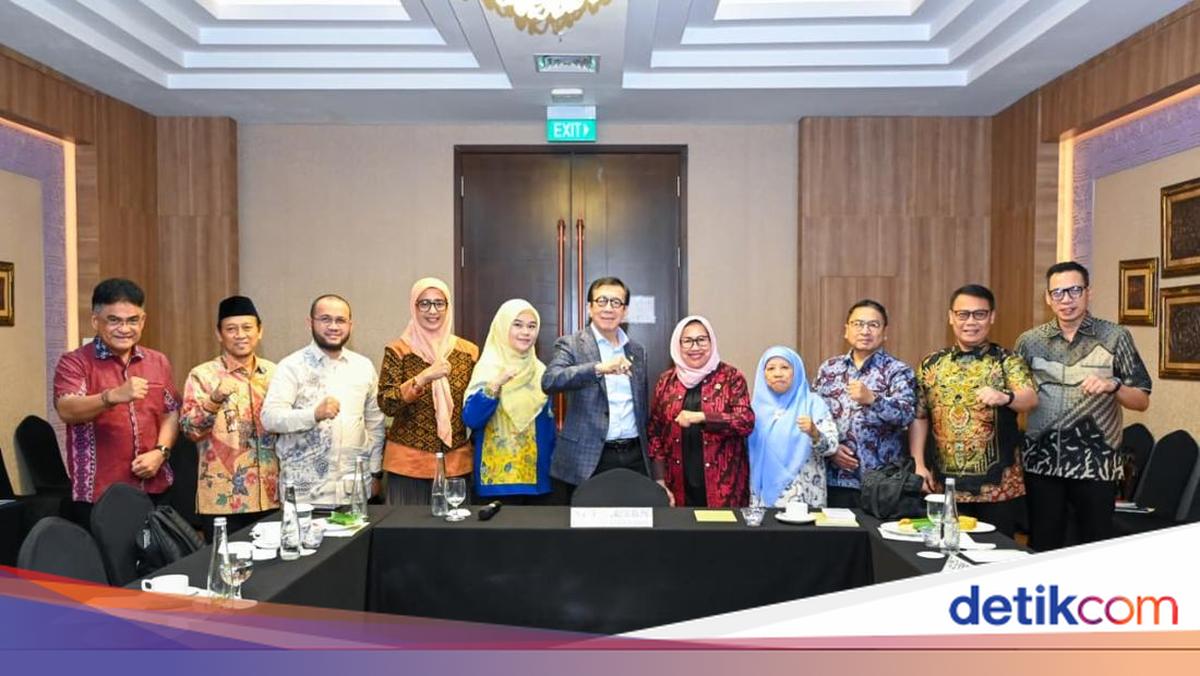
The MPR RI’s Group I Research Body organised a Focus Group Discussion (FGD) entitled ‘People’s Sovereignty in the Perspective of Pancasila Democracy’ as part of a comprehensive study of the 1945 Constitution and its implementation, in Yogyakarta on Friday 22 May 2026. The FGD featured two academic speakers, namely Prof. Dr. Ni’matul Huda (Dosen HTN FH UII) and Dr. Abdul Gaffar Karim (Dosen FISIPOL Universitas Gadjah Mada). The FGD was attended by the Leaders and Members of the MPR RI’s Research Body including Prof. Dr. Yasonna H. Laoly, Dr. Andreas Hugo Pereira, Dr. Ir. Endang Setyawati Tohari, DESS., Dr. Dedi Iskandar Batubara, Denty Eka Widi Pratiwi, Dr. Hilmi Muhammad, MA, Dr. Ahmad Basarah, Jialyka Maharani, and other members of the Secretariat General. In the forum, views emerged that Indonesian democracy cannot be measured merely by the holding of elections, the existence of political parties, parliament, freedom of expression, and democratic institutions. The more fundamental challenge is how all these democratic mechanisms truly realise substantive popular sovereignty. The MPR’s Research Body regards that people’s sovereignty in Pancasila Democracy must not stop at electoral legitimacy every five years. The people must have real space to be heard, represented, monitored, corrected, and to participate in determining the direction of state administration. In his policy brief, Dr Abdul Gaffar Karim emphasised that Indonesian democracy is relatively strong procedurally, but still weak in ensuring the people’s control over power. ‘People’s sovereignty must not merely be a source of legitimacy for power, but must be an instrument for the people to steer and correct government policy,’ said Abdul Gaffar Karim in his statement, Friday 22 May 2026. Within the FGD framework, Group I’s theme focuses on strengthening the system of Pancasila Democracy, the representative democracy grounded in the principle of deliberation and consensus in the fourth principle of Pancasila, and strengthening substantive democracy amid the dominance of procedural democracy. One of the prominent topics is the importance of meaningful public participation. The forum notes that in the digital era public participation is broader, but not necessarily of higher quality. Social media makes public voices louder, but not all viral content reflects the genuine aspirations of the people. Therefore, state institutions are deemed to need the ability to distinguish between noise and voice: what is mere uproar, emotion, or digital manipulation, and what is truly the people’s aspiration that needs to be acted upon in policy processes. The forum also discussed the boundary between criticism and insult. Criticism is viewed as an important part of the people’s control over power and does not have to be accompanied by solutions. Healthy criticism is aimed at improvement, policy correction, and accountability demands. By contrast, insults are personal attacks that have no improvement orientation and are not argument-based. Besides digital democracy issues, the FGD also highlighted the importance of strengthening political parties, political education, constitutional literacy, representation of communities and groups, and the need for channels of aspiration able to accommodate the voices of indigenous peoples, women, youth, farmers, fishermen, professionals and other social groups. In the forum, it was also voiced that the MPR must be strengthened as the great house of national deliberation. The MPR is not merely a ceremonial institution, but a constitutional forum to integrate the aspirations of the people, regions and communities, and to formulate recommendations for organising Indonesia’s state system. The discussion also touched on the importance of the state direction or Pokok-Pokok Haluan Negara as a major compass for state administration. The state direction is not meant to be interpreted as a technical document that takes over the President’s authority, but as a strategic guide to ensure that national development is not interrupted by changes in government. Besides political democracy, the forum emphasised the importance of economic democracy. People’s sovereignty does not only mean citizens are sovereign in the ballot box, but also must be sovereign over land, food, energy, minerals, frequencies, and other strategic resources. In this context, Article 33 of the 1945 Constitution should continue to be upheld as the basis for resource management for the greatest possible prosperity of the people. Next, in his presentation, Prof. Ni’matul Huda asserted that democracy can become corrupt if all its means and mechanisms merely become symbols, without being underpinned by the rule of law, responsibility, discipline, morality, integrity, and dignity. His presentation also highlighted issues of procedural democracy, money politics, entrenchment of political parties, and rapid-legislation practices that lack meaningful participation. The FGD concluded that the challenge of Pancasila Democracy today is not merely whether democratic mechanisms exist, but whether those mechanisms truly realise people’s sovereignty in practice. Moreover, Pancasila Democracy must move from procedural democracy to substantive democracy; from merely elections to people’s control; from the noise of participation to meaningful participation; from political sovereignty to socio-economic sovereignty; and from formal forums to a living national deliberation. ‘People’s sovereignty in Pancasila Democracy cannot be realised merely through the right to vote. It must exist in the people’s ability to be heard, to be represented, to be overseen, to be corrected, and to enjoy the fruits of development in a fair manner,’ said one of the key conclusions to emerge from the FGD. The results of the FGD will be used by the MPR’s Research Body in preparing recommendations for a comprehensive study of the 1945 Constitution and its implementation, particularly regarding strengthening people’s sovereignty in the perspective of Pancasila Democracy.