
The Moon Is Moving Away from Earth, and Humans Are Already Feeling the Effects
The distance between the Earth and the Moon has never been truly constant. Behind its beauty each night, Earth’s natural satellite is known to be slowly moving away from the planet we inhabit.
This positional shift was revealed thanks to historic findings from the Apollo missions of the 1960s. At that time, astronauts placed reflectors (special light reflectors) on the Moon’s surface.
Using the Lunar Laser Ranging Experiment method, scientists measured the travel time of laser beams fired from Earth until they bounced back to their point of origin. Periodic monitoring has shown a consistent trend: the Moon is moving away at a very slow rate of about 3.8 centimetres per year.
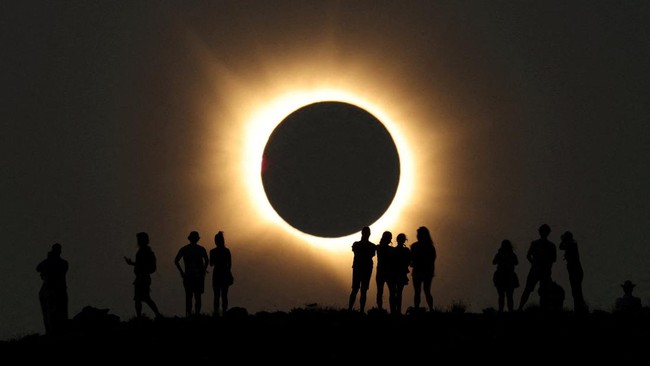
Although slow, this movement carries significant consequences for the future of Earth and humanity. According to a report by IFL Science, the Moon’s retreat could one day make total solar eclipses impossible to witness from Earth, as the Moon’s visual size in the sky appears increasingly smaller.
Currently, the Moon’s visual size in the sky is almost aligned with that of the Sun, even though the Sun is 400 times farther from Earth than the Moon and has a diameter 400 times larger. This alignment is what allows us to enjoy the phenomenon of total solar eclipses.
By comparison, 4 billion years ago, when the Moon first settled into its orbit, it appeared three times larger than it does today.
“Over time, the number and frequency of total solar eclipses will decrease. In about 600 million years, Earth will witness the beauty of a total solar eclipse for the last time,” said NASA scientist Richard Vondrak.
Source: jawawa.id (https://jawawa.id/newsitem/the-moon-is-moving-away-from-earth-and-humans-are-already-feeling-the-effects-1787813495)
Originally published by CNBC Indonesia (https://www.cnbcindonesia.com/tech/20260827113945-37-762673/bulan-bergerak-menjauhi-bumi-manusia-sudah-rasakan-dampaknya), translated from Indonesian