
The Ministry of Hajj and the Pursuit of Mabrur: Reflections on the Service of Hajj and Umrah
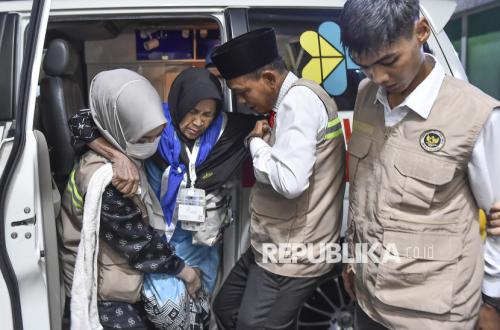
There is one experience that is difficult for anyone who has performed the Hajj pilgrimage to forget: being a guest of Allah while simultaneously witnessing how the state is present to serve those guests. The Hajj experience is not merely a spiritual journey to the Baitullah; it is also a journey of humanity. There, we learn that an intensely individual act of worship actually requires highly collective service.
Millions of pilgrims’ steps must be managed. Transport must be ensured. Food must be available. Hotels must be decent. Health must be maintained. The elderly must be accompanied. There are pilgrims who get lost, become exhausted, fall ill, or even require emergency assistance. Behind all of this are the hands of officials working, often far from the camera’s spotlight.
The State is Present to Serve the Guests of Allah
The year 2026 marks a new chapter in the history of Indonesian Hajj administration. The presence of a dedicated ministry to handle Hajj and Umrah brings new hope that services for pilgrims will become more focused, professional, integrated, and oriented towards pilgrim needs.
The Ministry of Hajj (Kemenhaj) is driving service quality through several new approaches, including the digitalisation of services, accelerating departure processes, strengthening pilgrim data validation, and increasing the standards of catering, accommodation, and transport services. Interestingly, appreciation for the 2026 Hajj services does not come from just one party. Field evaluations also show improvements in various aspects of service, ranging from departures, transport, and lodging to catering and health.
Furthermore, the Hajj Oversight Team of the Indonesian House of Representatives (DPR RI) assesses that this year’s service delivery feels more humanistic and provides greater attention to the comfort of pilgrims, including the elderly and vulnerable groups. In my view, this is not merely about service statistics. It is about how the state treats its citizens while they are performing their religious duties.
I have been on both sides. I have been in the position of a pilgrim, specifically in 2019 / 1440 H. At that time, I received the blessing of a transferred Hajj quota, which was officially implemented based on Law Number 8 of 2019 concerning the Implementation of Hajj and Umrah Pilgrimage. My father passed away in the year his Hajj departure arrived, having registered in 2010. Following his wishes, I replaced the deceased and accompanied my mother on the Hajj pilgrimage to the Holy Land.
Therefore, I know what it feels like to stand in the Holy Land with a racing heart. I know what it feels like to be a small human being amidst millions of people arriving with the same purpose: to answer the call of Allah.
However, I have also been in the position of serving pilgrims. Specifically, in 2024 / 1445 H. A friend, who owns a travel agency in Jakarta, contacted me and asked for my help to participate in the Hajj pilgrimage to assist pilgrims. From that experience, I understood one simple thing: pilgrims do not only need correct service, but also service that touches the heart.
Elderly pilgrims may not always need long explanations; they need someone willing to hold their hand. Exhausted pilgrims do not always need complex words; they need an official who patiently says, “Sir/Madam, let me help you.”
Confused pilgrims do not need bureaucracy; they need certainty. And sick pilgrims need the presence of the state to be truly felt. Therefore, the true measure of success in Hajj services is not just how many hotels are available, how many buses are operating, or how fast the digital system works.
The most important measure is: Do the pilgrims feel safe? Do the pilgrims feel respected? Do the pilgrims feel served? And can the pilgrims worship in peace?
Source: jawawa.id (https://jawawa.id/newsitem/the-ministry-of-hajj-and-the-pursuit-of-mabrur-reflections-on-the-service-of-hajj-and-umrah-1788872382)
Originally published by Republika (https://analisis.republika.co.id/berita/tl1o22366/kemenhaj-dan-asa-kemabruran-refleksi-hari-khidmat-haji-dan-umrah), translated from Indonesian