
The Milky Way Mystery: Why Sub-Neptune Planets Are Rare Around Low-Mass Stars?
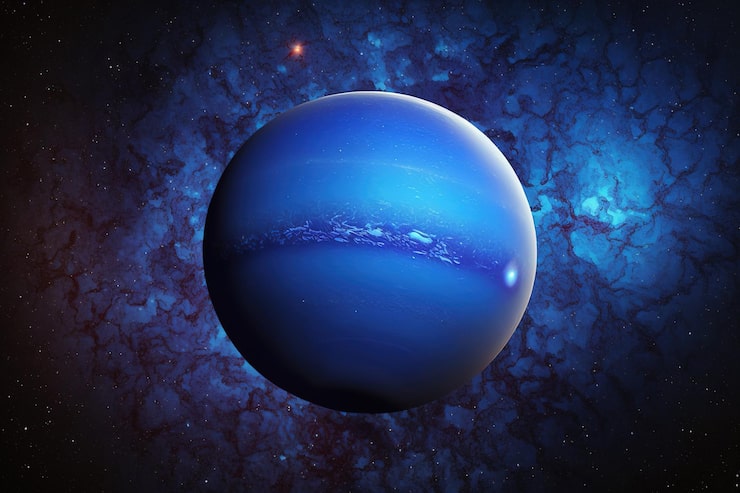
Astronomers have just revealed a major mystery in the Milky Way regarding the distribution of planets around small stars. The latest research shows an anomaly in which sub-Neptune planets, those sized between Earth and Neptune, are almost absent in systems around faint red dwarf stars, the most common type of star in our galaxy. The findings, published in The Astronomical Journal, provide a new perspective on planetary evolution. Using six years of data from NASA’s Transiting Exoplanet Survey Satellite (TESS), scientists attempt to map the occurrence of planets via the transit method or by observing changes in starlight. Based on the data analysed, out of 8,134 faint red dwarfs (mid-to-late M dwarfs) observed, researchers only verified five sub-Neptune planets. This figure is very low given the dominance of this star type in the Milky Way. Eric Gillis, a doctoral student at McMaster University, said the phenomenon points to a unique planet-formation mechanism. “Around these stars, sub-Neptunes essentially disappear. That means the planet-formation mechanism there is indeed different,” Gillis said. Unlike the scarcity of sub-Neptunes, the study instead finds an abundance of super-Earths or rocky planets slightly larger than Earth. In Sun-like stars, there is usually a “radius valley” that clearly separates the super-Earth and sub-Neptune categories. However, around small stars, this pattern is not seen because planets tend to cluster around Earth-like sizes. Scientists propose two main theories to explain the phenomenon. This finding has significant implications for strategies in the search for life beyond Earth. Scientists’ focus now increasingly shifts to small-star systems with compact, small planets. Although giant planets like Jupiter or ‘Hot Jupiters’ are not found around these stars, the abundance of rocky planets offers renewed hope in studying habitable zones. To date, researchers still require more detailed data on the masses and atmospheric compositions of these planets to fully understand their origins and potential habitability in the future. Note: Specific data on the list of verified planets from this study are still undergoing further validation through follow-up observations. Copyright @ 2026 Media Group - mediaindonesia. All Rights Reserved.