
The Middle East's Lifeblood Vanishing: A Warning Foretold
The Euphrates and Tigris rivers have for millennia been known as the lifeblood and the foundation of early human civilisation. The fertile region between these two ancient rivers—historically known as Mesopotamia—was the birthplace of the world’s first cities, such as Uruk and Babylon, which are now administratively located within Iraq.
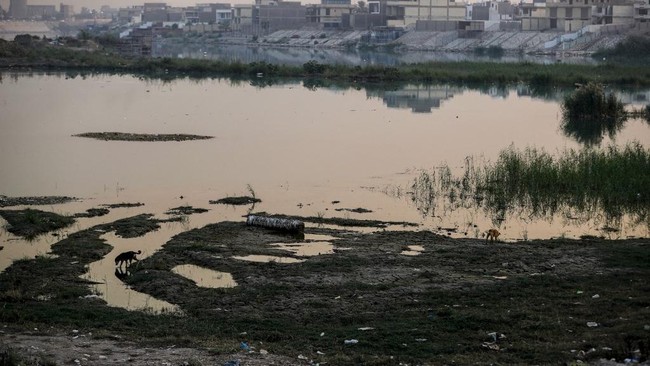
However, current conditions indicate a very serious environmental crisis threat. This lifeblood, which was once magnificent and supported dozens of generations, is reported to be slowly disappearing due to the impact of global climate change. Based on various environmental projections and modelling, the flow of the Euphrates and Tigress rivers is projected to potentially shrink drastically and even dry up completely by the year 2040. This crisis is occurring alongside rising global temperatures, prolonged droughts, and steadily declining rainfall in the Middle East region in recent years.
A warning from the Prophet Muhammad SAW 14 centuries ago aligns with this phenomenon. In Islamic literature, the drying of the Euphrates is believed to be one of the prophecies or signs of the end of times. In an authentic hadith narrated by Imam Muslim, the Prophet Muhammad SAW said: “The Hour will not be established until the Euphrates dries up and reveals a mountain of gold, so that people will fight over it and kill one another for it” (HR. Muslim No. 2894).
Scientifically, the drying of this river is indeed triggering new geopolitical conflicts due to the struggle for increasingly scarce access to clean water in the Middle East. The impact of the loss of water volume in this river system cannot be underestimated. According to recent data, approximately 60 million people depend entirely on the flow of the Euphrates and Tigris river systems. Communities spread across Turkey, Syria, and Iraq rely heavily on this aquatic ecosystem for various crucial needs, ranging from daily drinking water supplies and the agricultural sector to primary energy sources via hydroelectric power plants. The combination of water resource mismanagement, political tensions between riparian states (upstream and downstream), and the impact of extreme climate change now places the future of the Middle East on the brink.