
The Meratus Conservation Dilemma: Indigenous Communities Reject National Park Status
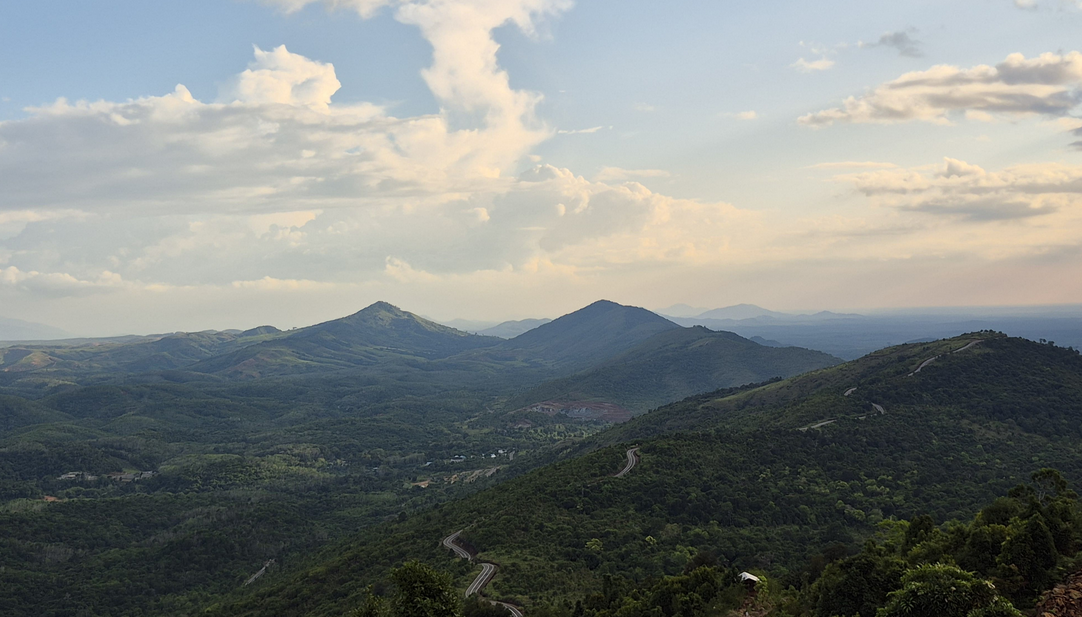
The plan to designate Meratus Mountains as a National Park has triggered a wave of strong opposition from various segments of society in South Kalimantan. The policy proposed by the South Kalimantan Provincial Government is viewed not as a solution to environmental conservation but as a real threat to the survival of Indigenous communities who have cared for the area for centuries.
According to data disclosed at a public hearing (RDP) at the South Kalimantan Provincial DPRD, the Meratus National Park proposal covers an area of 119,779 hectares. The area spans five districts:
The crucial problem arises because around 52.84% of the total proposed area lies directly within customary territory. This has raised concerns about large-scale dispossession of living space under the banner of conservation.
The Indonesian Environment Forum WALHI Kalimantan Selatan, together with representatives of Indigenous communities and student associations (BEM) across South Kalimantan, highlighted that top-down approaches to conservation often overlook public participation. Some of the negative impacts feared include:
National Park status is typically followed by strict zoning rules. This could cut off Indigenous access to non-timber forest products and to sacred sites that form part of their cultural identity.
Traditional livelihoods, such as shift-style farming that is carefully regulated, or the harvesting of herbal medicines, could be deemed illegal within the park, leading to legal jeopardy for local residents.
Rather than protecting, separating people from nature is seen as potentially worsening the crisis. WALHI contends that the core foundation of environmental sustainability is justice for its people.
Global data show that around 70% of the world’s remaining intact forests are under Indigenous community management rather than state control. In Meratus Mountains, Indigenous peoples have proven their ability to safeguard the ecosystem without formal government status.
This opposition sends a strong signal to the Ministry of Environment and Forestry of the Republic of Indonesia and to the South Kalimantan Provincial Government to reconsider the proposal. Without clear recognition of customary rights and Free, Prior, and Informed Consent (FPIC), the Meratus National Park project risks becoming another battleground in Bumi Lambung Mangkurat’s land conflicts.
Designating Meratus Mountain National Park without involving and recognising Indigenous rights is seen as a backward step in conservation. Environmental protection should proceed in tandem with human rights protection, ensuring the lungs of Kalimantan remain safeguarded without expelling those who have cared for it for generations. (DY/I-1)
Azis urged the state to recognise not only the administrative rights of Indigenous communities but also to keep the land productive without erasing local wisdom values.
In Mentawai, West Sumatra, energy transition success is determined by safeguards for Indigenous land rights and active local involvement in energy management.
Member of the House of Representatives’ Legislative Body (Baleg) Siti Aisyah emphasised that the Indigenous Peoples Bill should genuinely protect the existence of indigenous communities. Read her views on the role of local regulations and the risk of marginalisation.
Member of Commission III of the DPR Nyoman Parta urged the passage of the Indigenous Peoples Bill as a fulfilment of the Republic’s promises.
Advocating for a World-Standard Revenue-Sharing Scheme and Infrastructure in the Bromo Area