
The Meeting Point of Spirituality and Management in Pesantren
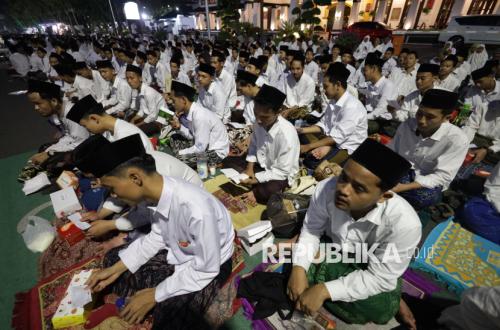
Pesantren in Indonesia bear a very special historical and sociological mandate. These institutions steadfastly preserve the authenticity of classical Islamic scholarly traditions, while being continually required to produce generations capable of facing the dynamics of the times and a knowledge-based economic landscape.
However, amidst the increasingly rapid pace of modernisation, pesantren are often confronted with governance tensions that are not simple. The spiritual leadership of the kyai, deeply rooted in moral authority, scholarly legitimacy, and exemplary relationships with students, is often seen as distant from the demands of institutional accountability, stakeholder participation, and data-based management.
The view that places spiritual tradition and modern management as two opposing poles is refuted by empirical evidence. A systematic literature review of 240 reputable international journal articles from 2016 to 2026 proves that pesantren in the country are actually transitioning towards a robust and tested hybrid governance model. Islamic spirituality and modern management instruments are shown not to negate each other, but rather to be capable of mutually supporting one another within a single institutional breath.
Over the past few decades, the map of pesantren governance studies was indeed split into two major streams. The theocentric stream placed the kyai’s charisma, student obedience (tawadu’), and moral orientation as the main driving axis. This approach is deeply rooted in regions with dense classical pesantren traditions, such as West Java, Yogyakarta, and Aceh.
Conversely, the anthropocentric stream placed greater emphasis on accelerating digital transformation, measurable strategic planning, and meeting accreditation standards. This approach, oriented towards stakeholder responsiveness, flourishes in urban centres such as Jakarta and Surabaya, where pesantren interact directly with market competition and state regulation.
Interestingly, research dynamics in recent years show a significant surge in the integrative approach. Pesantren prove that the adoption of modern management is not a form of secularisation that erodes the institution’s sanctity. On the contrary, contemporary governance principles are successfully naturalised and infused through the treasury of Islamic values.
Institutional accountability is deeply understood as a manifestation of the value of trustworthiness (amanah). Digital transformation is carried out not merely for the sake of trends, but to expand the space for da’wah and the deepening of religious knowledge (tafaqquh fi al-din). Likewise, the integration of vocational education and sharia economic business units is positioned as an endeavour to fulfil social obligations (fardhu kifayah).
The success of this hybrid governance is supported by the presence of transformative leadership. When kyai and bu nyai figures combine the sharpness of traditional religious knowledge with formal educational qualifications in management or education, institutional renewal can proceed smoothly without causing cultural clashes.
Source: jawawa.id (https://jawawa.id/newsitem/the-meeting-point-of-spirituality-and-management-in-pesantren-1787043373)
Originally published by Republika (https://analisis.republika.co.id/berita/tjyhg0451/titik-temu-spiritualitas-dan-manajemen-di-pesantren), translated from Indonesian