
The Mecca Pact and a New Chapter in Middle East Security
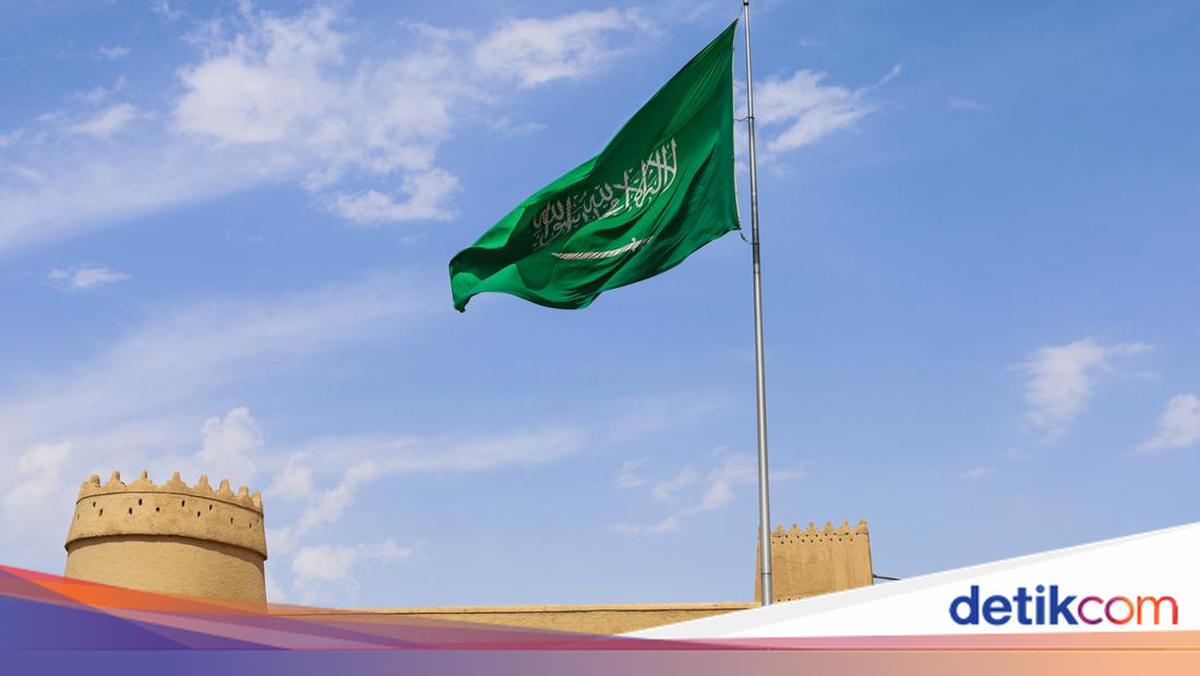
On Friday, 7 August 2026, Saudi Arabia, Turkey, and Pakistan signed the Mecca Joint Defence Agreement in the city of Mecca, a trilateral defence pact that establishes in principle that an attack against one member state will be viewed as an attack against all three. The agreement was signed by Saudi Crown Prince Mohammed bin Salman, Turkish President Recep Tayyip Erdogan, and Pakistani Prime Minister Shehbaz Sharif, bringing together three Muslim powers with distinct strategic characteristics within a single collective defence framework.
The emergence of the Mecca Pact cannot be separated from the drastic changes in the Middle East security environment throughout 2026, particularly following the escalation of conflicts involving Iran, the United States, Israel, Saudi Arabia, and armed groups affiliated with Tehran. Amid a situation of increasing missile and drone attacks, threats to energy infrastructure, and growing security uncertainty in the Gulf region, Riyadh has a vested interest in expanding its defence network beyond its traditional dependence on Washington.
Geopolitically, the Mecca Pact unites Saudi Arabia as a major economic and energy power in the Gulf, Turkey as a major NATO military and defence industry power, and Pakistan as the only Muslim-majority country possessing nuclear weapons. This combination provides a far more complex strategic dimension than ordinary bilateral defence cooperation, as each country brings different resources, military experience, defence industrial capacity, and geographical positions.
Turkey holds a unique position as a NATO member with complex relationships with Iran, Russia, Arab states, and the West, while Pakistan has strong historical and security ties with Saudi Arabia but also shares a border with Iran. Saudi Arabia’s primary interest is to protect its national territory, energy facilities, trade routes, and the Vision 2030 economic transformation agenda from disruption by regional conflict escalation.
Therefore, the Mecca Pact should not be read merely as a military agreement, but as an indication of the emergence of a more independent regional security architecture amid uncertainty over the extent to which the United States will continue to act as the primary security guarantor for Gulf states. For Riyadh, diversifying defence relations allows the kingdom to build deterrence capacity through multiple partners without automatically abandoning its strategic relationship with Washington.
Interestingly, the signatories of the Mecca Pact have sought to avoid the perception that the agreement constitutes the formation of a new military bloc explicitly aimed at Iran. A Saudi statement stressed that the pact is not the formation of a military axis or a sectarian bloc, while President Erdogan stated that the agreement does not target any specific country and is open to other nations that desire peace and regional stability.
This statement was reinforced by Turkish Foreign Minister Hakan Fidan on Saturday, 8 August 2026, when he explained that Iran is not listed as a common threat in the text of the agreement and that no specific country is targeted by the pact. Fidan further stated that Turkey, Saudi Arabia, and Pakistan are not expansionist countries, but rather nations primarily concerned with protecting their borders, national interests, development, and the stability of their surrounding environment.
On the same day, Turkish Vice President Cevdet Yilmaz conveyed a similar message, stressing that the Mecca Agreement is not directed against Iran or any other country, but is intended to strengthen regional security, collective defence, and deterrence capability. Diplomatically, Ankara is thus attempting to distinguish between deterrence against aggression and the formation of an offensive alliance against Tehran, even though the strategic perceptions of other countries in the region may not necessarily follow this official narrative.
Why Iran Remains Wary?
The core issue of the Mecca Pact is not merely what is written in the document, but how other states interpret the shift in the distribution of power that takes effect after the agreement. In international politics, an alliance can be claimed as defensive by its members, but still be perceived as offensive by outsiders if the resulting configuration of power, geographical location, and assembled military capabilities are seen to alter the strategic balance.
A comparison with NATO arises particularly because of the principle that an attack against one member is considered an attack against all, a principle reminiscent of Article 5 of the North Atlantic Treaty. NATO itself explains that Article 5 is the core of collective defence, but assistance to an attacked member does not automatically mean all members must provide a military response in the same form.
In the case of the Mecca Pact, this similarity is important because it creates a deterrence effect through uncertainty for any potential aggressor regarding the cost it would have to bear if it attacked one of the members. Whereas previously an attack on Saudi Arabia could be perceived as a bilateral conflict between Riyadh and a specific actor, the calculation now potentially changes because Ankara and Islamabad have politically declared their commitment to collective defence.
However, there are important differences between the Mecca Pact and NATO that should not be overlooked in academic analysis or media reporting. NATO possesses an institutional structure that has evolved over more than seven decades since its founding on 4 April 1949, whereas the Mecca Pact is still a new framework that must build mechanisms for command, coordination, and interoperability.