
The Meaning Behind the Meeting of Prabowo and Megawati
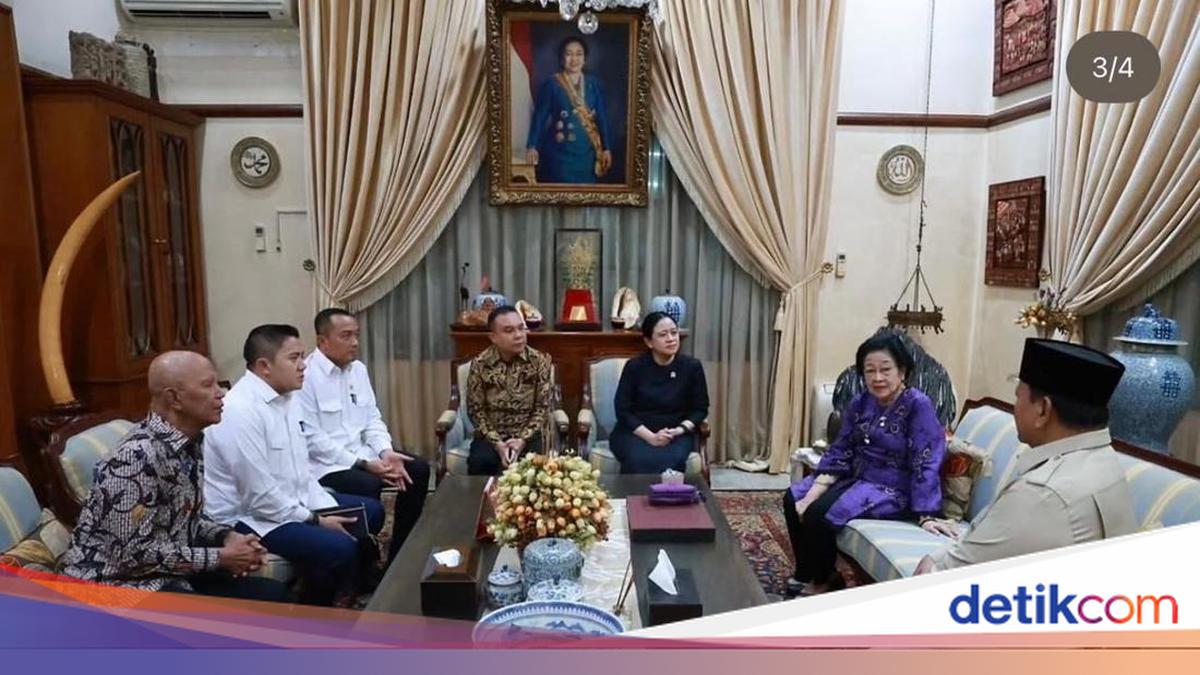
The meeting between President Prabowo Subianto and the 5th President of the Republic of Indonesia, Megawati Soekarnoputri, on 28 September 2026, is interesting to read not merely as a political event, but also as a communicative event. The context of the meeting was clear: Prabowo visited Megawati’s residence to express condolences for the passing of Mohammad Guruh Isobari Soekarnoputra, Megawati’s brother and the youngest son of President Soekarno. Prabowo was accompanied by the Deputy Speaker of the House of Representatives (DPR RI) Sufmi Dasco Ahmad, State Secretary Prasetyo Hadi, and Cabinet Secretary Teddy Indra Wijaya. Megawati welcomed Prabowo alongside the Speaker of the House Puan Maharani and the Chairman of the PDI Perjuangan DPP Said Abdullah.
Available documentation shows Prabowo and Megawati sitting close together and conversing in the atmosphere of the funeral home. Said Abdullah explained that the meeting took place in a personal atmosphere and that there were no political discussions. He also mentioned that both parties offered prayers for one another. Thus, the visit should first and foremost be placed as it is: as a condolence visit. However, when photos of the meeting circulated in the public sphere, an event that was essentially personal simultaneously became a communicative event that opened up space for interpretation.
An event does not always derive meaning solely from what is visible. Context, location, the relationship between participants, public knowledge of their history, and even who was present can influence how an event is read. In the meeting between Prabramo and Megawati, what appeared was actually simple: Prabowo came to convey condolences, Megawati received him, and both sat and conversed, while several close associates were around them.
However, the public does not view Prabowo and Megawati as two individuals without history. Both are national figures with long political journeys and significant positions in Indonesian politics. It is this context that allows a photo of a condolence visit to be read more broadly than what is visible to the naked eye. This is not because the photo proves the existence of a specific political agenda, but because the public reads their encounter using their knowledge of their respective historical relationships and political positions.
The venue of the meeting also shapes how the event is interpreted. Prabowo did not meet Megawati at the State Palace, the Parliament building, party offices, or in a negotiation room. He went to Megawati’s residence while her family was in mourning. This spatial context is important. A meeting at a conference table might immediately be associated with negotiation, while appearing together on a podium is more easily understood as an official statement. A meeting at a funeral home presents a different context: condolences, respect, acceptance, prayer, and social connection.
Prabowo’s identity as President and Megawati’s as the Chairperson of PDI Perjuangan certainly do not disappear, but in that space, both were also present in a human relationship. What is interesting about this meeting is not the speculation regarding what might be negotiated, but the visible fact: political differences did not prevent both from visiting, receiving, sitting together, and communicating directly.
Distance and body positioning also hold meaning in communication. Edward T. Hall, through the study of proxemics, demonstrates that humans communicate not only through words but also through the use of space and distance. Certainly, physical closeness cannot be simply translated into political closeness. However, the documentation of Prabowo and Megawati sitting close together in a relatively personal space produces a different visual impression compared to if both were sitting opposite each other in an official meeting.
There was no long meeting table separating them, no podium, and no attributes commonly accompanying political negotiations. These elements do not prove a change in political relations. However, communicatively, the atmosphere showed something simpler: political distance is not always identical to personal distance. Relationships between figures can have dimensions more complex than their formal positions in politics.
Another interesting aspect lies in who was around Prabowo and Megawati. Megawati was accompanied by Puan Maharani and Said Abdullah, while Prabowo was accompanied by Sufmi Dasco Ahmad, Prasetyo Hadi, and Teddy Indra Wijaya. They hold different formal positions and reasons for being present, so it would be inaccurate to immediately label this formation as a political team, let alone a negotiating team. However, in visual communication, the people surrounding the main figures also provide context for how a photo is read.
Puan holds a unique position as Megawati’s daughter, the Speaker of the House, and a key figure in PDI Perjuangan. Her presence has both familial and political dimensions. Said Abdullah has no biological family relationship with Megawati, but is the Chairman of the PDI Perjuangan DPP and a significant party figure. His presence in such a personal space can be understood as part of the circle of individuals who have access to and closeness with Megawati.
A similar pattern is seen in Prabowo’s entourage. Dasco, Prasetyo Hadi, and Teddy hold different institutional roles and functions. These differences in function make it inappropriate to group the three into a political category that they themselves have never declared. What can be said based on what is visible is merely that the meeting between Prabowo and Megawati took place with the presence of several important figures around both leaders. This fact adds a public dimension to an encounter whose primary context remains personal.
This is where it is crucial to strictly distinguish between communicative meaning and political evidence. The photo serves as documentation that the meeting…
Source: jawawa.id (https://jawawa.id/newsitem/the-meaning-behind-the-meeting-of-prabowo-and-megawati-1790780404)
Originally published by detikcom (https://news.detik.com/kolom/d-8686782/makna-di-balik-pertemuan-prabowo-dan-megawati), translated from Indonesian