
The Mass Resignation of Indonesia's Economic Ministers: Causes and Consequences
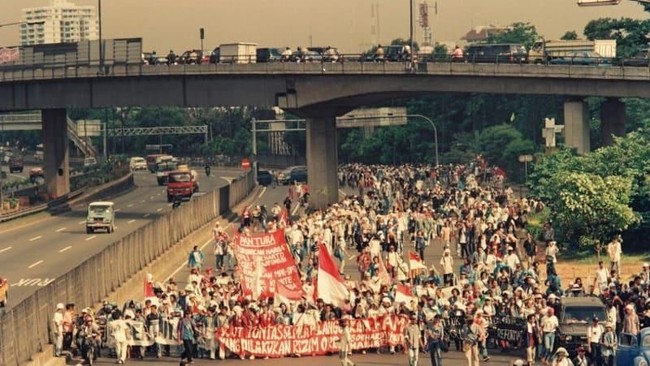
Jakarta, CNBC Indonesia - It may not be widely known that Indonesia once experienced one of the most dramatic political and economic crises in modern history. On 20 May 1998, 14 ministers in the economic and development fields simultaneously declared their resignation from the cabinet. The move was a devastating blow to President Soeharto’s administration and accelerated the end of his rule, which had lasted more than three decades. The decision to resign occurred amidst a monetary crisis that devastated the foundations of the national economy. The rupiah exchange rate collapsed, inflation soared, the banking sector faltered, and public trust in the government was nearly exhausted. On that day, the Coordinating Minister for Economy, Finance, and Industry, Ginandjar Kartasasmita, chaired a meeting of economic ministers at the Bappenas Building in Jakarta. The meeting was not a routine gathering. In his book Managing Indonesia’s Transformation (2013), Ginandjar recounted that the discussion was a continuation of intensive conversations since the morning with ministers, journalists, and business actors. All were discussing the same thing: Indonesia was moving towards the abyss of economic and political crisis without a roadmap for escape. At the Bappenas forum, Ginandjar candidly presented the national economic condition. The conclusion was firm: if left unchecked, Indonesia had the potential to collapse. This view was endorsed by almost all the ministers present. Only one expressed objection, namely the State Minister of Agrarian Affairs/Head of BPN, Ary Mardjono. From this collective awareness, a major decision was taken. Ginandjar conveyed his intention to resign from the Seventh Development Cabinet, which had only been inaugurated by President Soeharto four days earlier. However, the decision did not stand alone. One by one, other ministers declared a similar stance. That day, 14 ministers agreed to withdraw. They were Akbar Tandjung, A.M. Hendropriyono, Giri Suseno Hadihardjono, Haryanto Dhanutirto, Soehardjo, Ginandjar Kartasasmita, Kuntoro Mangkusubroto, Justika Baharsjah, Rachmadil Bambang Sumadhijo, Rahardi Ramelan, Subiakto Tjarawerdaya, Sanyoto Sastrowardoyo, Sumahadi, Theo L. Sambuaga, and Tanri Abeng. In a joint statement, they stated that the formation of a new cabinet would not solve the root problems of the crisis. This statement was a devastating blow to Soeharto, not only administratively but also symbolically, showing that the economic elite’s trust in his leadership had collapsed. Historian Robert Edward Elson, in Soeharto: A Political Biography (2017), noted that Soeharto was shocked and devastated. The ministers’ move was outside the power scenario he had arranged. Soeharto had still been planning to announce a Reform Cabinet on 21 May 1998 as an effort to salvage his legitimacy. Efforts to stem the tide of resignations were made. Vice President BJ Habibie, in Detik-detik yang Menentukan (2006), revealed that he had asked the ministers to stay on, but their decision was final. Having lost the support of key ministers and the political elite, Soeharto ultimately chose to end his rule. On 21 May 1998, a day after the mass resignation, Soeharto declared his resignation as President of the Republic of Indonesia.