
The Market Will Not Fix Itself; The State Must Be Present
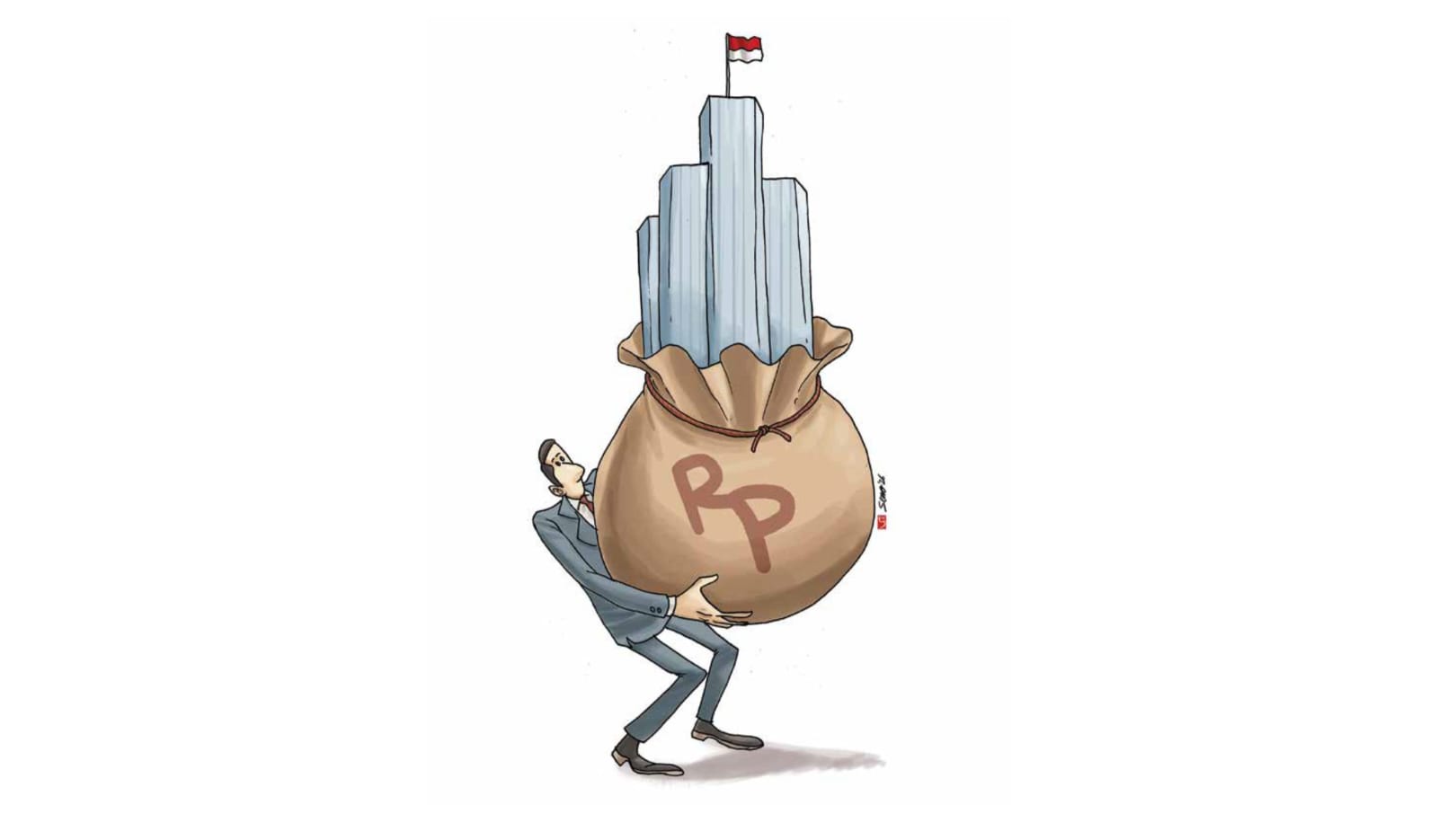
As the economy weakens, an old question resurfaces: does the government need to intervene more significantly, or should it allow the market to function independently? This debate is not new. For decades, the economic world has been divided into two major currents: those who believe the state must actively maintain the economy during market downturns, and those who believe the market is inherently capable of self-balancing without excessive government interference.
Recently, the Keynesian approach has returned to public debate. Some argue this approach is obsolete, leading only to deficits, debt, and fiscal waste. However, the issue is not that simple. In essence, Keynesianism is the idea that in certain situations, the state must intervene to keep the economy moving. When the public reduces spending, businesses delay investment, and economic activity slows, the government can step in through state spending to support demand. This can take the form of infrastructure development, social assistance, subsidies, business incentives, or economic recovery programmes. The goal is not for the state to control the entire economy, but to prevent a slowdown from turning into a deeper crisis. The logic is straightforward: when the economic engine loses momentum, the state provides an extra push to keep the wheels turning.
This school of thought emerged from the global experience of the Great Depression in the 1930s, when markets failed to recover on their own. Consumption plummeted, investment ceased, unemployment soared, and the economy entered a prolonged downward spiral. In such conditions, British economist John Maynard Keynes argued that the state must act as a temporary support when the private sector stops moving.
However, Keynesianism is not the only economic perspective. There is also the approach that believes markets work more efficiently without excessive government intervention. In this view, prices, investment, interest rates, and production should be left to market mechanisms, with the state merely maintaining the rules of the game, legal stability, and a conducive business climate. This view is also well-founded; many nations have failed due to overly dominant governments, inefficient bureaucracies, misdirected subsidies, and ballooning debt that fails to produce productivity.
Therefore, the economic debate is not about the state versus the market. The real issue is finding a balance: when should the market be left to work on its own, and when must the state intervene to maintain stability? If Keynesianism were entirely flawed, it would be difficult to explain why many nations have achieved high growth through strong state involvement.
These approaches can function simultaneously. The United States implemented massive Keynesian approaches through the New Deal during the Franklin D. Roosevelt era, building roads, dams, and public projects to absorb unemployment. During the 2008 global financial crisis, the US returned to large-scale fiscal stimulus. Similarly, during the COVID-19 pandemic, almost all developed nations employed highly Keynesian policies: surging state spending, increased cash assistance, expanded subsidies, and flooded market liquidity.
Europe followed a similar path. Following World War II, European economic reconstruction involved significant state involvement. Countries such as Sweden, Norway, and Denmark continue to maintain strong social welfare systems supported by substantial state spending in education, health, and social protection.
China provides an even more compelling example. It is difficult to imagine China’s economic rise without a dominant state role. Since the economic reforms of the late 1970s, China has opened its markets and attracted investment, yet the state maintains significant control over the direction of development, industrialisation, financing, infrastructure, and manufacturing transformation. When the 2008 crisis hit, China responded with a stimulus of approximately 4 trillion yuan (12% of China’s GDP) for infrastructure and public investment. Consequently, China’s economy continued to grow at high rates while many other nations experienced sharp slowdowns. In many ways, China demonstrates that market mechanisms and state intervention are not necessarily mutually exclusive; both can work together.
Thus, claiming Keynesianism is inherently wrong is an oversimplification. The real problem arises when expansionary fiscal policy is implemented without discipline or productive direction. Government spending does not automatically generate quality growth. If budgets are exhausted on inefficient projects, misguided subsidies, or short-term consumption without productivity, then deficits and debt can indeed become serious problems.
Conversely, if stimulus is directed towards productive sectors—such as infrastructure, education, health, research, industrialisation, and protecting purchasing power during crises—the multiplier effect on the economy can be immense. This is where the misunderstanding often lies. Many believe Keynesianism means the state can be perpetually wasteful and accumulate debt. In reality, the core of Keynesianism is not waste, but the stabilisation of economic cycles. When the economy weakens, the state supports demand; when the economy strengthens, the state must return to discipline to preserve fiscal space. In other words, Keynesianism is not an engine that should be running constantly; it is more akin to an economic shock absorber. Indonesia itself has utilised this approach many times, particularly during periods of crisis.