
The Lowest of the Low: A Defamation Trial and the Unresolved Diploma Polemic
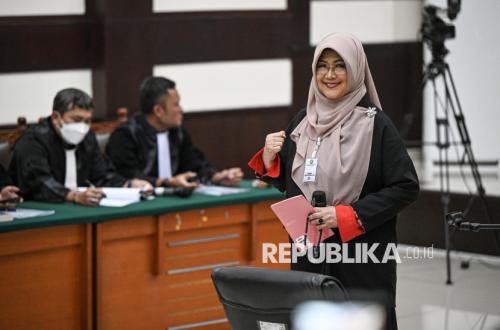
The lift in the courthouse only moves up and down a few metres. But on Thursday afternoon, a sentence in the courtroom seemed to bring a person’s dignity down to the very bottom floor. ‘Joko Widodo feels he has been insulted in the lowest possible way and demeaned to the deepest degree,’ the prosecutor read from the indictment against Dr Tifauzia Tyassuma, a doctoral candidate in philosophy, at the East Jakarta District Court. In the Indonesian language, there are almost no more steps down after those words. ‘Sehina-hinanya.’ ‘Serendah-rendahnya.’ Language has reached its lowest point to describe the honour of someone believed to have been trampled upon.
Interestingly, this point did not emerge in a corruption, murder, or treason case, but in a case of ‘alleged slander and defamation’ with a maximum prison sentence of under five years. The case itself originated merely from a polemic over a single diploma. Yes, just a single sheet. The inaugural hearing actually proceeded as a criminal case normally begins. The indictment was read out. The judge offered the possibility of resolution through a reconciliation mechanism permitted by law. However, the offer was rejected. Dr Tifa, who is also a grassroots social activist, chose to continue the trial. She stated she would fight the charges and requested that Joko Widodo appear in person in the courtroom, not just be represented by his legal counsel, and bring the diploma he claims is authentic.
The answer came just a few hours later. Through his legal counsel, Jokowi stated he was ready to appear if summoned by the court. In fact, according to his lawyer, he planned to bring not only his Gadjah Mada University diploma but also his elementary, junior high, and senior high school certificates. The statement immediately changed the complexion of the trial. What was initially expected to be merely the reading of the indictment is now seen by the public as the possible beginning of proof in a case that has been awaited and has captured public attention for nearly two years.
Yet herein lies the paradox of this case. What is being tried is not a ‘fake diploma’ case. The court is not being asked to decide a criminal case regarding the authenticity of a diploma. The charges brought by the prosecutor are solely articles concerning ‘alleged slander and defamation’. The elements that must be proven during the trial are whether or not a criminal act as charged occurred. This is where the public’s gaze shifts. The eyes of the law are focused on whether or not there was alleged slander and defamation. Meanwhile, the public’s eyes are looking in another direction: will the facts regarding the diploma issue, which has been in dispute for nearly two years, finally be examined before a judge? Two pairs of eyes are looking at the same courtroom, but with different focuses. The public asks: How does the court handle a case when the criminal element is alleged defamation, while the core of public attention lies precisely in the truth of the diploma facts that led to the accusation?
It is this paradox that makes this trial different from ordinary defamation cases. For nearly two years, the polemic over Jokowi’s diploma has circulated everywhere, consuming a great deal of the nation’s energy. It has lived on social media, in television debates, YouTube channels, discussion forums, chat groups, and 24-hour coffee shops. Various institutions have indeed provided explanations. The police have delivered the results of a criminalistic laboratory examination as part of the investigation process. Gadjah Mada University has also repeatedly explained its position. However, these explanations have not yet ended the debate. The public is still waiting for a certainty born from the process of proof before a judge, not merely from a war of statements in the public sphere.
Now, all eyes are turning to the courtroom of the Tifa case—and perhaps subsequently the Roy Suryo case, which is still undergoing a pretrial hearing. For it is there that evidence, witnesses, and statements from the parties will be examined openly according to law. Then another equally interesting question arises. Why is it precisely a case of ‘alleged slander and defamation’, originating from the issue of a diploma’s authenticity, that has given birth to the expressions ‘the lowest of the low’ and ‘demeaned to the deepest degree’? During his two terms as President, had Joko Widodo not faced far harsher accusations many times over? He was once accused of destroying democracy. He was accused of building a political dynasty. Some even called him a psychopath. At the end of his term, his name even appeared on the finalist list announced by the OCCRP in its controversial annual award related to corruption and organised crime. All these accusations were denied by Jokowi’s camp, and some even became world news.