
The Long Road to Restorative Justice for Children in Conflict with the Law
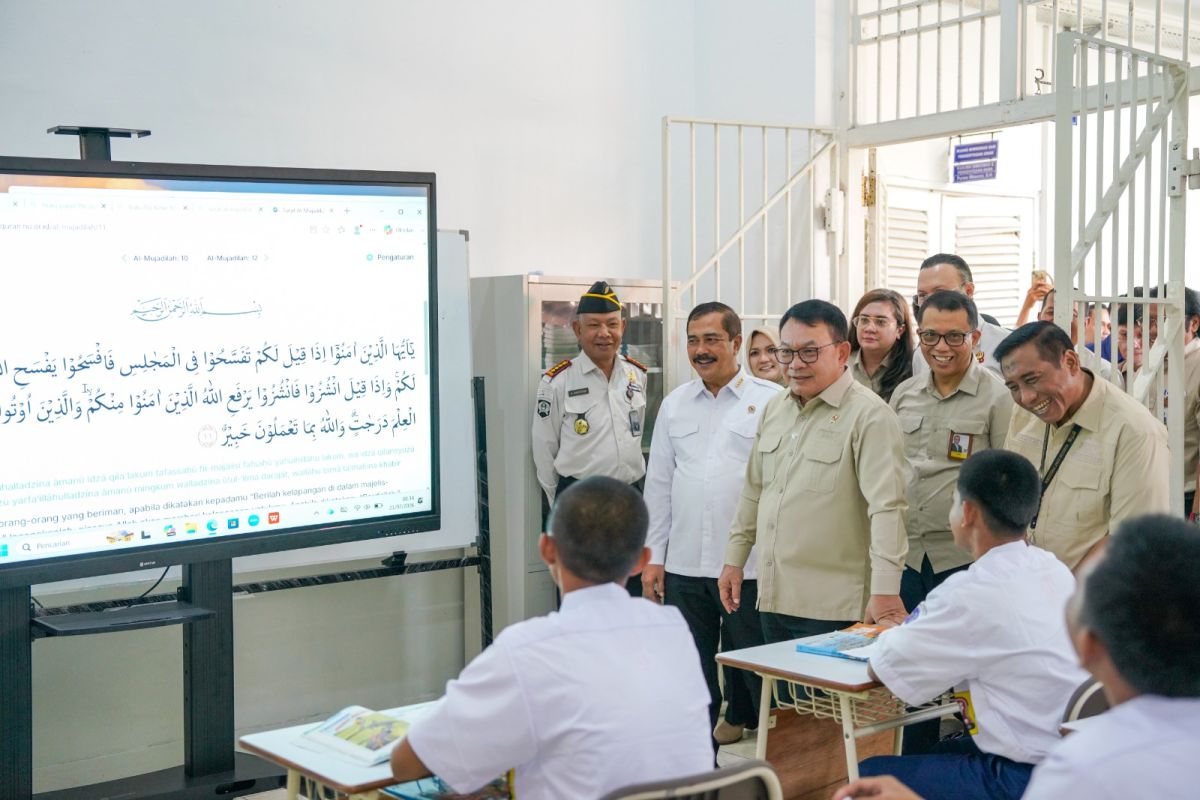
In the halls of the Special Child Development Institution (LPKA) Class I in Tangerang, a number of juvenile inmates listened to the message of Head of the Presidential Staff Office, General (Ret.) Dudung Abdurachman. He spoke about the future that still lies ahead, the courage to make decisions, and the importance of not repeating past mistakes. Within the same building, there are classrooms, a Community Learning Activity Centre (PKBM), workshops, and a production kitchen. These are the scenes of post-sentencing rehabilitation, a portrait of children who have reached the very end of the judicial system.
But how does a child end up in an LPKA? Indonesia’s Juvenile Criminal Justice System (SPPA), as regulated by Law Number 11 of 2012, was fundamentally designed to minimise the number of children ending up behind these doors. Article 5, paragraph (1) of the law mandates that child justice proceedings must prioritise a restorative justice approach, with diversion as its primary instrument. Diversion is the transfer of a child’s case resolution from the formal judicial process to an out-of-court settlement, starting from the investigation stage.
The underlying philosophy is simple yet profound. A child who enters a courtroom, bearing the status of a defendant, will carry that label long after the sentence is served. Diversion seeks to break that chain early, provided the criminal threat is under seven years and the offence is not a repeat crime.
However, to what extent is diversion actually working? Honestly, there is no single national figure that accurately depicts the percentage of child cases successfully resolved through diversion each year. The available data consists of fragmented regional snapshots with varying results. Research at the Serang Class II Correctional Centre recorded a diversion success rate of 86 percent. In contrast, a study in the Natuna Islands found a much lower success rate, citing a gap between normative obligations and practical implementation as the main cause.
During a discussion forum in early July, the Directorate of Crimes for the Protection of Women and Children at the National Police’s Criminal Investigation Agency, together with the Faculty of Law at UPN Veteran Jakarta, explicitly highlighted the lack of data synchronisation between law enforcement agencies—the police, prosecutors, courts, and correctional centres—as one of the main issues hampering the SPPA’s implementation.
Data from the Directorate General of Corrections at the Ministry of Immigration and Corrections shows that Indonesia has only 33 LPKA and 94 Correctional Centres to support the entire juvenile criminal justice system across 38 provinces. On Sumba Island, a single Correctional Centre must serve eleven districts simultaneously. This geographical challenge complicates the process of assisting children in conflict with the law from the earliest stages, long before diversion is even considered.
Similar obstacles also touch upon the statutory threshold for criminal penalties. The provision that diversion only applies to crimes with a maximum sentence of under seven years means that a number of serious cases involving children, including some sexual violence cases, automatically proceed through the formal justice system, regardless of the perpetrator’s young age.
A data recapitulation from the Supreme Court, cited by the National Law Development Agency (BPHN) for the period 2022 to the end of 2024, recorded a total of 4,960 child criminal cases resolved in District Courts. Of that total, 64 percent resulted in prison sentences or institutionalisation at an LPKA. The Indonesian Child Protection Commission, in its 2025 End-of-Year Report, recorded 36 complaints of children in conflict with the law who were directly institutionalised throughout the year. This figure is small compared to the court data, serving as a reminder that public complaint data and formal law enforcement data run on separate tracks, with scopes that do not always overlap.
Source: jawawa.id (https://jawawa.id/newsitem/the-long-road-to-restorative-justice-for-children-in-conflict-with-the-law-1784796970)
Originally published by Antara (Indonesian) (https://www.antaranews.com/berita/5662377/jalan-restoratif-bagi-anak-yang-berhadapan-dengan-hukum), translated from Indonesian