
The Lobster Seed Pendulum
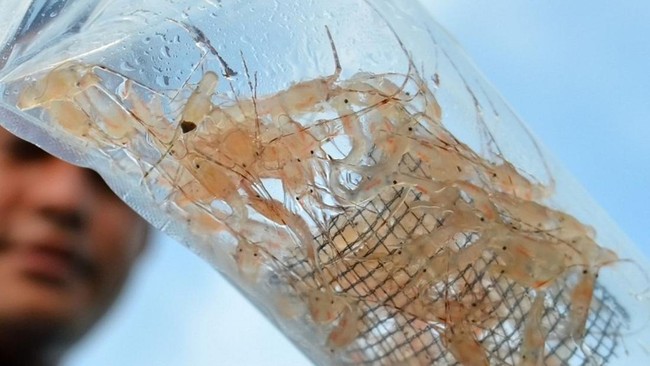
When the fishing season wanes, the southern coast of Java remains alight. From Banten to West Nusa Tenggara, boats’ lights can be seen shining in nearshore waters. There, fishers catch transparent lobster post-larvae (BBL), one of the few sources of income available when the fishing season ends.
On Monday, 12 October 2026, Marine Affairs and Fisheries Minister Sakti Wahyu Trenggono reiterated that BBL exports “will be stopped for good”. He made the statement as he launched a task force to combat the illegal removal of BBL, established under Presidential Regulation No. 69 of 2026. The task force is mandated to trace the networks of collectors, financiers and controllers behind illegal trade.
I support efforts to stop smuggling and protect lobster stocks. But the word “for good” needs to be treated with caution. Indonesia’s history of managing lobster seed shows how easily policy can change direction without necessarily resolving the fundamental problems on the ground.
Six policy U-turns
Since 2015, BBL policy has changed direction at least six times. Under Susi Pudjiastuti, catching and exporting the seed were prohibited. In 2020, Edhy Prabowo reopened the trade; the decision was later followed by his arrest by the Corruption Eradication Commission (KPK).
Exports were closed again in 2021. In 2024, exports to Vietnam resumed under a joint-cultivation arrangement, before being halted in 2025. The government now says the export ban will be permanent.
These policy changes have not resolved two key outstanding issues: building domestic farming capacity and providing economic protection for lobster-seed fishers.
The experience of the previous ban deserves review. The number of lobster-growing businesses reportedly fell from around 500 to fewer than 20 after the 2015 prohibition (Jones et al., 2026). At the same time, smuggling continued. Data cited in a study by Djayanti et al. in the UGM Journal of Fisheries (2021) recorded about 100 seed-smuggling cases in 2017.
Five years of smuggling, the same pattern
Enforcement data from the past five years show a consistent pattern: whatever the status of exports, seed continues to flow abroad. From late December 2020 to mid-August 2021, after exports were closed again, authorities foiled 52 smuggling cases, seizing 3.87 million post-larvae worth Rp159.9 billion. Between January and November 2023, seizures by multiple agencies totalled 1.62 million, worth Rp163 billion.
The most striking figure came in 2024, when the government opened a legal export route to Vietnam. That year, the Ministry of Marine Affairs and Fisheries (KKP) recorded 44 interceptions at 16 locations, with 6.44 million post-larvae seized, worth Rp849 billion — the highest total in the past five years.
Opening an official route did not empty the illicit one. The BBL problem is therefore not simply a matter of whether exports are open or closed, but of governance and oversight that have never been fully resolved.
In 2025, seizures fell sharply to 1.31 million, a drop of about 80 per cent. This could mean smuggling declined, but it could also indicate weaker enforcement; the public has difficulty judging because the published data are incomplete.
Smuggling continued in 2026. Eight cases were recorded from January to May, including at Soekarno-Hatta Airport, Batam, Yogyakarta and Juanda, followed by interceptions in Lampung, Merak Port and Banyuwangi, and the seizure of around 150,000 post-larvae on the Jagorawi Toll Road in September. The routes span land, sea and air, across Java, Sumatra and the Riau Islands.
Figures reveal the scale of the incentive
In 2024, the KKP estimated that around one million post-larvae were smuggled abroad each day. At a reference price of about Rp150,000 each, potential state losses were estimated at Rp52.9 trillion to Rp54.75 trillion a year.
Meanwhile, authorities foiled the smuggling of about 1.31 million post-larvae during 2025 — equivalent to just one or two days’ flow, compared with the KKP’s own estimate. Even in 2024, the year with the largest seizures, the quantity intercepted was less than 2 per cent of the annual flow estimated by the ministry.
Foreign demand also remains high. In Khanh Hoa, one of Vietnam’s main lobster centres, locally sourced post-larvae meet only about 5 per cent of demand; the rest depends on imports, particularly from Indonesia (SeafoodSource, September 2026). As long as demand is strong and the value gap across the supply chain remains lucrative, a ban alone will not automatically remove the incentive to smuggle.
The price difference highlights the unequal distribution of benefits. To calculate potential state losses, the KKP uses a benchmark price of around Rp150,000 per post-larva (Antara, 6 May 2024), consistent with reports that the seed sells for Rp150,000–Rp200,000 each overseas.
By contrast, a study in Binuangeun, Lebak, recorded purchase prices from fishers of around Rp12,000 each (Nurdin et al., 2023), while a study by the Trenggalek Regional Development Planning Agency found a range of Rp6,000 to Rp18,000. A gap that can exceed tenfold shows that the greatest value does not remain with fishers, but can flow to later links in the trade chain.
Domestic farming capacity is also far below the sector’s potential and needs. Lobster aquaculture production stood at 437 tonnes in 2023 and 481 tonnes in 2024, still well short of the 1,100-tonne target for 2026.
Experience in Cidaun, Cianjur, in 2020 offers another warning: when exports were made conditional on farming activity, some facilities were reportedly used only to meet administrative requirements so that seed could be sold to exporters (Djayanti et al., 2021). In other words, facilities on paper do not necessarily represent genuine farming activity.
Science needs stronger data
Conservation is an important basis for regulating the use of BBL. Concerns about lobster-stock conditions are supported by evidence. BRIN researchers found that three lobster species in waters off Gunungkidul were overfished, with exploitation rates of 0.72–0.79, above the optimum limit of 0.5. Spawning biomass was estimated at just 22–35 per cent, below the safe threshold of 40 per cent (Tirtadanu et al., 2021).
A subsequent study placed the area’s lobster fishery in the red zone, identified the intensification of seed fishing as one of the risk factors, and noted that some fishers had switched to other species because catches had declined (Tirtadanu et al., 2024).
Other research, however, has reached different conclusions. Priyambodo, Jones and Sammut estimated Indonesia’s seed catch at around 103 million a year — more than 20 times Vietnam’s seed resources.
They argued that the previous ban had not been shown to increase the number of adult lobsters, but had instead weakened domestic farming while seed continued to flow to Vietnam (Priyambodo et al., 2020). These studies also put the natural survival rate of post-larvae at only about 1–3 per cent.
These differing findings should not be used as a reason to choose one side for political purposes. Rather, they underline the need for stronger data and a consistent monitoring system. Estimates of Indonesia’s seed catch alone range from 103 million to 316 million a year, while data on fishing intensity and effort remain limited.
Official figures also do not align. The KKP’s estimate of smuggling — one million post-larvae a day, or around 365 million a year — exceeds all researchers’ estimates of the total seed catch. Estimates of state losses have also varied without an explanation of the methodology: Rp30 trillion in lost non-tax state revenue in 2023, Rp52.9 trillion to Rp54.75 trillion in annual losses in 2024, and Rp16 trillion a year in a 2026 statement.
Western Australia has monitored lobster-seed arrivals since the late 1960s to help predict adult stocks several years ahead. Indonesia needs to build a monitoring system with the same degree of seriousness, rather than continuing to rely on estimates that are not regularly tested.
A ban closes routes, but does not remove incentives
For small-scale fishers, catching BBL is not simply a business choice; in some places, it is a source of income when the main fishing season ends. In Binuangeun, for example, some fishers who usually catch ribbonfish switch to post-larvae fishing after the ribbonfish season.
Collectors wait on the beach to gather the catch, which is then sent to Singapore and Vietnam. This practice was documented in 2022, when official exports were closed (Nurdin et al., 2023).
This shows that closing legal routes does not necessarily eliminate the economic activity behind them. If domestic farms cannot absorb the seed and alternative livelihoods are unavailable, fishers face two bad choices: their catch goes unsold, or it enters illegal networks.
In this situation, fishers and small collectors — the easiest people to reach — risk becoming the main targets of enforcement, while financiers and network controllers remain hidden.
Five steps to make the ban work
The export ban does not necessarily need to be lifted. But it must be accompanied by conditions that have not been adequately addressed for years.
First, prepare livelihood transitions in fishing communities. Alternative fishing gear, access to finance and diversification of coastal businesses should be designed to fit local conditions, with measurable targets and indicators. Protecting livelihoods is not a ceremonial add-on; it is part of the design of conservation policy.
Second, direct the task force towards financiers, major collectors and export routes. Enforcement should be based on clear procedures so that small-scale fishers are not automatically treated as the principal offenders. The government should publish its targets, performance indicators and enforcement data so the task force’s effectiveness can be assessed objectively.
Seizure volumes alone are not enough. The change in enforcement results — from 6.44 million post-larvae in 2024 to 1.31 million in 2025 — must be explained, including how many financiers and network controllers were actually prosecuted, rather than only couriers caught at airports.
Third, strengthen fishers’ cooperatives as hubs for governance. Cooperatives could help record catches, connect seed with domestic farmers through lawful arrangements and at fair prices, and act as community-based monitoring partners. This approach is consistent with BRIN researchers’ recommendations on involving communities in fisheries management.
Fourth, protection must extend beyond post-larvae: adult lobsters must also be safeguarded. Recommendations from the Gunungkidul study include reducing fishing pressure on adult lobsters, setting minimum sizes, and regulating fishing seasons and areas. These measures should be accompanied by independent, regular monitoring of post-larvae in every fisheries management area.
Fifth, establish greater legal certainty. If the government wants to declare the ban permanent, its legal basis should be designed so that it cannot easily change with each shift in policy. The word “for good” carries little weight if it rests only on rules that are relatively easy to revise.
Commission IV of the House of Representatives, through its Working Committee on Lobster Seed, should oversee the policy using transparent and realistic measures of success. Over the next 12–18 months, at least three indicators should move in the same direction: smuggling should decline, domestic farms should absorb more seed, and fishers’ incomes in fishing centres should not fall.
If smuggling continues while fishers’ livelihoods worsen, the policy must be reviewed and improved — not maintained simply because it has been labelled “for good”.
The lights along the southern coast will not go out just because the government announces a ban. They will go out only when fishers have a better livelihood option than going to sea to catch post-larvae. That is the real measure of a policy that supports both conservation and economic justice.