
The Limitations of Econometrics in the Age of AI: An Indonesian Case Study
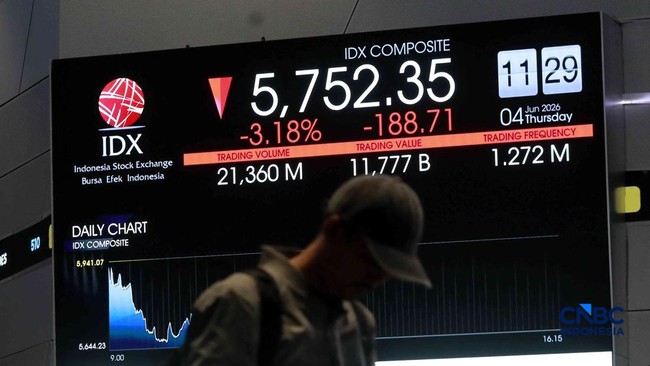
According to Investopedia, econometrics is the application of statistical and mathematical methods to economic data to test economic theories and relationships, and to forecast future trends. Though it may appear rational and empirical, its underlying assumption is that a posteriori knowledge and yesterday’s data can predict human decisions tomorrow or two years from now.
Even in the age of AI (artificial intelligence) and flying cars, we are still a long way from being able to use numbers to predict human actions, which are as unpredictable as quarks.
Reshuffling the Deck
Analysts and economists have openly voiced concerns about the state of public finances. An article in the Jakarta Globe stated: “But economists argue that fundamental fiscal challenges remain: costly government programmes continue to grow, while Indonesia’s capacity to generate additional revenue remains limited.”
This has become apparent with three finance ministers and a change of Bank Indonesia (BI) governor—an institution described as independent—in just about three years since President Prabowo Subianto and Vice-President Gibran Rakabuming Raka began their first term.
The boards of directors and commissioners of the Indonesia Stock Exchange (IDX) and the Financial Services Authority (OJK) have also been replaced. Reports say the IDX’s ownership structure may undergo demutualisation, allowing Danantara Indonesia to become the majority shareholder in the name of transparency.
Private Property Wronged, Ownership Nationalised
In July 2026, PT United Tractors Tbk’s (UNTR) gold mine was reportedly taken over by Danantara Indonesia after the Ministry of Energy and Mineral Resources (ESDM) revoked PT Agincourt Resources’ forestry permit. Martabe is a key element in Danantara’s plan to establish the state-owned Perminas. After a dispute with Jardine-owned Astra, Danantara backed down and allowed UNTR to retain the mine.
In September 2026, PT Bayan Resources Tbk (BYAN), a mining company owned by Singaporean billionaire Low Tuck Kwong, and three of its coal subsidiaries were declared to be in force majeure after ESDM delayed approval of their 2026 Work Plan and Budget (RKAB) production quotas, threatening their ability to meet supply contracts.
The status was lifted only after BYAN agreed, in mid-September 2026, to transfer a 30% stake to PT Jhonlin Baratama at a discount of about 80% to the publicly traded market price. Following the transaction, BYAN’s affected subsidiaries received an additional production quota of 15 million to 20 million tonnes.
Ideological Clashes Erode Trust
To improve confidence, MSCI called for transparency on share ownership; investor classifications and data; ownership concentration; minimum free-float thresholds; and market integrity and enforcement. On Friday, 17 October 2026, MSCI said that “sufficient progress has not been consistently observed across the Indonesian equity market”.
The writer, however, argues that this is a cover for underlying political and investment concerns. The issue is not only the takeover of foreign-linked entities, but also the conduct of local conglomerates with political connections or support.
Conglomerates known as the “Nine Dragons”, which benefited from and were protected by previous administrations, are now being replaced by other groups, referred to as the “Nine Hajjis”, under the current government. This not-so-subtle power struggle is reflected in publications carrying headlines such as “Nine Dragons replaced by Nine Hajjis”.
This shift in power has shaken business and investor confidence in private property rights, the weaponisation of the courts and deliberate bureaucratic obstruction. The significance of, and connection between, this power struggle and the Jakarta Composite Index (JCI) can be seen by comparing the overall market’s performance with that of the fundamentally based LQ45 index (Exhibit 1).
A negative divergence emerged after MSCI’s initial announcement in February 2026 that it was assessing Indonesia for a possible downgrade to Frontier Market status. Before February, the market was driven mainly by second- and third-tier shares linked to the Nine Dragons conglomerates, which are illiquid and not included in the universe of any global passive funds.
No Calculator Works in a Burning Jungle
Returning to my earlier thesis, there is a reason quantitative funds have not grown rapidly in Indonesia or most of the world. Human relationships and subjective personal logic can never be calculated using one rigid equation.
Source data may be wrong; financial statements may be inflated, as in the case involving eFishery; and experts’ consensus may be for sale. The economy is only as simple as one person’s relationship with another. The centrally planned economy promoted through the slogan “Towards a Golden Indonesia 2045” (the centenary of the Republic of Indonesia) has strayed from its original plan.
Econometricians have not, at least so far, demonstrated an ability to incorporate scenarios that contradict their own restrictive assumptions about how individuals should think and act.
Source: jawawa.id (https://jawawa.id/newsitem/the-limitations-of-econometrics-in-the-age-of-ai-an-indonesian-case-study-1792479037)
Originally published by CNBC Indonesia (https://www.cnbcindonesia.com/opini/20261020123741-14-777814/keterbatasan-ekonometrika-di-era-ai-studi-kasus-indonesia), translated from Indonesian