
The 'Less but More' Principle in Deep Learning
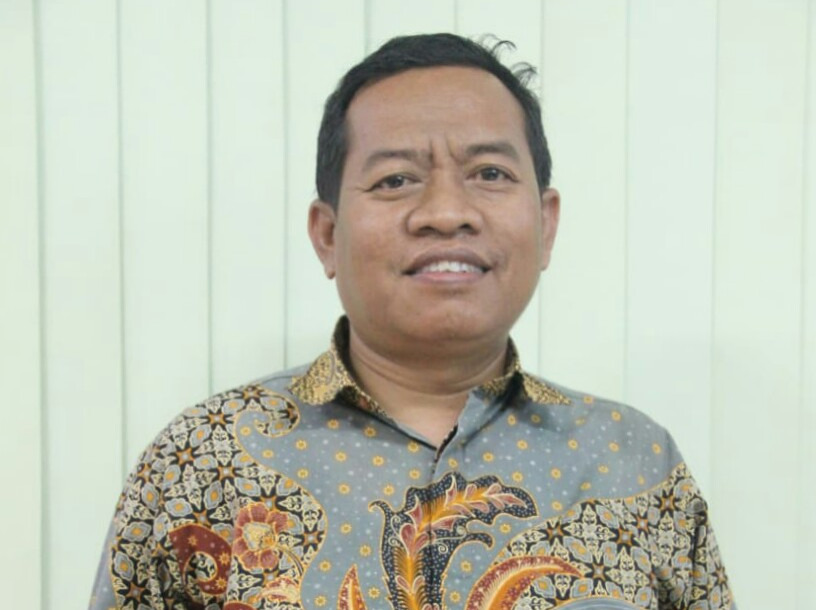
Minister of Primary and Secondary Education (Mendikdasmen) Abdul Mu’ti has stressed the importance of teachers understanding the ‘less but more’ principle in implementing the deep learning approach. On one occasion, the Minister asserted, ‘Deep learning does not have to involve a large amount of material. Its character is narrow, meaning little, but deep. The principle is less but more, or when less is more.’
The Minister’s assertion means that the ‘less but more’ principle in deep learning places greater emphasis on the depth of discussion of each subject matter, rather than how much material has been taught by the teacher to students. In other words, teachers are no longer directed to teach overly dense material. Lesson material can be designed more concisely, but its discussion is broad and deep.
The ‘less but more’ principle also allows teachers to conduct learning by linking between materials, even between subjects. This method certainly necessitates teachers reading extensively and understanding interconnected material.
Thus, interdisciplinary learning will occur. This method also allows for ‘interaction’ between disciplines so that separated learning does not occur. The scope of learning can even be expanded through a hidden curriculum in the form of social activities, leadership, and real-life experiences.
To implement the ‘less but more’ principle better, it is important for teachers to reflect at the end of each lesson. Teachers can compare old learning patterns with the deep learning model. Like looking in a mirror, reflection is important for reviewing the entire teaching and learning process. Through reflection activities, teachers will obtain feedback to see strengths and weaknesses. Not many teachers dare to look in the mirror of the learning process that has been carried out. Yet this step is important as an evaluation to improve the quality of learning.
In the Academic Paper on Deep Learning prepared by Suyanto and Team (2025), it is stated that reflection is the closing stage of the three main experience cycles of the teaching and learning process, namely understanding, applying, and reflecting. These three stages are an inseparable unity in implementing deep learning.
The ‘less but more’ principle also aims to correct the old learning approach that was only oriented towards material completion, especially if it merely ended in memorisation. For it is very possible for a student to memorise a lot of lesson material but not understand well what is memorised. Whereas in learning, the quality of understanding is far more important than the quantity of memorisation.
Therefore, the old learning paradigm that requires teachers to pursue material completion targets is important to change. Moreover, in that old learning pattern, teachers seemed not to care whether students had understood the material delivered well. For this reason, teachers must not hold the view that the most important thing is to complete the material according to curriculum demands. Sometimes students are even forced to learn something that does not correlate with real life around them. Whereas good education should bring children closer to real experiences in life.
The deep learning approach wants to ensure that students are truly present as a whole, find meaning in their learning experiences, and do not merely undergo surface learning activities. The teaching and learning process is also not merely a transfer of knowledge. More than that, learning must be able to change children’s way of thinking and behaviour.
In that context, the deep learning approach is present to invite students to learn something truly new and in accordance with life’s challenges. The material taught by the teacher may not be too much, meaning little (less), but the material is discussed in depth. In this way, students will gain many real-life experiences (more).
The teacher’s task is to invite students to learn with full awareness (mindful learning), namely awareness of the importance of education for designing the future. This awareness will make children love knowledge so as to foster an attitude of curiosity. Students also learn something meaningful because it correlates with real life (meaningful learning).
What also must not be forgotten is that all teaching and learning processes must be carried out joyfully (joyful learning). Joyful in deep learning must not be understood merely as presenting humour in the classroom or outside the classroom. Importantly, in the teaching and learning process, teachers honour children so that they feel safe and comfortable. School also becomes a pleasant second home for children.
In deep learning, teachers must respect the interests and talents, uniqueness, and diversity of each child. All children actually have great talents according to the potential given by God. Therefore, no teacher should stigmatise a child with labels such as stupid child, naughty child, or other negative terms. Such negative stigma will certainly affect a child’s self-confidence to a certain degree.
Deep learning also emphasises the importance of collaboration, the use of technology, and digital media. With all these tools, it is hoped that children will develop into individuals who are critical, creative, innovative, and adaptive thinkers.
To implement the ‘less but more’ principle in deep learning, the key word is the teacher. Therefore, all efforts to improve teachers’ philosophical understanding, competence, and skills in implementing the approach are essential.
Source: jawawa.id (https://jawawa.id/newsitem/the-less-but-more-principle-in-deep-learning-1787871018)
Originally published by Media Indonesia (https://mediaindonesia.com/opini/926884/prinsip-less-but-more-dalam-pembelajaran-mendalam), translated from Indonesian