
The Legacy of Indonesian Elephant Researchers
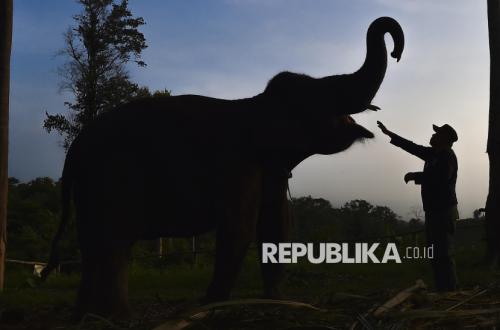
The long journey of elephant research in Indonesia is a narrative of intellectual succession spanning over one and a half centuries, passing from one researcher to the next amidst constantly evolving challenges. It began not in the dense jungles of Sumatra, but within the museum laboratories of Europe during the mid-19th century.
At that time, the Western world was hungry for knowledge regarding the biodiversity of tropical regions. The first key figure to lay the foundation for Indonesian elephant science was Coenraad Jacob Temminck. In 1847, he officially conducted the first taxonomic research that established the scientific name Elephas maximus sumatranus.
Temminck’s research did more than just provide a name; it was a scientific recognition that the Sumatran elephant is a unique entity, morphologically distinct from its mainland Asian relatives, possessing a smaller body size but distinctive skull and ear characteristics. This recognition became a vital foundation for all future efforts to protect the species.
As time progressed into the early 20th century, the focus of research shifted from mere species identification in laboratories to observing status in the wild. During this colonial period, F.C. van Heurn emerged, making significant contributions through historical documentation and the study of social interactions between elephants and local communities, particularly in the Aceh region during the late 1920s. Van Heurn recorded how elephant populations began to be squeezed by the massive expansion of tobacco and rubber plantations owned by the colonial government.
His records served not only as historical documents but as a powerful scientific basis that triggered the creation of the Dierenbeschermings Verordening 1931. This regulation became the first legal milestone in Indonesia to designate elephants as protected wildlife, marking the beginning of the use of research data to formulate nature protection policies.
Following independence, elephant research experienced a long hiatus due to political dynamics, until global attention returned to Sumatra in the 1980s as deforestation rates increased sharply. This era saw the emergence of senior forester Haryanto, who collaborated with international researcher Robert A. Blouch. Haryanto was the spearhead of field research, physically traversing the difficult forests of Sumatra to conduct the first systematic population counts.
Through his ability to track footprints and identify isolated habitat pockets, Haryanto successfully gathered primary data proving that human-elephant conflict was on the brink of a crisis. Haryanto’s data served as the primary catalyst for the Indonesian government to launch ‘Operation Ganesha’ in 1982, a historic rescue mission that relocated hundreds of elephants from conflict areas to safer habitats.
Amidst this momentum of rescue, Charles Santiapillai emerged, later known as the primary architect of the foundations of modern elephant conservation in Asia. Throughout his three decades of service, Santiapillai introduced a new perspective: that elephant protection cannot be done partially. Through various scientific journals, he asserted that the survival of the Sumatran elephant depends on the protection of vast and intact natural forest landscapes, rather than mere placement in breeding centres.
As a figure dubbed the ‘Father of Asian Elephant Conservation’, his international influence through the IUCN Elephant Specialist Group successfully attracted global attention and funding for elephant preservation programmes in Indonesia. Santiapulations established the scientific framework that remains the primary reference for conflict mitigation strategies at the national level today.
Source: jawawa.id (https://jawawa.id/newsitem/the-legacy-of-indonesian-elephant-researchers-1780867462)
Originally published by Republika (https://analisis.republika.co.id/berita/tg0343483/jejak-peneliti-gajah-indonesia), translated from Indonesian