
The Legacy of Cempaka Diamonds: Meratus Geopark Heritage and Banjar Culture
In the rich expanse of South Kalimantan, a glimmering legacy has endured for centuries. The Cempaka Traditional Diamond Mining Site is not merely a location for seeking precious stones, but a natural classroom holding a grand narrative of millions of years of geological processes and the resilience of Banjar culture.
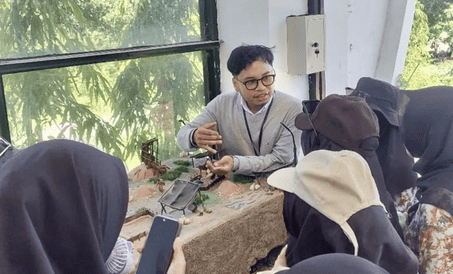
Recently, dozens of students from the Tourism Department of SMKN 4 Banjarbaru had the opportunity to make an educational visit to this legendary site. Accompanied by the Management Body of the Meratus UNESCO Global Geopark, these young people were invited to delve deeper into their regional identity, which has now gained global recognition.
Scientifically, the presence of diamonds in Cempaka is inseparable from the history of Kalimantan’s land formation. Ramadhan Jayusman, a Biologist from the Meratus UNESCO Global Geopark Management Body, explained that the diamond-bearing alluvial deposits in this area were formed through an extremely long geological process.
“The Cempaka Traditional Diamond Mining Site is a cultural heritage that reflects the diamond mining activities of the Banjar community, which have been ongoing for centuries and form part of the social identity and developmental history of the region,” he stated in Banjarbaru, South Kalimantan, on Wednesday (17/6/2026).
This process is closely linked to the uplift of the Meratus Mountains, which occurred millions of years ago. This makes Cempaka one of the crucial points within the Meratus UNESCO Global Geopark, as it possesses internationally valuable geological heritage that tells the story of the earth’s formation in the southern part of Kalimantan.
More than just an economic commodity, diamond mining is the lifeblood of the Banjar community’s social identity. The traditional mining activities that survive to this day reflect the values of hard work, mutual cooperation, and local wisdom passed down through generations.
The Cempaka site stands as a silent witness to how the community interacts with nature. Mining is carried out using traditional techniques with minimal heavy machinery intervention, preserving the authenticity of a way of life that has lasted for centuries. This makes the area a unique geotourism destination, where visitors can directly observe the harmonious relationship between humans and natural resources.
“The diamond-bearing alluvial deposits in the Cempaka area were formed through geological processes related to the uplift of the Meratus Mountains millions of years ago, making it an important location for studying the history of diamond formation in South Kalimantan,” he added.
This visit by SMKN 4 Banjarbaru students underscores that the preservation of regional heritage must begin with the understanding of the younger generation. By learning about the mining history and its geotourism potential, the students are expected to become the front line in promoting and safeguarding the Meratus Geopark.
Through its recognition as part of the UNESCO Global Geopark, Cempaka Diamonds is no longer just a local story, but a world heritage demanding a collective commitment to keep its brilliance shining for future generations.
“We hope the students will better understand the potential of regional cultural and geotourism, while also fostering awareness to protect and preserve cultural and earth heritage as part of the identity of the South Kalimantan community,” said Jayusman.
Source: jawawa.id (https://jawawa.id/newsitem/the-legacy-of-cempaka-diamonds-meratus-geopark-heritage-and-banjar-culture-1781704222)
Originally published by Media Indonesia (https://mediaindonesia.com/nusantara/901545/jejak-intan-cempaka-warisan-geopark-meratus-dan-budaya-banjar), translated from Indonesian