
The Legacy of Bogor's Bag Industry Finds a New Home
The name Tajur was once an icon of Bogor’s bag industry. Along Jalan Raya Tajur, rows of shops selling locally produced bags were a shopping tourism destination that also supported thousands of workers. One of the main players was PT Sumber Karya Indah (SKI), established in 1990, which developed a new centre in Katulampa in 2002. It was in this factory that Sugianto (67) spent decades as a tailor. Together with his colleagues, he learnt to make bags without formal education—armed only with a sample bag that was taken apart, its pattern studied, and then stitched back together until a new product was born. At its peak, around 50 tailors could produce nearly 2,400 bags each week for sale in the SKI area, supplying department stores and fulfilling orders for companies and various events.
However, Tajur’s glory gradually faded. The onslaught of imported products, changes in shopping behaviour, and the rapid growth of marketplaces meant the shops in the area were no longer as busy as they were two decades ago. Some factories ceased production, while many tailors returned to their hometowns and opened their own businesses. In a simple workshop still surviving in Tajur, the old sewing machines are now used more for repairing bags than making new ones. Even so, long-time customers still come bringing Tajur-made bags that have accompanied them for decades. For Sugianto, every bag repaired is a reminder of the era when Bogor’s bag industry was at its peak.
About 20 kilometres from Tajur, the pulse of the bag industry is alive in Bojong Rangkas Village, Ciampea District. Almost every morning, the sound of sewing machines can be heard from residents’ homes. In one house, Suhanda (61) and his child are completing an order for women’s bags. He began learning to sew in the 1980s as a sewing assistant, helping a neighbour who worked in Jakarta. The skills of cutting materials, making patterns, and sewing bags were then passed on to his children and became the family’s livelihood. Unlike Tajur, which lost most of its production activity, the home industry in Ciampea continues to grow with the times.
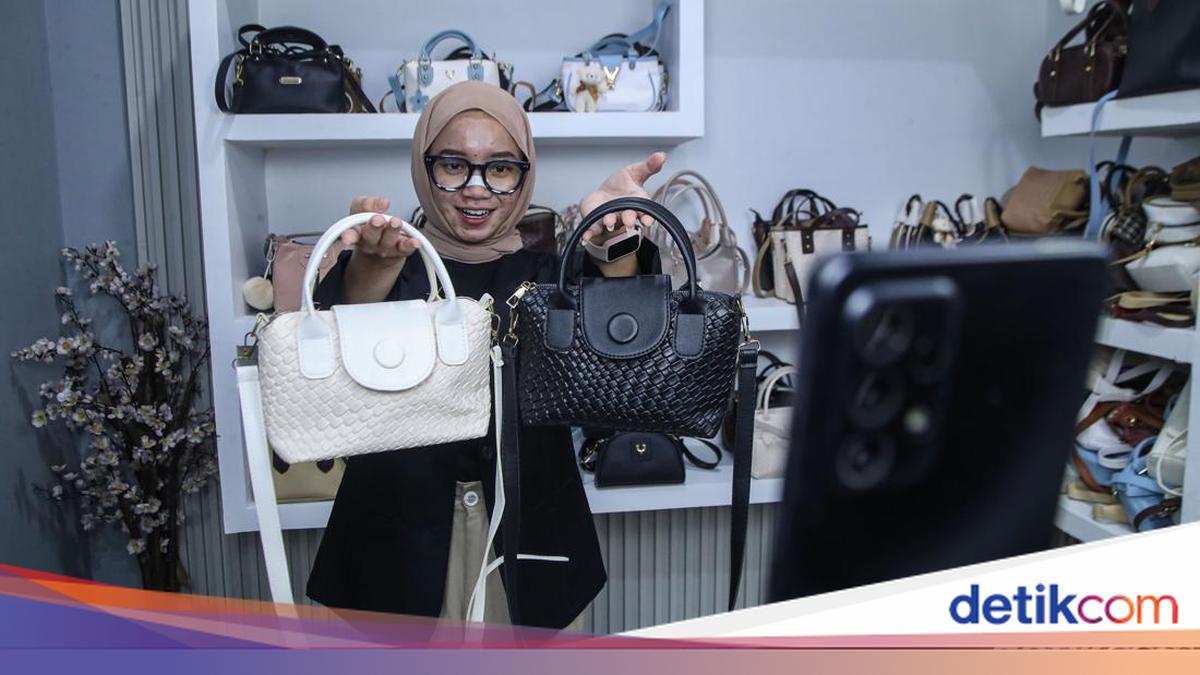
The biggest change occurred when the COVID-19 pandemic pushed artisans to adapt to digital marketing. Suhanda is now able to produce around 300 bags per week. Meanwhile, at Adiba Collection, the home production system is run by dividing the work process among dozens of residents’ homes. Raw materials are cut in one location, then sewn by tailors in their respective homes before being collected again for marketing via live broadcasts on social media and marketplaces. This model allows dozens of families to keep their jobs without having to leave their neighbourhood.
Nevertheless, new challenges continue to emerge. The rising US dollar exchange rate has made raw materials and accessories increasingly expensive, while competition on marketplaces squeezes selling prices and the profits of artisans. Yet the sound of sewing machines in Bojong Rangkas continues to be heard, a sign that Bogor’s bag industry has not completely disappeared. While Tajur was once the face of the industry’s glory, the same spirit now lives in the yards of residents’ homes in Ciampea. The industry has not vanished; it has simply found a new home.