
The Legacy of a Long Breath of Resistance in a Clenched Fist
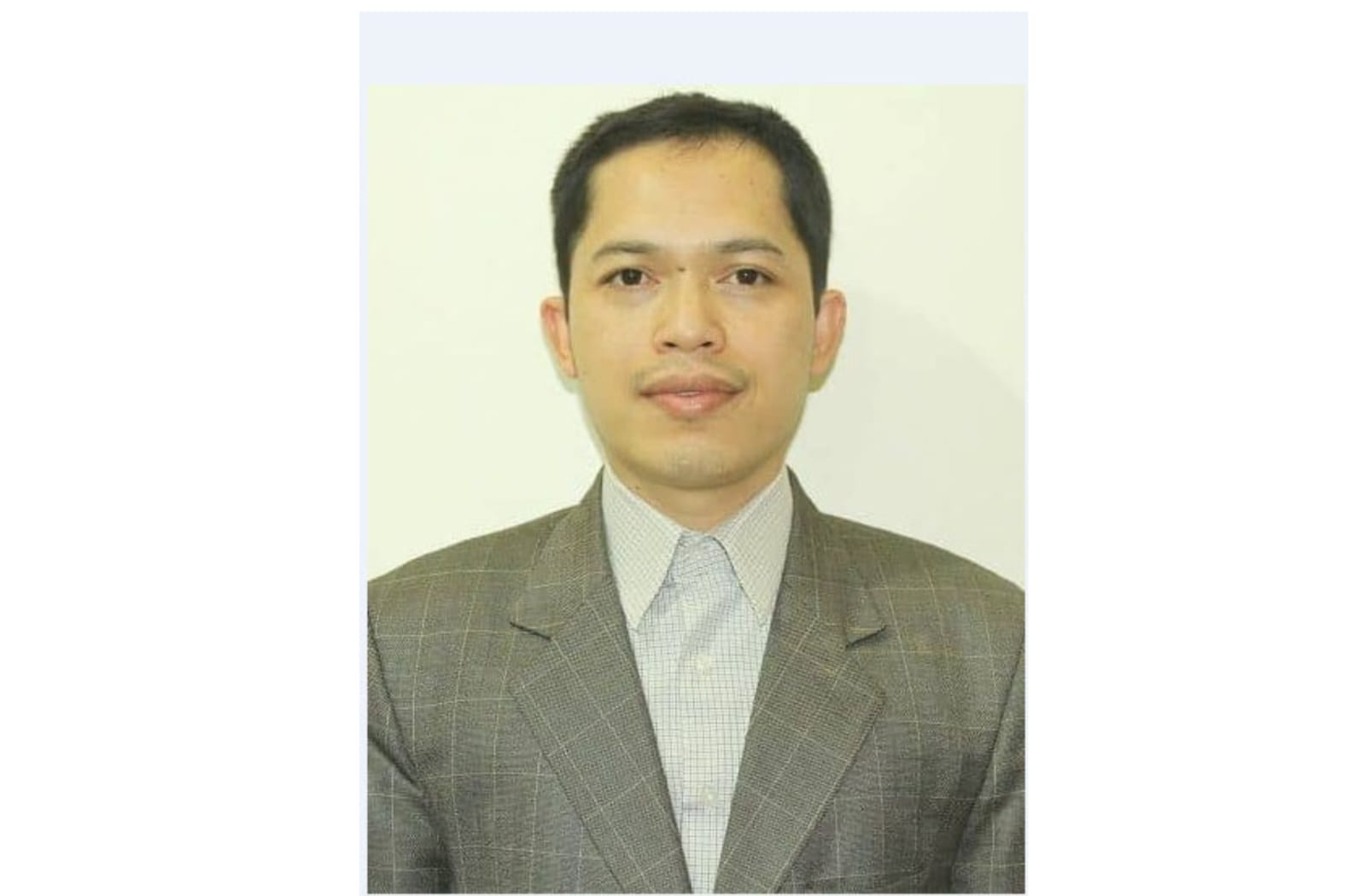
Public doubts must be answered through a transparent legal process.
Entering the subway passage from Meydan-e Ketab towards the Grand Mosalla of Tehran, I was greeted by an unusual sight. Grief-stricken faces of people dressed in black walked in procession. Some clutched Iranian flags. Others carried posters of Ayatollah Ali Khamenei.
But my attention was drawn to one symbol that appeared repeatedly: a clenched fist against a red and black background. Beside the image was writing in white Farsi script: ‘Bayad bakhast!’ (Rise up!).
In the crowded train carriage, distinctive slogans of mourning and defiance echoed back and forth. Upon exiting the station, I seemed swept into a human current with no visible end. The streets leading to the Grand Mosalla turned into a sea of mourners. There I witnessed firsthand one of the largest funeral processions in modern Iranian history. I stood among millions of people who had come from various cities to escort their leader to his final resting place. At that moment, I witnessed not merely a funeral procession, but a profoundly symbolic event.
In Iran, symbols never stand alone. An event such as a death ritual is always intertwined with history, religion, and collective memory. The national flag, slogans, and millions of mourners formed a chain of symbols stretched across the occasion.
On Friday (3/7/2026) and Saturday (4/7/2026), diplomatic and public tribute processions took place in Tehran, then continued to Qom. They then crossed into other countries, to Najaf and Karbala in Iraq. Finally, the procession returned to Iran, with the burial in Mashhad on Thursday (9/7/2026). All of it formed a mutually reinforcing narrative woven through symbols.
Victor Turner saw ritual not as mere ceremony, but as a social process that renews solidarity and collective identity. The long procession I witnessed over a week was not only a tribute to a fallen leader, but also a society’s way of tending its collective memory and extending the breath of its struggle.
This chain of symbols appeared at levels ranging from the personal to the national. In Iran’s collective context, moments like these often unite opposing sides. The clearest example came from critical academics such as Bijan Abdolkarimi. Although known as a critic of the regime, this Iranian philosopher still attended and expressed his feelings through a symbol: ‘I am merely a fish in the middle of an ocean of masses.’
THE STRUGGLE DOES NOT END WITH DEATH
It was at this point that I saw the symbols interweave. The clenched fist, the fish, and the ocean. All three speak of consistency. The clenched fist is interpreted as a symbol that the struggle does not end with death. Abdolkarimi demonstrated another form of struggle: a fish that remains faithful to its conscience and intellectual honesty.
In sociology, Émile Durkheim called such phenomena social facts — collective realities that must be understood before being judged. Of course, we may hold differing views on Ali Khamenei or the Islamic Republic. Yet the millions who came to pay their final respects are an empirical fact that deserves to be explained, not ignored.
For the mourners, the clenched fist symbolised steadfastness in fighting for principles and values. For Abdolkarimi, consistency meant remaining critical of the state without losing the honesty to acknowledge reality. These two different positions were united by one shared value: loyalty to principle and values.
I left the Grand Mosalla with more questions than answers. I returned home with a reminder that every nation possesses symbols that shape its collective memory, and that every intellectual is tested not when facts support their convictions, but when facts challenge convictions they may hold differently.
Sayid Ali Khamenei, who died with his fist clenched, became a symbol in images scattered throughout the long procession of his funeral.
Ultimately, the deepest meaning of the clenched fist lies not in who clenched it, but in the question it leaves for all of us: do we still possess the courage and consistency to remain loyal to our principles and values, even when it must be redeemed at a great price?
Ali Khamenei paid with his life. In the clenched fist, the long breath of defiance lives on. This is his legacy.
Source: jawawa.id (https://jawawa.id/newsitem/the-legacy-of-a-long-breath-of-resistance-in-a-clenched-fist-1783983038)
Originally published by Media Indonesia (https://mediaindonesia.com/opini/910577/warisan-napas-panjang-perlawanan-di-kepalan-tangan), translated from Indonesian