
The KM Virgo Transport 8 Tragedy: Responsibility Should Not Rest Solely with the Captain
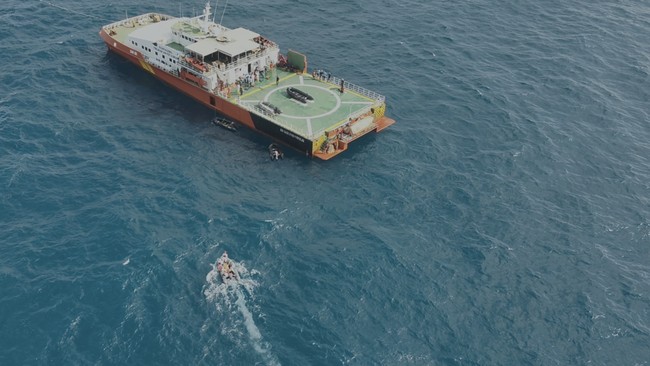
The tragedy of the KM Virgo Transport 8 capsizing in the Java Sea serves as a concrete illustration of the vital importance of passenger protection and safety in maritime transport.
BBC News Indonesia reported that the KM Virgo Transport 8 capsized in the Java Sea waters in the early hours of Sunday, 13 September 2026, while en route from Surabaya to Banjarmasin. The vessel was carrying 243 people. Passengers recounted events leading up to and immediately after the capsizing, noting the absence of danger alarms and the fact that many passengers were not wearing life jackets.
One witness, Agus, an expedition driver from Palangkaraya, described the moments when the ship began to tilt. Around 1:00 am, he was in the sleeping quarters when a fellow driver woke him to report the list. Most passengers were still asleep. Agus stated that he heard no announcements from the crew indicating an emergency, only hearing from others that the ship was tilting.
This testimony is significant as it highlights issues regarding early warning systems and emergency communication on board. In an accident occurring in the early hours when most passengers are asleep, the presence of alarms, announcements, and effective evacuation procedures is not merely a technical matter, but a fundamental part of maritime safety obligations.
The legal proceedings have progressed, with the Directorate of Water Police (Korpolairud) of the Indonesian National Police (Baharkam Polri) naming Captain Arief Yunianto as a suspect in the accident. Sub-director of Law Enforcement, Commissioner Pol. Kukuh Prabowo, stated that the captain was named a suspect based on at least two pieces of evidence and has been detained. However, investigations are ongoing to uncover whether other parties should be held accountable.
Previously, the handling of the KM Virgo Transport 8 case was transferred from the South Kalimantan Regional Police to the National Police Headquarters for further action.
These facts suggest that the tragedy of the KM Virgo Transport 8 should not merely focus on identifying a suspect, but should address a more fundamental question: why were maritime safety systems unable to prevent or minimise casualties during the emergency? A crucial question arises: is the responsibility for this tragedy sufficient if placed solely on the captain, or must the responsibility of the company employing the captain and operating the vessel also be examined?
Ship accidents do not always occur due to the error of a single individual. They may stem from various issues, such as negligence, lack of oversight, failure of safety procedures, or a company’s failure to ensure that the vessel and its safety systems meet required standards.
Therefore, once the captain has been named a suspect, the legal process should not stop there. It is necessary to investigate whether the ship’s owner or operator bears responsibility for the accident. The captain does not work for himself; he works within a company, performing duties using a vessel operated by a company, for the ultimate benefit of that company.
This is where the issue of corporate liability becomes essential. In criminal law, the doctrine of vicarious liability exists. Simply put, this doctrine means that under certain circumstances, a company can be held liable for acts committed by its employees, provided there is a legal relationship and specific conditions are met.
As explained by legal scholars, vicarious liability is a principle that allows a person or corporation to be held accountable for the actions of another person within an employment relationship or under their control. In an employer-employee relationship, an employer can be held liable if an employee’s actions cause loss while performing their duties. In other words, corporate responsibility does not necessarily absolve the individual of personal responsibility; both can coexist as long as legal requirements are met. This principle is highly relevant to the KM Virgo Transport 8 case. If the captain was performing his duties as part of the company’s operations, it is insufficient to only examine his actions.
Source: jawawa.id (https://jawawa.id/newsitem/the-km-virgo-transport-8-tragedy-responsibility-should-not-rest-solely-with-the-captain-1791136322)
Originally published by CNBC Indonesia (https://www.cnbcindonesia.com/opini/20261004234801-14-773191/tragedi-km-virgo-transport-8-jangan-hanya-nakhoda-bertanggung-jawab), translated from Indonesian