
The Journey of Malika Soybeans: From Farmers' Fields to Indonesian Kitchens
There is a long story behind the aroma of sweet soy sauce familiar at Indonesian family dining tables.
It is about soil, seeds, and people. Not many know that the main ingredient of Bango soy sauce, one of Unilever Indonesia’s legendary products, is a superior variety born from cooperation between local farmers, academics, and corporations.
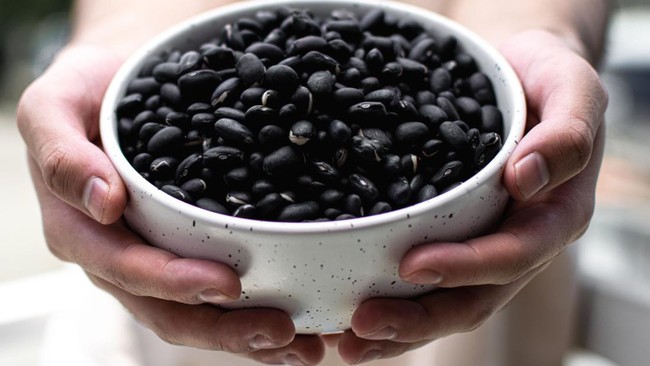
Its name is Malika soybean, a black variety that has become a symbol of sustainable collaboration between science and business, between the kitchen and the land.
Indonesia has long been known as a major soybean consumer, yet ironically not a primary producer. Each year, demand for soybeans for tofu, tempeh, and soy sauce continues to rise, while domestic production still lags far behind national needs.
According to Statistics Indonesia (BPS), national soybean productivity in 2022 was only around 15.43 quintals per hectare, or 1.54 tonnes per hectare, with total production of approximately 301 thousand tonnes.
Yet national demand is estimated to reach nearly 2.8 million tonnes, forcing Indonesia to import around 2.5 million tonnes every year. In 2023, soybean imports even reached 2.67 million tonnes, the majority originating from the United States and Brazil.
This deficit reflects lost economic opportunities at the farmer level and the fragility of national food sovereignty. It is in this context that Malika soybean was born—an effort to revive local black soybean production that had long been marginalised.
From laboratory to field, Malika’s journey
The story of Malika began in the early 2000s.
At that time, Unilever Indonesia, through its Bango soy sauce brand, wanted to ensure that its main raw material—black soybeans—could be supplied domestically with consistent quality.
On the other hand, a research team from Gadjah Mada University (UGM) was developing a superior black soybean variety more adaptive to local land and climate conditions.
The meeting of these two interests gave birth to a long-term partnership between academia and industry. From that research emerged the Malika variety, officially recognised as a national superior variety in 2007.
Malika was chosen because it has a deep black colour, natural savoury taste, high storage durability, and higher protein content than ordinary yellow soybeans—around 37–40% per 100 grams of dry beans. The anthocyanin content in its seed coat also provides added value as a natural antioxidant source, making it an ideal raw material for premium soy sauce.
“Malika is not merely a variety, but a bridge between research, business, and farmer welfare,” said one UGM researcher involved in its development in a 2019 academic publication. This statement captures the philosophy behind the partnership that continues to this day.
Taking root in Javanese soil
The Bango partnership programme began from a small plot of 5 hectares in Central Java in 2001. In less than two decades, the project grew rapidly.
According to Unilever Indonesia’s 2015–2016 sustainability report, the partnership with black soybean farmers has involved more than 10,500 farmers in over 20 regencies across Central Java, Yogyakarta, and East Java.
In 2019, Unilever recorded planting 1,052 hectares of land with the Malika variety, and all seeds used were certified under the Sustainable Agriculture Code (SAC), Unilever’s internal sustainability standard covering social, economic, and environmental aspects.
The partnership includes technical training, planting assistance, and guaranteed purchase of harvests. In several regions, a “seed loan” system is also applied: farmers receive seeds from Unilever and return them in the form of harvested crops. This model not only ensures the sustainability of seed stock but also fosters a sense of collective responsibility among farmers.
A sustainable supply chain network
The Malika supply chain was built with an approach different from conventional practice. Unilever does not buy from the open market, but partners directly with farmer groups that have been nurtured together with universities and local governments.
Each harvest is collected through partner cooperatives before being channelled to Bango soy sauce processing facilities.
According to internal reports, all black soybeans used in Bango production now come from the Malika variety. Unilever calls this the “heart of Bango quality”, as Malika black soybeans provide the distinctive taste and aroma that characterise the legendary soy sauce.
From an economic perspective, the partnership offers price guarantees for farmers. Unilever’s purchase price for Malika black soybeans is said to be higher than the market price of yellow soybeans, while remaining competitive compared to import prices. This pattern gives farmers a real incentive to plant local varieties without fear that their harvest will not be absorbed by the market.
The advantages of black soybeans
Beyond its role in the supply chain, Malika soybean has attracted scientific attention due to its nutritional profile. A number of studies show that black soybeans have higher antioxidant and polyphenol levels than yellow soybeans.
Anthocyanins in the seed coat give the deep black colour while protecting body cells from oxidative stress. Several laboratory studies note that black soybean extract can suppress free radicals more effectively than other varieties.
In terms of protein, laboratory test results cited from national agricultural publications show that Malika black soybean protein content reaches around 40.4 grams per 100 grams of dry beans. This figure is higher than the average yellow soybean, which ranges between 34–36 grams per 100 grams.
In addition, the isoflavone content in soybeans—particularly genistein and daidzein—offers potential positive physiological effects for the body, such as maintaining heart health, supporting hormone balance, and playing a role in preventing degenerative diseases. Although these benefits are mostly found in pre-clinical research, they reinforce the narrative of Malika soybean as a high-value functional food.
Economic and social impact at the grassroots
The Unilever–UGM partnership is also a village economic empowerment programme. Through a “shared value” approach, Unilever ensures that business profits are also felt by farmers on the ground.
Farmers enrolled in the programme receive technical cultivation assistance, access to financing, and entrepreneurship training. In many cases, Unilever works with cooperatives or women farmer groups to strengthen local social structures.
Although it has shown positive results, the Malika soybean programme still faces a number of challenges. First, farmers’ dependence on a single large buyer can create market vulnerability if company policy changes.
Second, national soybean productivity remains stagnant, making it difficult to compete with cheaper imported soybeans.
Third, climate change affects planting patterns and the risk of crop failure.
However, opportunities remain wide open. With the support of cultivation technology, supply chain digitalisation, and government policies favouring local varieties, Malika soybean could become a milestone in transforming food self-sufficiency based on local innovation.
The story of Malika is a portrait of how industry can synergise with science and society to create shared value.
Unilever, through Bango soy sauce, has succeeded in making farmer partnerships part of its brand identity—a narrative that authentic taste is born from welfare and sustainability upstream.
Now, in every drop of soy sauce that darkens Indonesian cooking, lies the long journey of thousands of farmers as #PahlawanKita, researchers, and workers who keep Indonesia’s flavours alive.
Source: jawawa.id (https://jawawa.id/newsitem/the-journey-of-malika-soybeans-from-farmers-fields-to-indonesian-kitchens-1786611196)
Originally published by CNBC Indonesia (https://www.cnbcindonesia.com/research/20260810125206-128-757922/jejak-kedelai-malika-dari-ladang-petani-hingga-dapur-nusantara), translated from Indonesian