
The Irony of the "Criminalisation of Creativity" in the Karo District Prosecutor's Office
The absolute acquittal handed down by the Medan District Court panel of judges against Amsal Christy Sitepu in early April 2026 is not merely a victory for a videographer and creative worker.
This verdict is also a triumph for rational justice and a death knell for outdated reasoning and the arrogance of bureaucratic law enforcement, which has long haunted communities in the regions.
The case stemmed from something simple: an offer of services to create village profile videos by Amsal Sitepu. However, through the cold hands of the Karo District Prosecutor’s Office under the leadership of Prosecutor Danke Rajagukguk, this creative project was forced into the “dark box” of criminal corruption with absurd allegations of budget inflation.
In his offer, Amsal Sitepu priced the audio-visual work at Rp30 million per village, covering research, scriptwriting, filming, and final editing.
Yet, the blinkered view of regional law enforcement officials saw it as a crime because the Karo Regency Inspectorate auditor deliberately “rejected” the value of ideas and creative processes.
As a result, in their indictment, the prosecutors insisted that the fair price for the video was only Rp24.1 million, so the Rp5.9 million difference per village was deemed a state loss.
This logic is highly dangerous because it ignores the fact that in the creative economy, the value of work is determined by intellectual agreement.
Valuing brainstorming, dubbing, and editing at zero rupiah is an insult to human intellect, not just for creative workers.
Every satisfied client’s smile in a government procurement contract for goods and services could turn into iron bars simply because an auditor does not understand that creativity cannot be calculated with a hardware store calculator.
Moreover, the mistake of the Karo District Prosecutor’s Office is not only about a lack of understanding of the creative industry but also touches on very basic aspects of professionalism.
The handling of this case shows a pattern of “Parcok” or Parkir Cokot, a method where cases are left idle for a long time before being “plucked” to meet performance targets or certain interests.
Amsal Sitepu, who had completed his work since 2022, was suddenly made a suspect at the end of 2025, without credible audit grounds.
In fact, according to the Constitutional Court decision, the absolute authority to calculate state losses lies with the Financial Audit Board (BPK).
Unfortunately, the Karo District Prosecutor’s Office seemed too eager to force corruption articles against service providers who had no authority over state budgets at all.
State organisers who should be supervised instead seem to escape the sharp aim of those prosecutors.
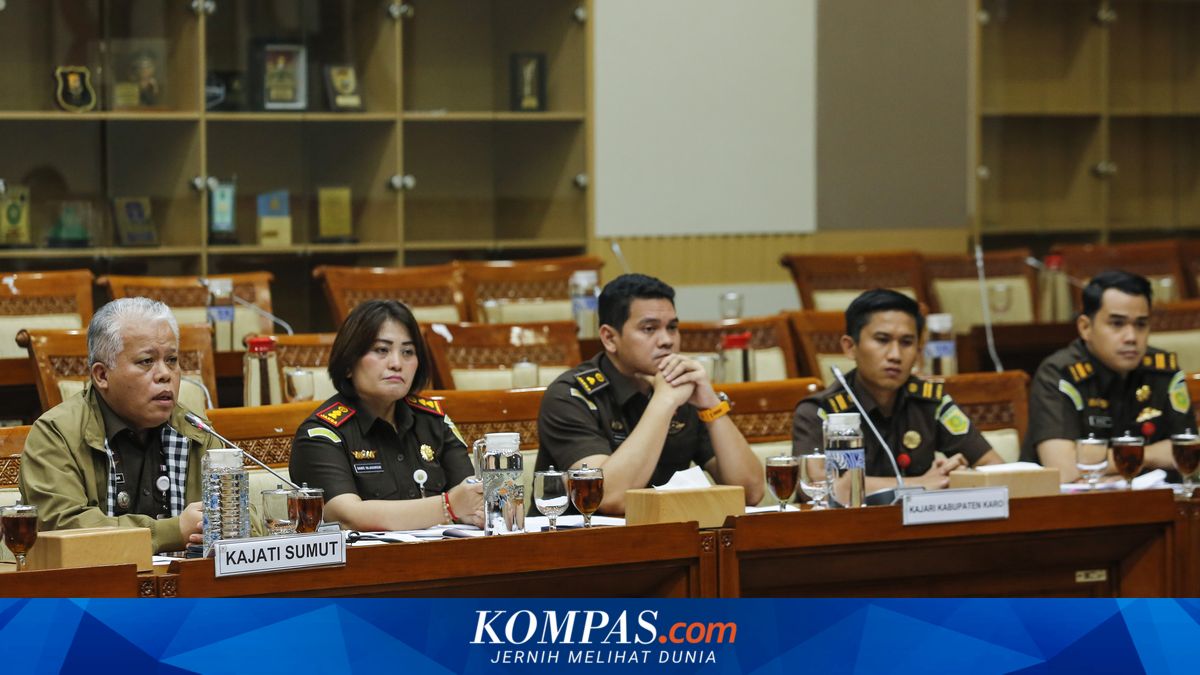
Sharp scrutiny from Commission III of the Indonesian House of Representatives in a hearing revealed a much darker veil.
The emergence of the “Paha” variable or the misuse of regional asset facilities suddenly became our collective concern.
Information regarding luxury car aid such as Toyota Fortuner, Nissan Grand Livina, and Kijang Innova from the Karo Regent to the Karo District Prosecutor’s Office has raised public suspicion.
The question is, are these facilities what make the prosecutor’s sharpness blunt upwards but very sharp downwards.
When law enforcement institutions receive grants from parties they should oversee, the neutrality and independence of the law reach their lowest point.
Source: jawawa.id (https://jawawa.id/newsitem/the-irony-of-the-criminalisation-of-creativity-in-the-karo-district-prosecutors-office-1775631195)
Originally published by Kompas (https://nasional.kompas.com/read/2026/04/08/13095831/ironi-kriminalisasi-kreativitas-di-kejaksaan-negeri-karo?utm_source=ABC&utm_medium=rss), translated from Indonesian