
The Irony of Indonesia's Palm Oil Giants Headquartered in Singapore
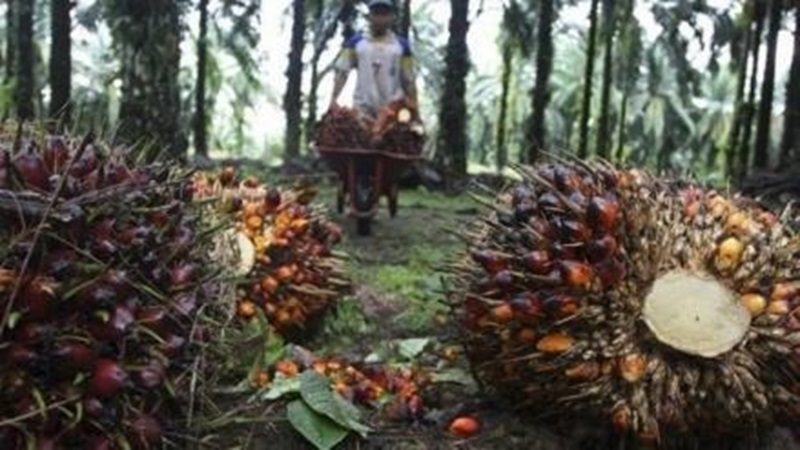
Indonesia is the world’s largest producer of palm oil. More than half of the global palm oil supply originates from plantations spread across Sumatra, Kalimantan, Sulawesi, and Papua.
The land is Indonesian, the labourers are Indonesian, the natural resources are Indonesian, and the supporting facilities are also located in Indonesia. However, there is an irony that is rarely discussed in depth: several palm oil business giants that control millions of hectares of plantations in Indonesia actually place their parent companies or corporate headquarters in Singapore.
Widely known names include Wilmar International, Golden Agri-Resources (GAR) from the Sinar Mas Group, Musim Mas Group, First Resources, Bumitama Agri, and Apical Group. While most plantations, palm oil mills, refineries, and production activities are located in Indonesia, their parent companies are based in Singapore, with some even listed on the Singapore Exchange (SGX).
This phenomenon raises a fundamental question: why do companies that derive most of their profits from Indonesia’s natural resources choose another country as their business control centre? The answer is not as simple as taxation. Singapore offers many advantages attractive to global corporations, including higher legal certainty, simpler bureaucracy, broader access to international financial institutions, deeper capital markets, and a commodity trading ecosystem that has developed over decades. From a business perspective, such decisions are legitimate and rational corporate strategies.
However, from a national interest perspective, this situation remains ironic. Strategic corporate decisions—ranging from business expansion, financing, and restructuring to investment and asset management—are largely determined from outside Indonesia. High-value-added activities, such as financial services, treasury, capital raising, and global management functions, are also largely enjoyed by the country where the parent company is based.
This means that while Indonesia benefits from investment, employment, tax revenue, and export earnings, a portion of the added value from high-level corporate functions flows to the country hosting the parent companies. In the modern economy, the greatest profits often stem not just from production, but from the control of capital, technology, financing, and strategic decision-making.
This condition reflects that Indonesia’s challenge is not merely about natural resource wealth. The issue is how to create a business climate that encourages large companies to choose Indonesia as their business control centre. Legal certainty, regulatory consistency, bureaucratic efficiency, a competitive tax system, and a strong financial market are decisive factors.
Therefore, the measure of success for downstreaming (hilirisasi) is not enough to just build factories domestically. Indonesia also needs to become the birthplace of global corporate headquarters, research centres, financing hubs, innovation centres, and decision-making hubs. Otherwise, Indonesia will continue to be merely a production site, while business control and a portion of the economic added value remain abroad.
It must be acknowledged that these companies are not breaking the law by being based in Singapore; they are executing common international business strategies. The more important question is: why has Indonesia not yet become the primary choice for companies grown from its own natural wealth to make this country their corporate home?
This irony should be a priority for the government. A nation that is truly economically sovereign is not just one that possesses natural resources, but one that serves as the centre of ownership, decision-making, and profit from those resources.
Source: jawawa.id (https://jawawa.id/newsitem/the-irony-of-indonesias-palm-oil-giants-headquartered-in-singapore-1782582612)
Originally published by indopolitika.com (https://indopolitika.com/ironi-raksasa-sawit-indonesia-berkantor-pusat-di-singapura/?amp), translated from Indonesian