
The Increasingly Selective Oil and Gas Market in 2026
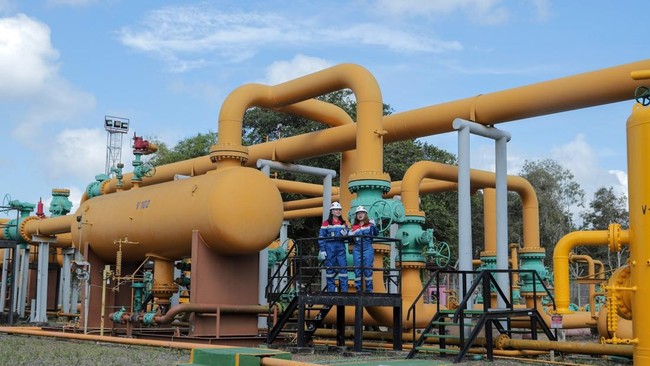
Despite the global transition towards clean energy, oil and gas remain primary commodities, as evidenced by sustained growth in demand, which is expected to continue in the coming years.
Regarding oil, global demand growth is projected to reach 770,000 barrels per day in 2025 and rise to 850,000 barrels per day in 2026, with total global demand estimated to reach 105 million barrels per day. This growth is no longer driven solely by transportation but is shifting towards petrochemicals and Asian markets. Furthermore, oil prices remain highly sensitive to geopolitics, necessitating more mature long-term planning than currently exists.
Gas and LNG are entering a new phase. Global gas demand growth reached 2.8 bcf per day in 2024, but is expected to slow to 1.3 bcf per day in 2025 before rising again to 2.0 bcf per day in 2026, with total global gas demand reaching between 400 and 413 bcf per day. The slowdown in 2025 is attributed to relatively high spot LNG prices and a weakening Asian economy. By 2026, the market is expected to improve as LNG supply grows more rapidly and the Asian market becomes more price-sensitive. LNG traded in 2025 reached 56.3 bcf per day.
Interestingly, LNG is increasingly linking prices across regions, meaning regional volatility no longer exists in isolation; developments in one market are quickly felt in another. For industry players, this makes gas, LNG, and infrastructure portfolios increasingly strategic.
Distinguishing winners from laggards now depends on more than just volume; the market is evaluating cost position, reliability, market access, and speed of execution. These four factors are now the primary differentiators between success and failure.
In the downstream sector, the focus has shifted from production volume to how efficiently refineries operate and the level of asset utilisation. Consequently, factors such as logistics, storage, and distribution reach are determining competitiveness. Notably, greater value-add is derived from integration with petrochemicals rather than fuel products alone. Meanwhile, product quality and regulatory compliance have become non-negotiable requirements as the market becomes more selective.
A similar trend applies to the services sector, where local execution capability, reliability in niche segments, digitalisation, and cash discipline serve as the main differentiators. Service companies that can prove their capability will secure their position, while those relying solely on low prices will gradually be phased out. Amidst fluctuating prices, the ability to maintain flexible contracts, perform hedging, and accurately read the market provides a distinct advantage. Ultimately, technology is only valuable if utilised to protect margins, rather than for mere prestige.
Source: jawawa.id (https://jawawa.id/newsitem/the-increasingly-selective-oil-and-gas-market-in-2026-1791132704)
Originally published by CNBC Indonesia (https://www.cnbcindonesia.com/opini/20261004231214-14-773188/pasar-migas-yang-semakin-selektif-di-tahun-2026), translated from Indonesian