
The Importance of the TPPO Task Force in Preventing Recurrences of Maritime Disasters Involving Indonesian Migrant Workers (PMI)
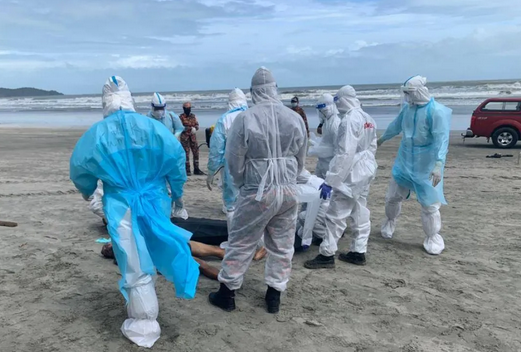
Sixteen Indonesian citizens have been confirmed dead after a vessel carrying Indonesian Migrant Workers (PMI) sank in waters on the way to Malaysia. The maritime disaster involving PMI is not merely a transport accident but the downstream consequence of organised human trafficking crimes (TPPO). This is where the TPPO Task Force becomes crucial as the frontline in breaking the chain of non-procedural departures that risk lives.
The existence of the TPPO Task Force has been strengthened by Presidential Regulation (Perpres) No. 49 of 2023, which amends Presidential Regulation No. 69 of 2008. The regulation provides a tougher mandate for this coordinating body to operate from the central level down to the regional levels (provincial and regency/city).
In the latest structure, The Police Chief (Kapolri) has been appointed as the Acting Chair of the TPPO Task Force at the Central level, signalling a shift in strategy toward more proactive law enforcement without neglecting prevention and victim protection.
The TPPO Task Force, which involves cross‑ministry and agency collaboration such as Polri, BP2MI, and the Ministry of Justice and Human Rights, operates with a comprehensive approach. Their role is vital because preventing maritime accidents cannot be achieved only when a vessel is already at sea.
Why does direct involvement of the TPPO Task Force have an impact on reducing maritime accidents? The answer lies in transport safety standards that are neglected by syndicates. The ships used to transport illegal PMI are typically characterised by unfitness, lack of safety equipment, and being pushed to sail in extreme conditions to evade authorities. The TPPO Task Force operates not only preventively but also repressively. Firm action against captains and sending agents provides the deterrence needed. As the syndicates’ room to operate narrows, the number of high-risk departures can be significantly reduced.
Moreover, the Task Force plays a role in strengthening bilateral cooperation with Malaysian authorities. The exchange of intelligence on human‑smuggling routes allows prevention to take place before ships enter dangerous waters.
The existence of the TPPO Task Force is the key to ensuring that no more Indonesian citizens have to risk their lives at sea to earn a living. By tightening supervision, educating prospective migrants, and taking firm action against those involved in human trafficking, we can close the gaps that lead to tragic incidents in border waters.
- What is the TPPO Task Force’s main duty?
The main duty is to coordinate prevention, handling, and rehabilitation of victims of human trafficking crimes, including supervising migrants’ departure routes.
- Why do illegal PMI often suffer maritime accidents?
Because they depart on vessels that are unfit, without safety equipment, and are often forced to sail in extreme weather to avoid authorities.
- How can suspected TPPO be reported?
The public can report through BP2MI’s call centre or at the nearest police station if they encounter recruitment of workers that is suspicious or unofficial.
Migrant CARE has urged the government to thoroughly investigate the sinking of the PMI vessel at the Malaysia border and to highlight weaknesses in the TPPO Task Force’s role.
The Spokesperson for the Indonesian Ministry of Foreign Affairs (Part I), Yvonne Mewengkang, explained that the number of victims found exceeded the initial estimate based on the crew’s statements.
Migrant CARE has urged the government to thoroughly investigate the tragedy and to highlight the weaknesses in the TPPO Task Force’s role.