
The IMF's hidden agenda in the economic crisis
Their agenda is for the US to control the Greater Middle East, a vast region stretching from Indonesia to Morocco.
Jakarta (ANTARA) - The rupiah’s exchange rate against the US dollar has been volatile. On Friday (14/8/2026), the rupiah traded at around Rp 17,000 in the foreign exchange market.
Several analysts say the pressure on the rupiah has been triggered by global sentiment, including geopolitical uncertainty and market anticipation of US inflation data, rather than domestic economic fundamentals.
This is also the reason Finance Minister Purbaya Yudhi Sadewa rejected a loan offer from the International Monetary Fund (IMF) and the World Bank worth 20 billion to 30 billion US dollars. Purbaya’s reasoning, as quoted by Antaranews (21 April 2026), is that Indonesia currently has reserves of almost 25 billion US dollars.
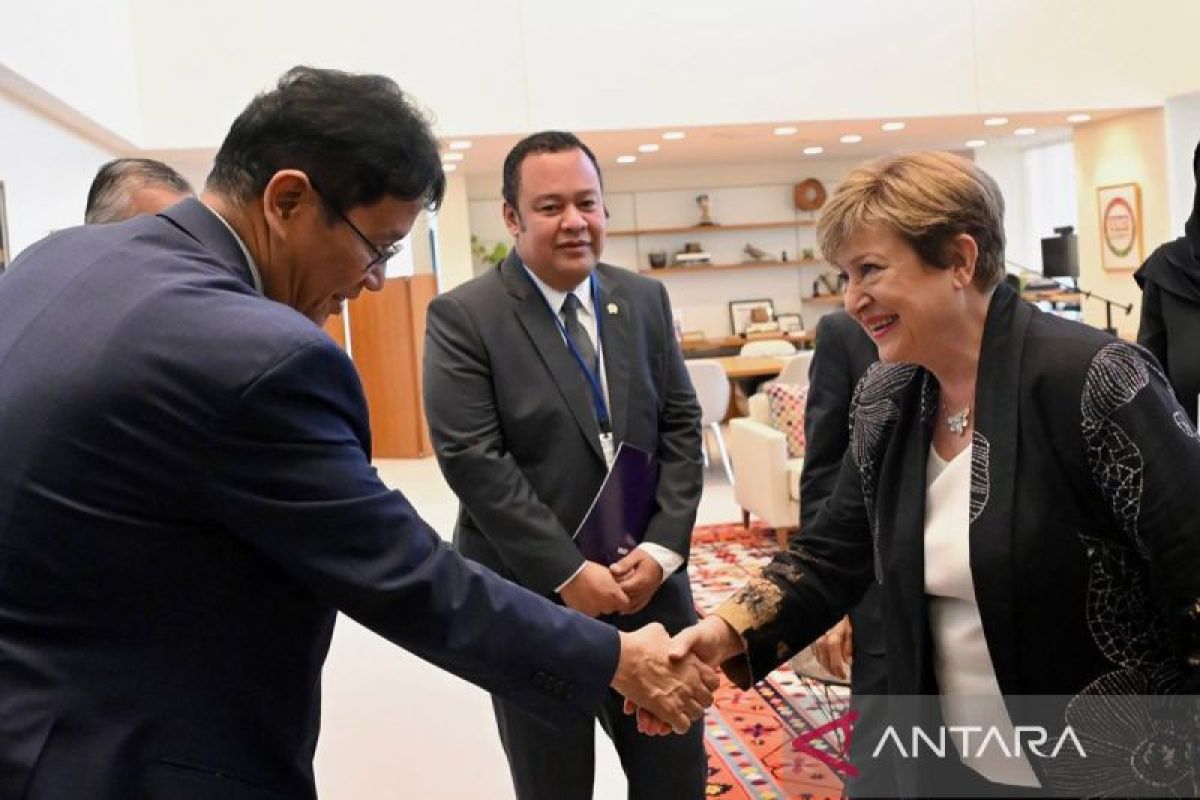
Purbaya’s decision to reject the IMF and World Bank loan offer at the IMF-World Bank Spring Meetings on 13-17 April in Washington DC, United States, deserves appreciation. Beyond Indonesia’s available funds, there is also the political impact that could arise from such a loan.
Dark history records that IMF assistance in 1998 did not improve Indonesia’s condition; it actually made things worse, leading to a political crisis. Beginning in July 1997, the Thai baht collapsed. This spread to Indonesia. The rupiah’s exchange rate plunged from around Rp 2,500 per US dollar to around Rp 13,673. The IMF came offering help to stabilise the rupiah.
On the advice of his economic team, including Widjojo Nitisastro — the chief architect of the New Order economy — President Soeharto accepted the IMF’s offer. On 31 October 1997, Finance Minister Mar’ie Muhammad and Bank Indonesia Governor Sudradjat Djiwandono signed the first Letter of Intent (LoI). However, the rupiah did not stabilise; it weakened further.
The first LoI was followed by a second LoI on 15 January 1998. It contained around 50 policy points, including structural reform, banking restructuring, fiscal and monetary tightening, and economic liberalisation, in exchange for the disbursement of IMF assistance as emergency crisis aid.
This LoI was signed by Pak Harto at his home on Jl Cendana, Jakarta. The public still remembers IMF Managing Director Michel Camdessus crossing his arms over his chest as Pak Harto bowed to sign the document, an image that conveyed IMF arrogance.
Seeing the situation, Pak Harto began to doubt the IMF’s good intentions. He invited Fuad Bawazier, an economist and Gadjah Mada University graduate who was then heading the Directorate General of Taxation. Fuad held a different view from Widjojo Nitisastro, who had advised Pak Harto to accept the IMF. Fuad rejected the IMF.
Through Fuad, Rini Soemarno, and Renee Zecha, the head of a financial venture capital firm, Pak Harto was introduced to Steve Hanke, a professor of economics at Johns Hopkins University in the United States. Hanke was known as an expert in monetary policy and an economic adviser to several world leaders, including President Ronald Reagan.
In a number of meetings with Pak Harto, Steve Hanke recommended the adoption of a Currency Board System (CBS), which would peg the rupiah to all foreign currencies, including the US dollar. At the time, the rupiah was under pressure at around Rp 13,673 per US dollar.